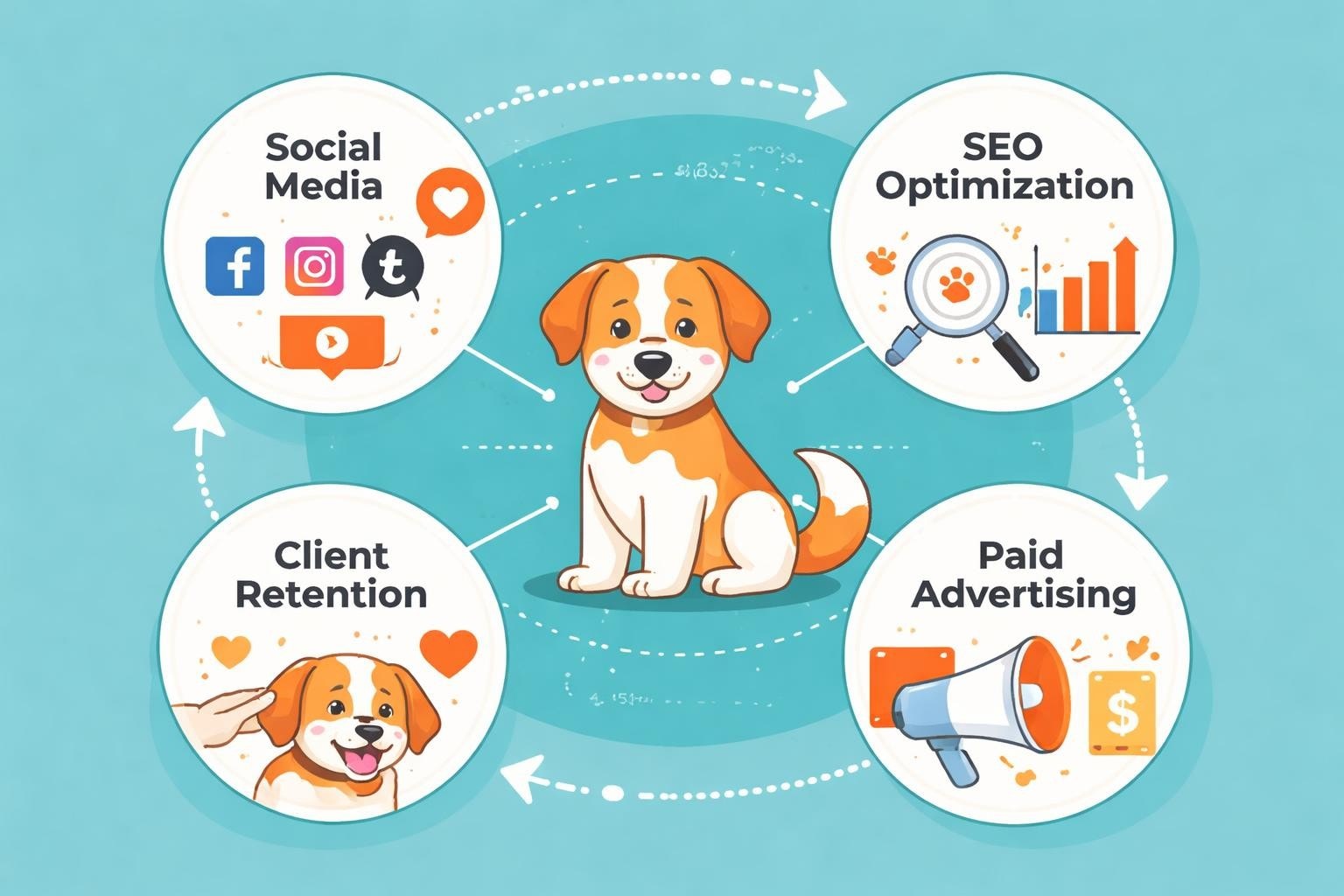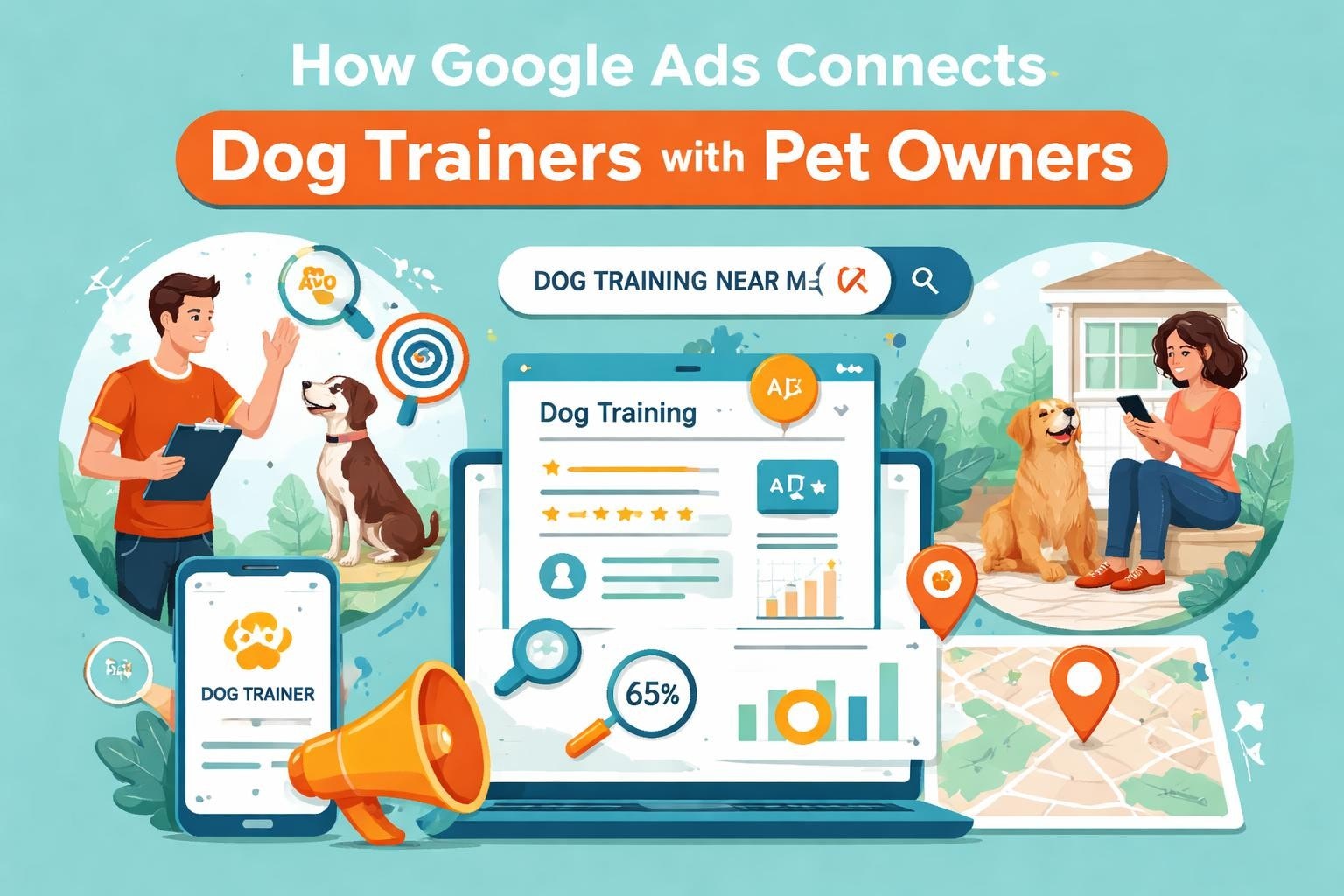
Running a pet business is incredibly rewarding, but let's be real: even the most talented groomer or dedicated veterinarian needs clients walking through the door. The pet industry has exploded in recent years, with more competition than ever before. Whether you're running a dog daycare, mobile grooming service, or veterinary clinic, understanding how to effectively market your pet business can make the difference between thriving and just surviving. The good news? You don't need a marketing degree to attract the perfect clients. You just need the right strategies and a willingness to show your authentic love for animals.
Understanding Your Pet Business Audience
Before you spend a single dollar on pet business marketing, you need to know who you're talking to. Here's a little secret: you're not marketing to pets (obviously), you're marketing to pet parents. And these folks? They're a special breed.
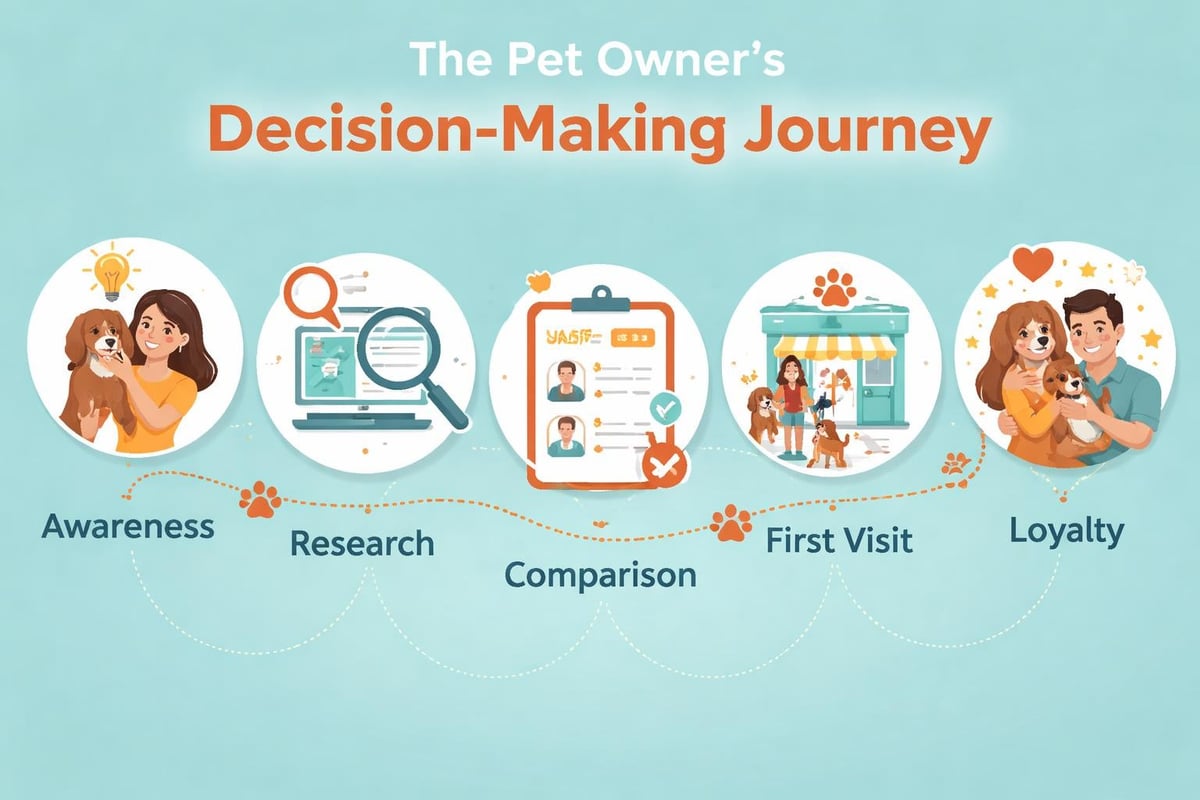
Today's pet owners treat their furry friends like family members. They research extensively before choosing service providers, read reviews religiously, and aren't afraid to spend money on quality care. Understanding this mindset changes everything about how you approach marketing.
Key characteristics of your ideal pet business clients:
- They prioritize their pet's safety and comfort over price
- They value transparency and communication
- They're active on social media, especially Facebook and Instagram
- They trust recommendations from other pet parents
- They appreciate educational content that helps them be better pet owners
Creating Customer Personas
Take 30 minutes right now to write down your ideal client. Are they busy professionals who need dog walking? First-time puppy parents overwhelmed by training? Senior citizens looking for gentle grooming services? Getting specific helps you craft messages that actually resonate.
For example, a luxury pet spa in Manhattan will market differently than a mobile grooming service in rural Texas. Neither approach is wrong, they're just different because they serve different people with different needs.
Building Your Online Presence
Let's talk about something that might surprise you: your website is your hardest-working employee. It never calls in sick, it works 24/7, and it can answer client questions while you're sleeping. But only if you set it up right.
Essential Website Elements for Pet Businesses
Your website doesn't need to be fancy, but it absolutely needs to be functional. Here's what every pet business website must include:
- Clear service descriptions – Don't make people guess what you offer or how much it costs
- Online booking capability – Making it easy to schedule = more bookings
- Photo gallery – Show happy pets and clean facilities
- About page – People want to know who's caring for their fur babies
- Contact information – Phone, email, and physical address visible on every page
- Mobile optimization – Most people browse on their phones
Here's the thing about optimizing your website for search engines: it's not just about Google rankings. It's about creating a user experience that converts visitors into clients. When someone searches "dog grooming near me" at 10 PM because their pup just rolled in something awful, you want them to find you and be able to book immediately.
| Website Feature | Why It Matters | Implementation Difficulty |
|---|---|---|
| Online Booking | Increases conversions by 40% | Medium |
| Mobile-Friendly Design | 65% of searches happen on mobile | Easy |
| Client Reviews Section | Builds trust immediately | Easy |
| Service Menu with Prices | Reduces phone inquiries | Easy |
| Blog/Resources | Improves SEO and authority | Medium |
Social Media Strategies That Actually Work
You've probably heard that pet content performs incredibly well on social media. It's true! But posting cute photos randomly isn't a strategy. It's just posting.
Effective pet business marketing on social media requires consistency, authenticity, and engagement. You're not trying to go viral (though it's fun when it happens). You're building relationships with your local community.
Platform-Specific Tactics
Facebook remains king for local pet businesses. Join local community groups, post helpful tips, and share client success stories. Create a Facebook Business Page and keep it updated with your hours, services, and contact information.
Instagram is perfect for visual storytelling. Show before-and-after grooming transformations, introduce your team members, and give behind-the-scenes glimpses of daily operations. Use local hashtags like #ChicagoDogGroomer or #AustinPetCare to reach nearby pet parents.
TikTok isn't just for teenagers anymore. Short, authentic videos showing the reality of your work (the good, the funny, and the challenging) can build serious connections with younger pet owners.
Content Ideas That Engage
- Pet care tips specific to your local climate
- Staff spotlights introducing your team
- Client testimonials (with permission)
- Educational content about common pet health issues
- Live Q&A sessions about your services
- Pet of the week features
The All Ears Digital blog regularly shares insights about creating content that resonates with pet owners without overwhelming your schedule.
Local Marketing That Brings Results
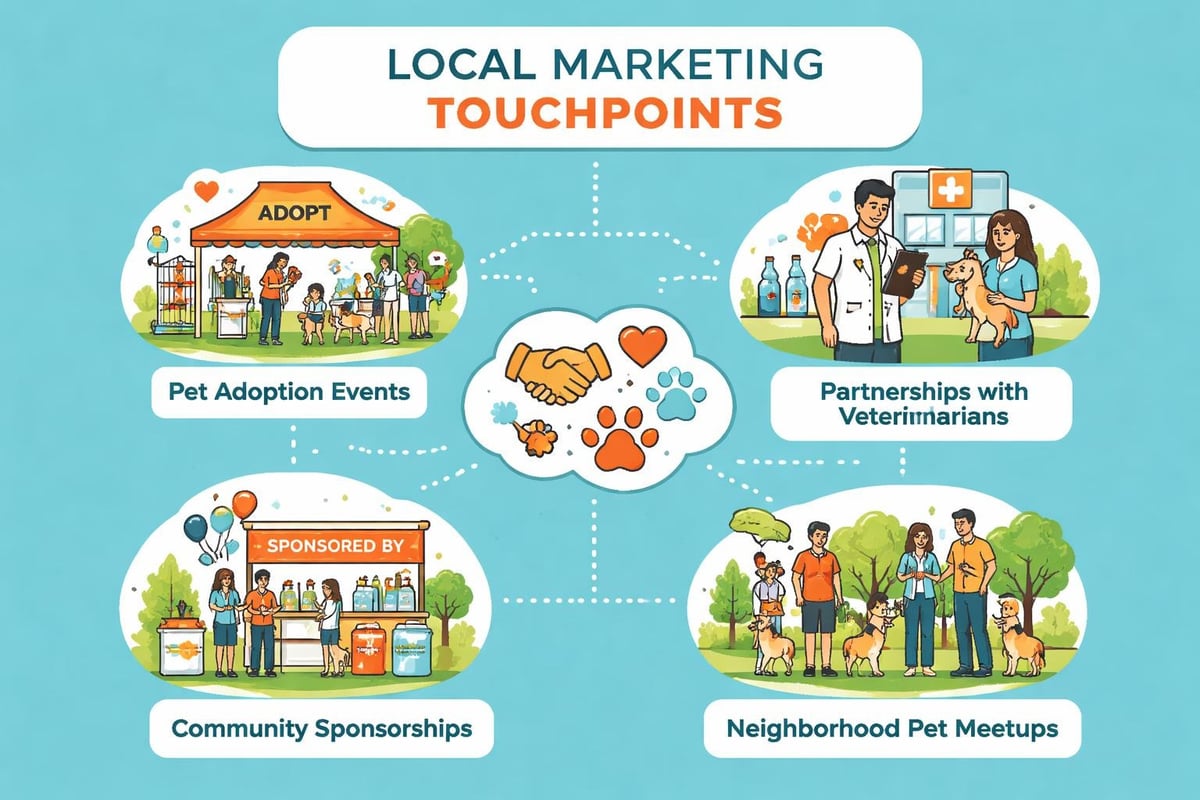
Here's something many pet business owners overlook: some of the most effective marketing happens offline, right in your community. Digital is important, but never underestimate the power of face-to-face connections in the pet world.
Community Involvement Strategies
Partner with complementary businesses. If you run a grooming salon, partner with local veterinarians, pet supply stores, and dog trainers. Cross-referrals work beautifully because you're both serving the same customers with different services. Creating partnerships with non-competing businesses is one of the smartest moves you can make.
Sponsor local events. Put your business name on the local 5K dog walk. Sponsor a shelter adoption event. These investments pay dividends in brand awareness and goodwill.
Host your own events. Consider organizing puppy socialization meetups, pet first aid workshops, or holiday photo sessions. These position you as a community leader while attracting potential clients in a low-pressure environment.
Google Business Profile Optimization
This free tool is absolute gold for pet business marketing. When someone searches for your services, your Google Business Profile often appears before organic search results.
Steps to optimize your profile:
- Claim and verify your listing
- Add accurate business hours (update for holidays!)
- Upload high-quality photos of your facility and team
- Respond to every review, positive or negative
- Post regular updates about services or special offers
- Add relevant business categories
- Include your service area if you're mobile
Reviews on your Google Business Profile are worth their weight in gold. Don't be shy about asking happy clients to leave feedback. A business with 50+ positive reviews will outperform competitors with only a handful.
Paid Advertising for Pet Businesses
Organic marketing is fantastic, but sometimes you need faster results. Paid advertising, when done correctly, can fill your appointment book quickly. The key phrase here is "when done correctly."
Google Ads for Pet Services
Pay-per-click advertising lets you appear at the top of search results for specific keywords. For pet businesses, this typically means location-based searches like "emergency vet near me" or "dog boarding in Denver."
Benefits of Google Ads:
- Immediate visibility for high-intent searches
- Only pay when someone clicks your ad
- Detailed tracking of which keywords drive bookings
- Ability to adjust budget and targeting in real-time
Common mistakes to avoid:
- Setting a budget too low to be competitive
- Using overly broad keywords that waste money
- Sending traffic to your homepage instead of service-specific pages
- Forgetting to add negative keywords (like "free" or "jobs")
Facebook and Instagram Ads
Social media advertising works differently than search ads. People aren't actively looking for your services, so you need to grab attention and create interest.
Target your ads to people within a specific radius of your business who have interests related to pets. Show them engaging visuals (video performs best) and clear offers. A special discount for first-time clients or a free consultation can lower the barrier to trying your services.
Email Marketing That Doesn't Feel Spammy
Email isn't dead, it's just evolved. For pet businesses, email marketing serves multiple purposes: staying top-of-mind, educating clients, and driving repeat bookings.
Building Your Email List
You need permission to email people, so create opportunities to collect email addresses:
- Offer a downloadable pet care guide in exchange for an email
- Add a signup form to your website
- Collect emails at checkout or during appointments
- Host a contest where entry requires an email address
Email Campaign Ideas
| Campaign Type | Purpose | Frequency |
|---|---|---|
| Monthly Newsletter | Share tips, updates, special offers | Monthly |
| Appointment Reminders | Reduce no-shows | As needed |
| Seasonal Promotions | Drive bookings during slow periods | Quarterly |
| Educational Series | Build authority and trust | Weekly or bi-weekly |
| Birthday Club | Celebrate client pets with special offers | On pet birthdays |
The beauty of email marketing is that it's personal and direct. You're literally in someone's inbox, which is a privilege. Respect it by providing value, not just selling.
Content Marketing and SEO
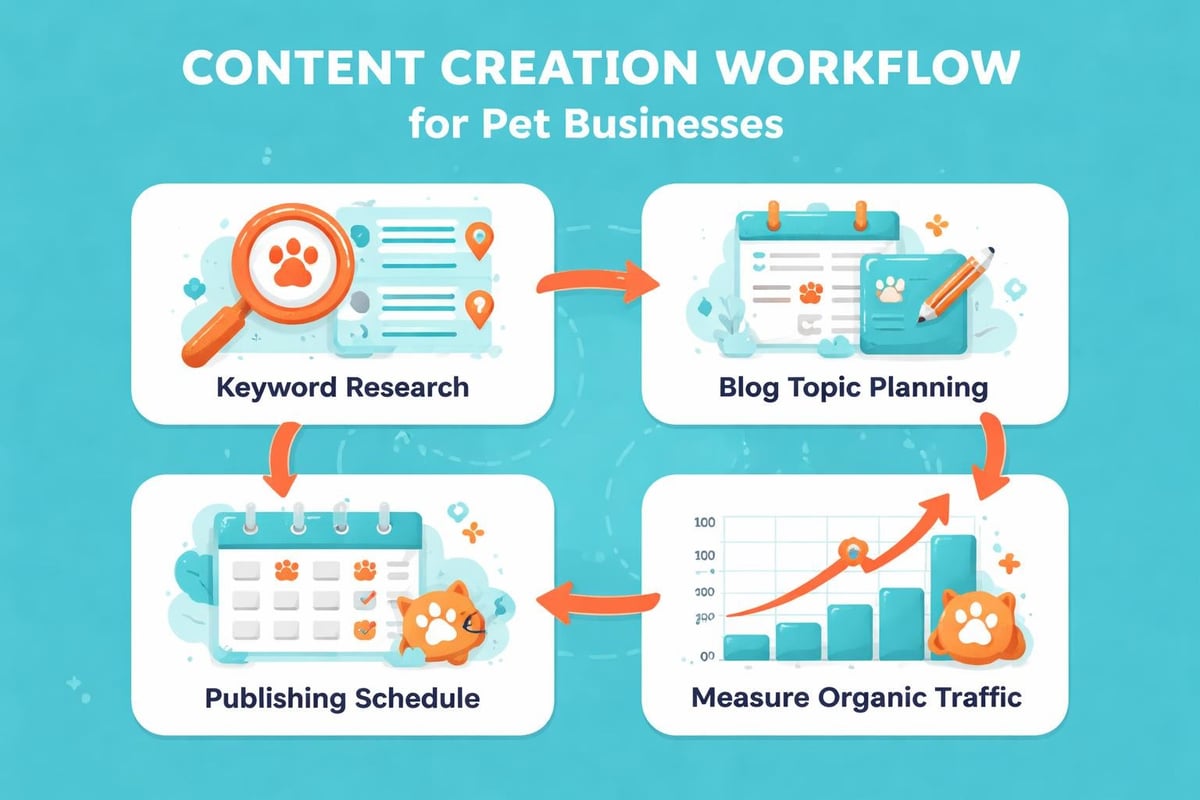
Search engine optimization might sound technical, but it's really just about being helpful online. When you create educational content that answers the questions pet owners are asking, Google rewards you with higher rankings.
Blog Topics That Drive Traffic
Think about the questions clients ask you regularly. Those are perfect blog topics! For example:
- "How often should I get my dog groomed?"
- "What vaccines does my puppy need?"
- "Signs your cat might be sick"
- "How to prepare your pet for boarding"
- "Choosing the right dog trainer"
Each blog post is a fishing line in the vast ocean of Google searches. The more quality content you publish, the more chances you have to be found by pet owners searching for answers.
Local SEO Tactics
Pet business marketing is inherently local. You need clients within your service area, not across the country. That's why local SEO matters so much.
Action steps for local SEO success:
- Include your city and neighborhood names naturally in website content
- Create location-specific pages if you serve multiple areas
- Get listed in local online directories (Yelp, Yellow Pages, pet-specific directories)
- Encourage reviews on multiple platforms
- Build links from other local businesses and organizations
- Use structured data markup to help search engines understand your business
The comprehensive approach at All Ears Digital combines these tactics to help pet businesses dominate their local market online.
Measuring What Matters
You can't improve what you don't measure. Pet business marketing requires tracking the right metrics to understand what's working and what's wasting your time or money.
Key Performance Indicators (KPIs)
Website metrics:
- Monthly visitors
- Bounce rate (people who leave immediately)
- Time on page
- Conversion rate (visitors who book or contact you)
Social media metrics:
- Follower growth rate
- Engagement rate (likes, comments, shares per post)
- Reach and impressions
- Profile visits and clicks to your website
Advertising metrics:
- Cost per click
- Cost per acquisition (what you spend to get one new client)
- Return on ad spend
- Click-through rate
Business metrics:
- New client acquisition rate
- Client retention rate
- Average transaction value
- Lifetime customer value
Don't get overwhelmed by data. Pick 5-7 key metrics that align with your business goals and check them monthly. Adjust your pet business marketing strategies based on what the numbers tell you.
Building a Referral Program
Word-of-mouth marketing is powerful in the pet industry. When someone recommends your grooming salon to their friend, that referral comes with built-in trust. You can systematize this with a formal referral program.
Creating Incentives That Work
Offer value to both parties. The person referring gets a reward (discount, free service, gift card), and the new client gets a first-time discount. This motivates sharing while reducing the barrier for trying your services.
Make it easy. Provide referral cards that clients can hand to friends. Create a simple online form where they can submit referrals. The easier the process, the more likely people will participate.
Track and thank. Keep a spreadsheet of referrals and send personal thank-you notes or emails. Recognition goes a long way in encouraging continued referrals.
Adapting to Seasonal Trends
The pet business has natural ebbs and flows throughout the year. Smart pet business marketing anticipates these patterns and adjusts accordingly.
Peak seasons typically include:
- Late spring and summer (grooming demand increases)
- Holiday periods (boarding and pet-sitting surge)
- Back-to-school season (training and daycare)
Slower seasons might be:
- Post-holiday winter months
- Early fall
- Immediately after summer vacation season
Plan your marketing pushes strategically. Implementing marketing strategies that account for seasonal variations keeps your revenue more stable year-round. Offer promotions during slow periods. Double down on advertising before peak seasons when people are planning ahead.
Leveraging Client Testimonials
Social proof is everything in pet business marketing. Pet parents want assurance that their beloved companions will be safe and happy in your care. Client testimonials provide that reassurance better than anything you could say about yourself.
Collecting Powerful Testimonials
Ask at the right moment. Right after a successful service, when the client's pet looks amazing or clearly had a great time, that's when you ask for a review. Strike while the iron is hot and the positive emotions are fresh.
Make it specific. General reviews like "Great service!" are nice, but specific testimonials are powerful. Ask clients to mention particular team members, specific services, or how your business solved a problem they had.
Use multiple formats. Written reviews are standard, but video testimonials are gold. A happy client talking about how you helped their anxious dog enjoy grooming creates an emotional connection that text alone can't match.
Display testimonials prominently on your website, share them on social media, and include them in email newsletters. These real stories from real clients do the selling for you.
Growing a pet business in 2026 requires a blend of digital savvy and old-fashioned relationship building. The strategies outlined here work because they focus on genuine connection with pet owners who want the best for their furry family members. If managing all these pet business marketing channels feels overwhelming while you're trying to run your actual business, that's completely normal. All Ears Digital specializes in helping pet businesses just like yours develop and execute marketing strategies that actually drive growth, so you can focus on what you do best: caring for animals.