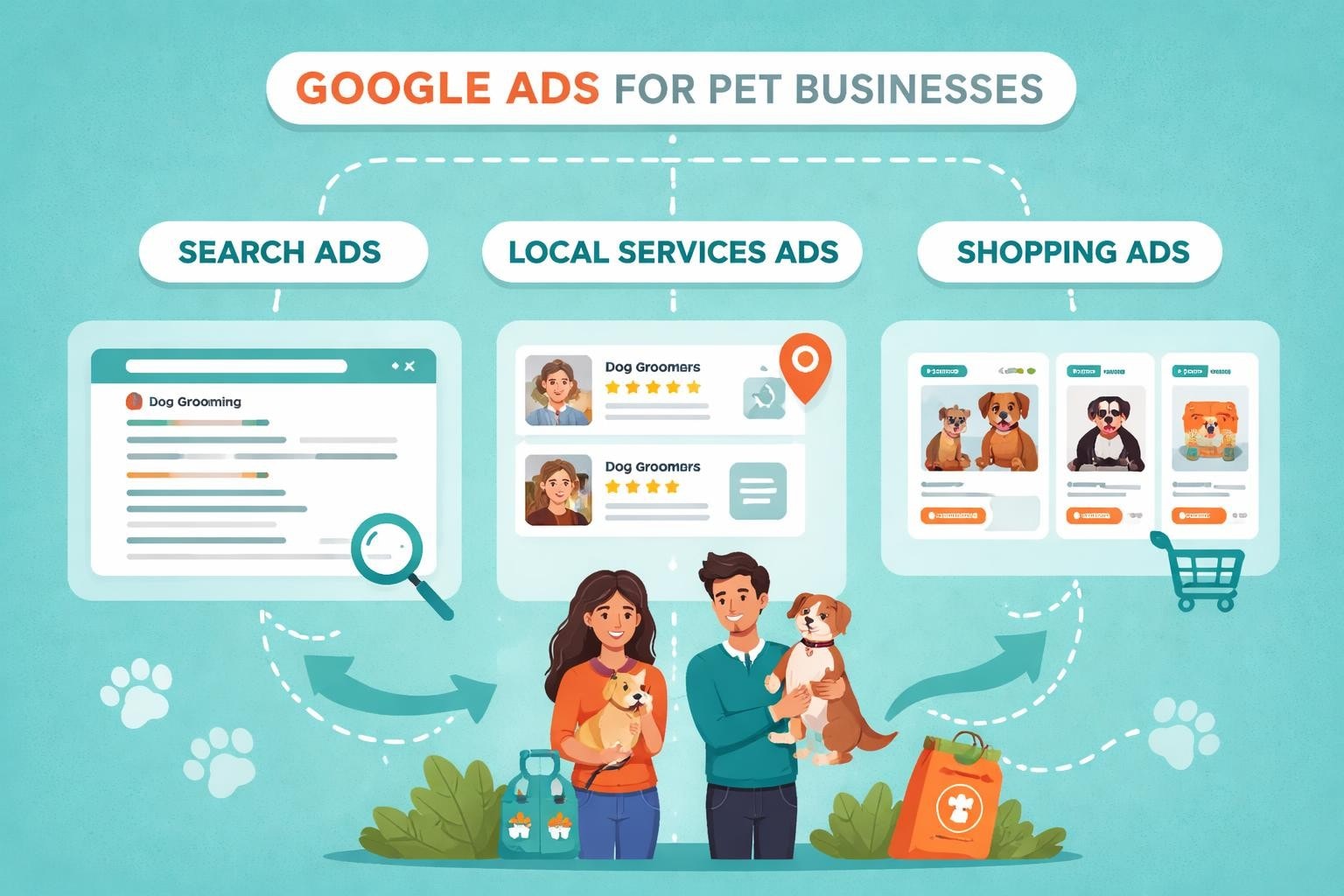
If you're a dog trainer struggling to fill your class schedule or book more private sessions, you're probably wondering if dog trainer Google Ads are worth the investment. Here's the straight answer: when done right, Google Ads can be one of the fastest ways to get in front of pet parents actively searching for your services. Unlike social media where you're interrupting someone's scroll, Google Ads puts you right in front of people who are typing "puppy training near me" or "aggressive dog trainer" into their search bar. They're already looking for help, and you're showing up exactly when they need you. Let's break down everything you need to know about running successful Google Ads campaigns for your dog training business.
Why Dog Trainer Google Ads Actually Work
Think about the last time you needed to find a local service. You probably opened Google and started searching, right? Your potential clients are doing the exact same thing when their new puppy won't stop biting or their rescue dog is reactive on leash.
The beauty of dog trainer Google Ads is that you're reaching people with high intent. These aren't casual browsers. They're pet parents who need help now, and they're willing to pay for it. According to successful case studies in the dog training industry, trainers who implement strategic Google Ads campaigns can see impressive returns on their advertising spend.
The Immediate Visibility Advantage
Unlike SEO, which can take months to show results, Google Ads can start driving traffic to your website or phone within hours of launching your campaign. This makes it especially valuable for:
- New dog training businesses that need clients quickly
- Established trainers launching new service offerings
- Seasonal promotions like puppy socialization classes
- Geographic expansion into new service areas
When you combine Google Ads with other marketing strategies for dog training businesses, you create multiple pathways for potential clients to find you.
Setting Up Your First Dog Trainer Google Ads Campaign
Let's walk through the actual setup process. Don't worry if you've never run ads before. I'm going to break this down into manageable steps that won't make your head spin.
Step 1: Define Your Campaign Goals
Before you spend a single dollar, get crystal clear on what you want to achieve. Are you trying to:
- Fill your next group class session
- Book more private consultations
- Promote a specific service like board-and-train
- Generate phone calls during business hours
Your goal will determine everything else about your campaign structure, from the keywords you choose to the ad copy you write.
Step 2: Determine Your Budget
Here's where many dog trainers get stuck. How much should you actually spend on dog trainer Google Ads?
| Budget Level | Monthly Spend | Expected Results | Best For |
|---|---|---|---|
| Starter | $300-500 | 5-10 qualified leads | Testing the waters, small service areas |
| Growth | $500-1,000 | 10-25 qualified leads | Established trainers, moderate competition |
| Competitive | $1,000-2,500+ | 25-50+ qualified leads | High competition areas, multiple services |
Start smaller and scale up once you see what's working. Remember, you only pay when someone actually clicks on your ad, which is why this is called pay-per-click advertising.
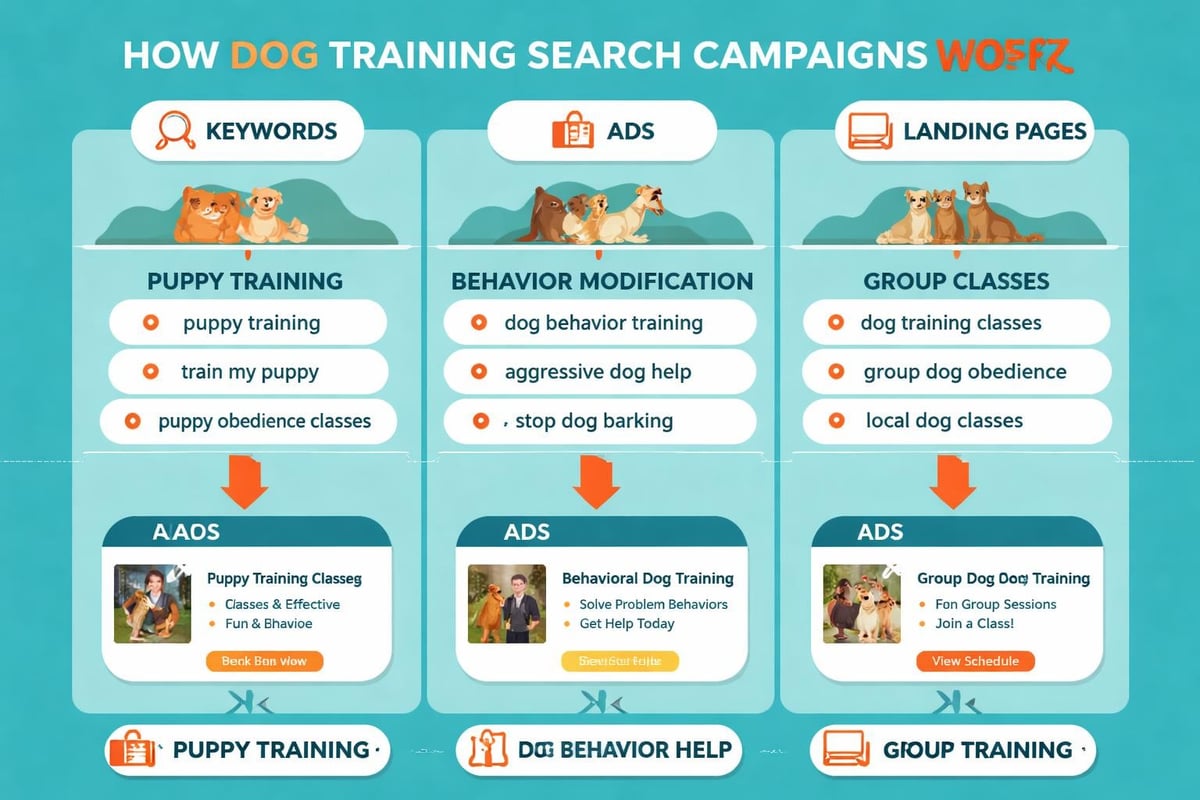
Step 3: Choose Your Keywords Strategically
Keywords are the search terms that trigger your ads to show up. For dog trainers, you want to focus on terms that indicate someone is ready to hire help, not just researching general information.
High-Intent Keywords:
- "dog trainer near me"
- "puppy training classes [your city]"
- "reactive dog trainer"
- "in-home dog training"
- "dog obedience school"
Lower-Intent Keywords to Avoid:
- "how to train a dog"
- "dog training tips"
- "free dog training videos"
Setting up an effective campaign requires balancing broad enough keywords to get impressions while staying specific enough to attract serious clients.
Step 4: Craft Compelling Ad Copy
Your ad copy is your first impression. You've got just a few lines to convince someone to click on your ad instead of your competitor's. Here's what works for dog training ads:
Headline Formula:
- Lead with the specific service: "Puppy Training Classes in [City]"
- Include a benefit: "Stop Jumping & Biting Fast"
- Add urgency or social proof: "Book Your Free Consultation"
Description Best Practices:
- Mention your credentials (CPDT-KA, years of experience)
- Address specific pain points (leash pulling, separation anxiety)
- Include a clear call-to-action
- Add location details for local relevance
Real example: "Certified Dog Trainer • 15+ Years Experience | Gentle, Positive Methods for Puppies & Adult Dogs | Serving [City] • Book Your Free Assessment Today"
Advanced Strategies That Fill Your Training Calendar
Once you've got the basics down, these strategies will help you squeeze more results from your dog trainer Google Ads budget.
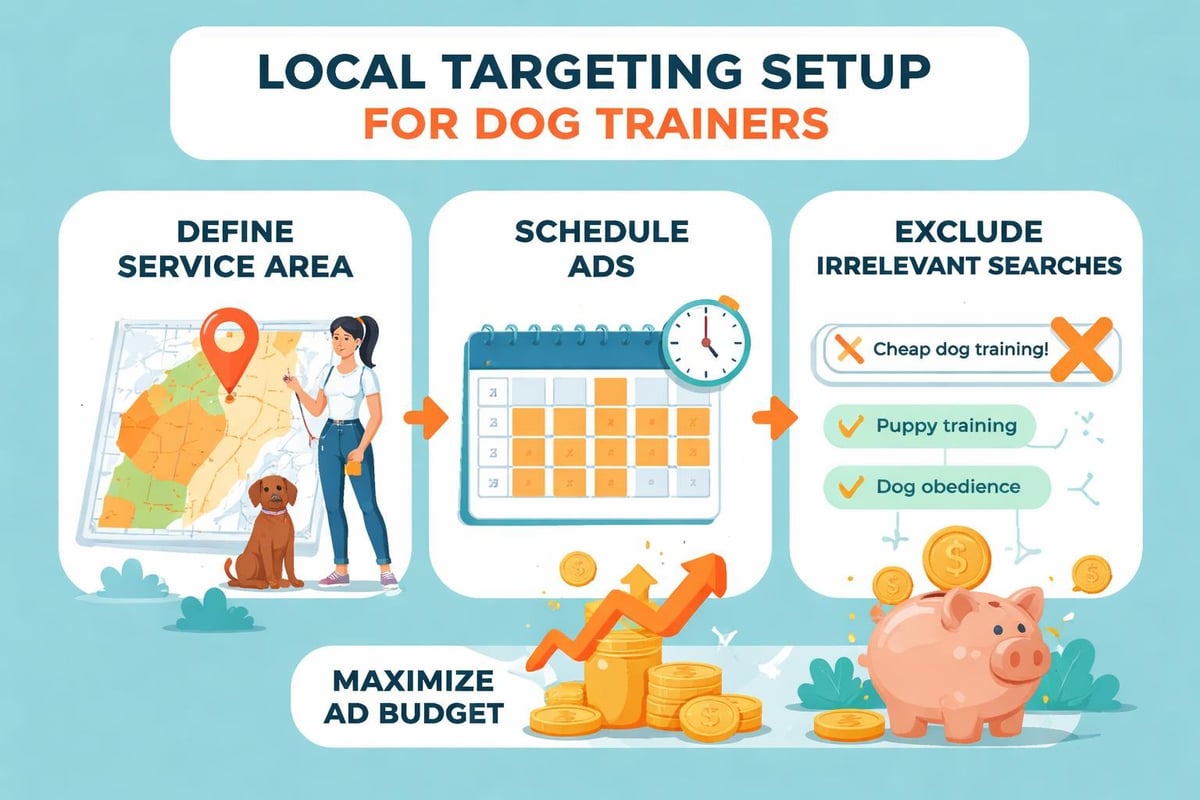
Location Targeting That Actually Makes Sense
Don't just target your entire city. Get specific about where you want to attract clients from. If you offer in-home training, you might want to focus on neighborhoods within a 15-mile radius. If you have a physical training facility, you can cast a wider net.
Pro Tips for Location Targeting:
- Use radius targeting around your business location
- Add specific zip codes where your ideal clients live
- Exclude areas you don't service to save budget
- Adjust bids higher for your most profitable service areas
Ad Scheduling for Maximum Impact
Here's something many trainers miss: three ways Google Ads can help you get more clients include smart scheduling. Why run ads at 3 AM when you can't answer your phone and most people aren't searching?
Schedule your ads to run when:
- You're available to answer phone calls
- Pet parents are most likely searching (evenings, weekends)
- Your conversion rates are historically highest
Check your data after a few weeks and adjust accordingly.
Using Ad Extensions to Stand Out
Ad extensions are free additional information that makes your ads bigger and more clickable. For dog trainers, these are essential:
- Call extensions: Add your phone number for instant calls
- Location extensions: Show your address and distance from the searcher
- Sitelink extensions: Link to specific services (puppy classes, private training, board-and-train)
- Callout extensions: Highlight certifications, guarantees, or unique selling points
Expert tips for running successful PPC campaigns emphasize that ad extensions can significantly improve your click-through rates.
Creating Landing Pages That Convert Clicks into Clients
Here's a mistake I see constantly: trainers spend money driving clicks to their homepage instead of dedicated landing pages. Your homepage tries to do everything for everyone. A landing page has one job: convert that specific visitor.
Essential Elements of a High-Converting Landing Page
Above the Fold:
- Clear headline matching the ad promise
- Compelling hero image (happy dog, training in action)
- Prominent phone number and contact form
- Trust signals (certifications, years in business)
Supporting Content:
- Brief explanation of your approach
- Client testimonials specific to the service
- Clear pricing or package information
- FAQ section addressing common objections
- Multiple conversion opportunities (form, phone, chat)
| Element | Why It Matters | Example for Dog Trainers |
|---|---|---|
| Matching message | Reduces bounce rate | Ad says "Puppy Training" = Landing page about puppy training |
| Social proof | Builds trust | "Helped 500+ dogs in [City]" |
| Clear CTA | Drives action | "Book Free Consultation" button |
| Mobile optimization | Most searches are mobile | Click-to-call button, simple form |
| Fast load speed | Keeps visitors engaged | Under 3 seconds load time |
The All Ears Digital team specializing in pet business marketing can help you create landing pages that are specifically optimized for dog trainer Google Ads campaigns.
Measuring Success and Optimizing Your Campaigns
Running dog trainer Google Ads without tracking results is like training a dog without marking desired behaviors. You need to know what's working so you can do more of it.
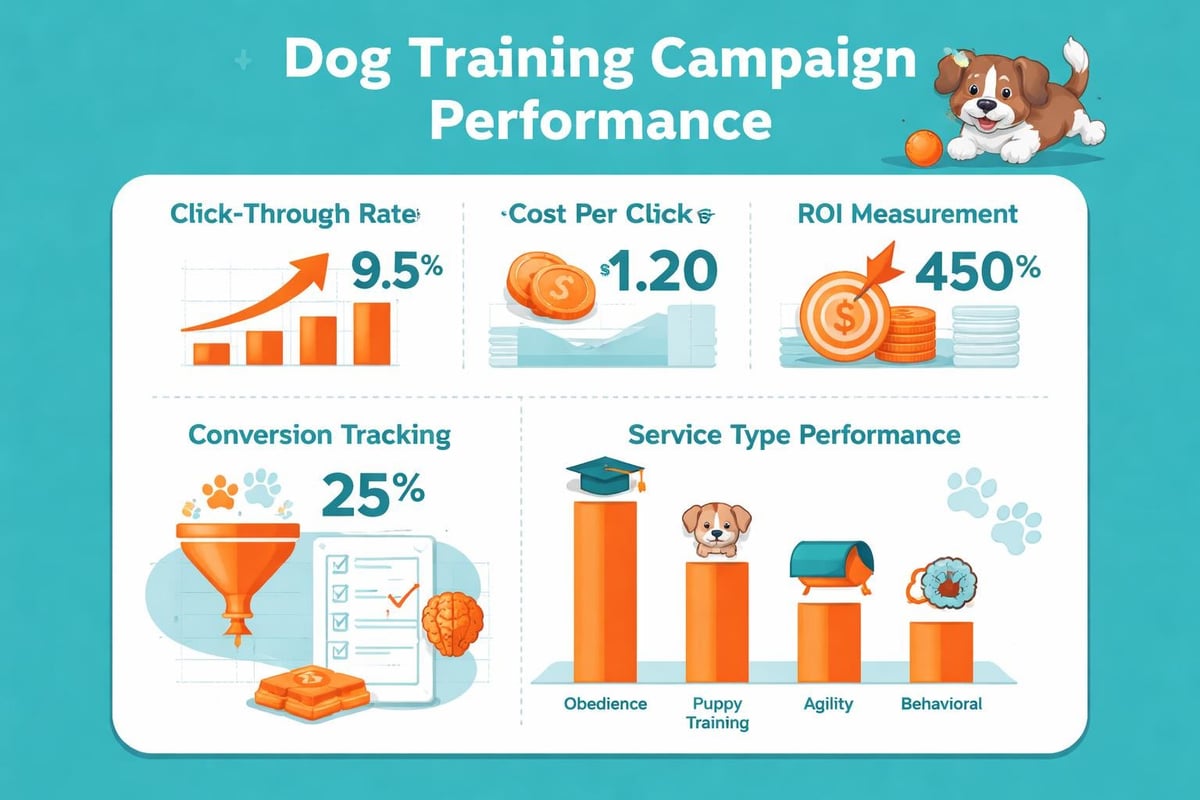
Key Metrics to Monitor
Click-Through Rate (CTR):
A good CTR for local service ads is 3-5%. If yours is lower, your ad copy might need work or your keywords are too broad.
Cost Per Click (CPC):
For dog training keywords, expect to pay $2-8 per click in most markets. Higher in competitive cities like Los Angeles or New York.
Conversion Rate:
This is the percentage of clicks that turn into actual leads. A healthy conversion rate for dog trainers is 5-15%. Lower? Look at your landing page.
Cost Per Acquisition (CPA):
How much does each new client cost you? If your average client is worth $500-1,000, a CPA of $50-100 is fantastic.
Monthly Optimization Checklist
Here's what you should review every month:
- Add negative keywords (searches you don't want to show up for)
- Pause underperforming ads (low CTR or high CPC)
- Test new ad variations (always be testing)
- Adjust bids based on performance by location, time, device
- Review search term reports to find new keyword opportunities
- Update landing pages based on conversion data
Common Mistakes That Waste Your Dog Trainer Google Ads Budget
Let me save you some money by highlighting the mistakes I see trainers make all the time.
Mistake #1: Targeting Too Broadly
Showing ads for "dog training" to people searching "how to train my dog myself" is just burning cash. They want DIY advice, not your paid services.
Fix it: Use phrase match and exact match keywords. Add negative keywords like "free," "DIY," "how to," and "YouTube."
Mistake #2: Ignoring Your Google Business Profile
Your Google Business Profile works hand-in-hand with your ads. Make sure it's complete, updated, and loaded with reviews.
When someone clicks your ad and then Googles your business name (they will), what they find matters. Poor reviews or an outdated profile will kill conversions.
Mistake #3: Not Tracking Phone Calls
If most of your clients book by phone, you're flying blind without call tracking. Google Ads offers call tracking numbers that show you exactly which keywords and ads are generating calls.
Mistake #4: Giving Up Too Soon
I get it. You run ads for two weeks, spend $200, and only get three leads. So you quit. But here's the thing: dog trainer Google Ads campaigns need time to optimize. Google's algorithm learns from your data, and you need enough clicks to see patterns.
Give it at least 60-90 days and a reasonable budget before you decide it's not working.
Mistake #5: Sending All Traffic to Your Homepage
We covered this earlier, but it's worth repeating. Your homepage confuses people. Are you offering group classes? Private training? Behavior consulting? Board-and-train?
Match your ad to a specific landing page for that service. Someone searching "puppy potty training" should land on a puppy training page, not your general homepage.
Integrating Google Ads with Your Overall Marketing Strategy
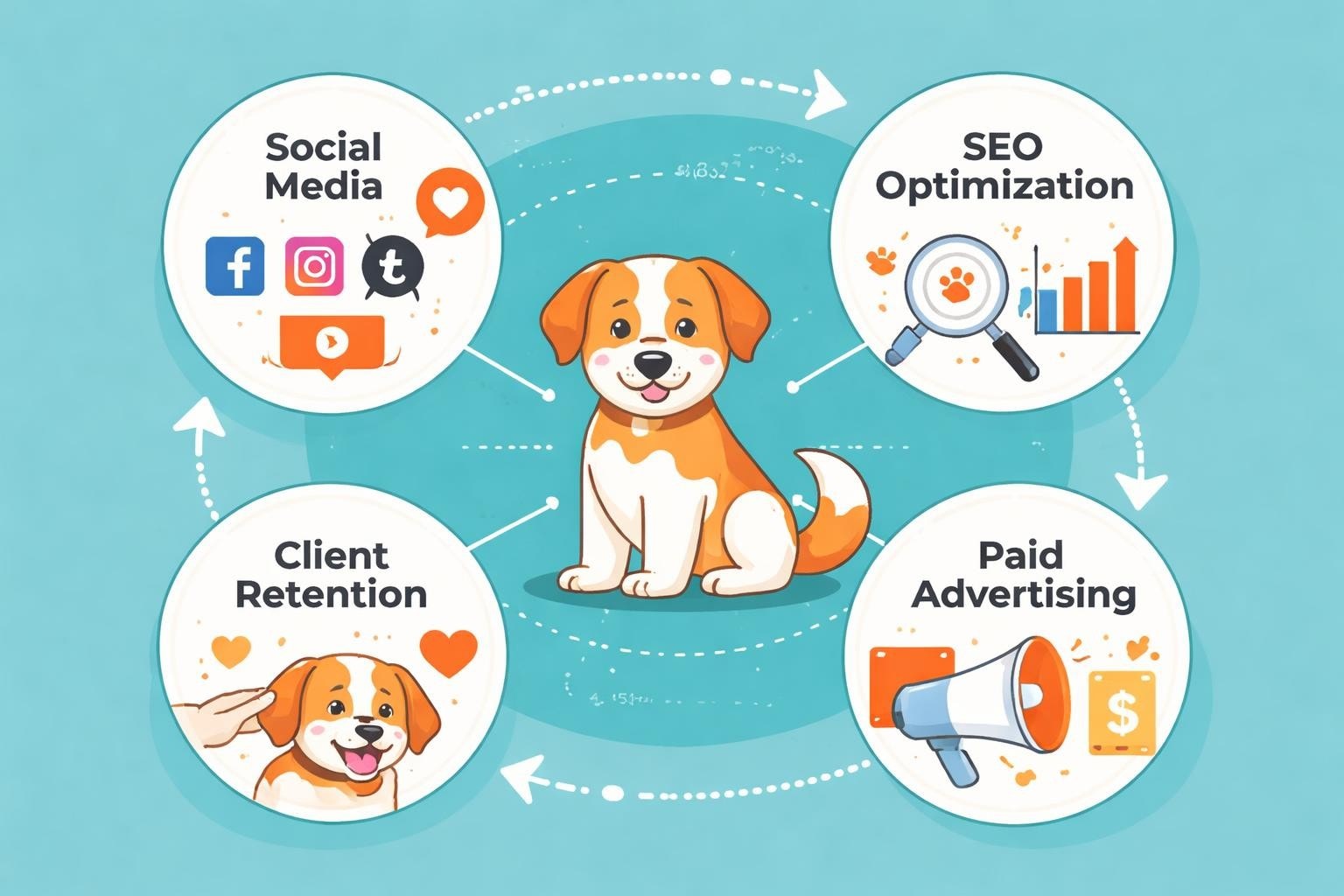
Dog trainer Google Ads work even better when they're part of a complete marketing system. Think of it like this: Google Ads is your lead generation engine, but you need other pieces to support it.
The Complete Picture:
- Google Ads: Immediate visibility for high-intent searches
- SEO: Long-term organic visibility that reduces ad dependency
- Social Media: Building relationships and showcasing your training philosophy
- Email Marketing: Nurturing leads who aren't ready to book yet
- Retargeting: Bringing back website visitors who didn't convert
For example, someone might click your ad, visit your site, but not book. With retargeting, you can show them ads on Facebook reminding them about your puppy class starting next month. Or they might find you organically through good SEO practices, then see your Google Ad later, which reinforces your credibility.
Comprehensive marketing strategies that combine paid ads with organic tactics create multiple touchpoints with potential clients.
Real-World Success Stories from Dog Trainers
Let's talk actual results. I love theory as much as the next marketing nerd, but what really matters is whether this stuff works in the real world.
Case Study 1: Suburban Trainer Fills Group Classes
A trainer in suburban Chicago was struggling to fill her group obedience classes. She was getting maybe 3-4 dogs per six-week session. After implementing targeted dog trainer Google Ads focused specifically on "group dog training" and "puppy socialization classes" in her service area, she started getting 8-12 inquiries per week. Within two months, she had a waitlist for the first time ever. Her ad spend was $450/month, and she was generating $3,000-4,000 in new class revenue.
Case Study 2: Specialized Behavior Consultant
A certified behavior consultant specializing in aggression and reactivity was tired of getting calls about basic obedience. She restructured her dog trainer Google Ads to focus exclusively on terms like "reactive dog trainer," "dog aggression specialist," and "fear-based behavior." Her cost per click went up (more specialized = more expensive), but her conversion rate skyrocketed because she was only attracting her ideal clients. Even better, these clients had higher lifetime value because behavior cases require more sessions.
Looking at successful implementation examples shows that strategic Google Ads campaigns consistently deliver measurable ROI for dog training businesses.
Budget Allocation Recommendations for Different Business Stages
Where you are in your business journey should determine how you invest in dog trainer Google Ads.
Brand New Trainers (0-6 months in business)
Recommended Budget: $300-500/month
Focus Areas:
- Very local targeting (5-10 mile radius)
- Long-tail keywords with lower competition
- Heavy emphasis on free consultations to build testimonials
- Split budget between search ads (80%) and retargeting (20%)
Growing Trainers (6 months – 2 years)
Recommended Budget: $500-1,200/month
Focus Areas:
- Expand geographic targeting as you can handle more volume
- Test different service-specific campaigns
- Implement conversion tracking and optimize for actual bookings
- Add competitor keywords (people searching for other trainers)
Established Trainers (2+ years)
Recommended Budget: $1,000-3,000+/month
Focus Areas:
- Maintain dominant visibility for core service keywords
- Test expansion into adjacent services
- Implement sophisticated retargeting strategies
- Consider display campaigns for brand awareness
- May want to work with specialized marketing agencies to maximize ROI
Seasonal Considerations for Dog Training Ads
Dog training demand isn't consistent year-round, and your dog trainer Google Ads strategy should reflect that.
Peak Seasons:
- January-February: New Year's resolutions, post-holiday puppies
- April-June: Spring puppy season, nice weather for outdoor training
- September-October: Back to routine after summer
Slower Seasons:
- July-August: Vacations, outdoor distractions
- November-December: Holidays, reduced disposable income
Adjust your budget accordingly. Increase spending 20-30% during peak months when conversion rates are higher and competition is fiercer. Reduce during slower months or shift focus to different services (like board-and-train over holidays).
Working with a Marketing Agency vs. DIY
Should you manage your dog trainer Google Ads yourself or hire help? Honest answer: it depends on your time, budget, and learning curve tolerance.
DIY Makes Sense When:
- You have 5-10 hours per month to learn and optimize
- Your budget is under $500/month
- You enjoy learning new technical skills
- You're in a less competitive market
Agency Support Makes Sense When:
- Your time is better spent training dogs than managing ads
- You're spending $1,000+/month and want expert optimization
- You want integrated marketing across multiple channels
- You're in a highly competitive market
Pet-focused agencies like All Ears Digital understand the unique challenges of marketing dog training services and can implement strategies faster than you could learn them yourself.
Running successful dog trainer Google Ads comes down to understanding your ideal clients, meeting them where they're searching, and continually optimizing based on what actually works. The trainers who succeed with paid advertising are the ones who commit to the long game, track their metrics religiously, and aren't afraid to test and adjust their approach. If you'd rather focus your time on what you do best (transforming dogs and their families) while someone else handles your marketing strategy, All Ears Digital specializes in helping pet businesses like yours attract more of the right clients through strategic ads management and comprehensive digital marketing.