Running a dog training school, doggy daycare, or grooming salon is a labor of love. But let's be real – your passion for pups doesn't automatically translate into a packed schedule and a thriving business. You need effective dog business marketing to get those tails wagging through your door. Whether you're just starting out or looking to fill more spots in your already-established business, understanding how to market to dog owners will make all the difference between struggling to fill your calendar and having a waiting list of eager clients.
Understanding Your Dog Business Marketing Foundation
Before you dive headfirst into posting cute puppy photos on Instagram (though we're definitely not saying you shouldn't), you need to understand who you're actually trying to reach. Dog business marketing isn't just about appealing to dogs – it's about connecting with the humans who make the decisions and hold the wallets.
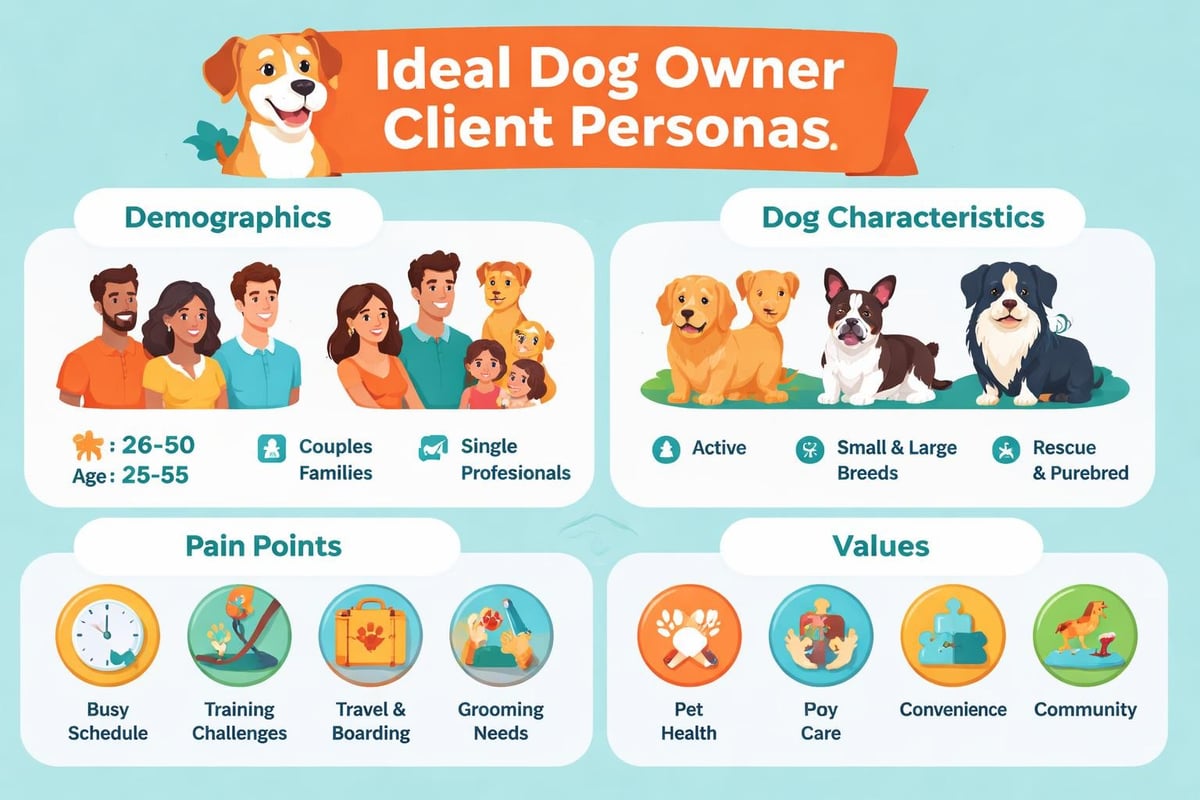
Your ideal client isn't just "anyone with a dog." Get specific. Are you targeting first-time puppy parents who need basic training? Busy professionals who need daycare for their high-energy breeds? Owners of anxious rescue dogs who need specialized behavior modification?
Here's what you need to define:
- Demographics: Age range, income level, location radius
- Dog specifics: Breeds you specialize in, dog ages, behavioral issues
- Pain points: What problems are they desperately trying to solve?
- Values: Do they prioritize force-free training, luxury amenities, or affordable options?
Once you know exactly who you're talking to, your marketing messages become so much clearer and more effective. A dog training business in Manhattan targeting busy young professionals will market very differently than a rural boarding facility catering to retirees.
Building Your Online Presence for Maximum Visibility
Your website is often the first impression potential clients get of your dog business. If it looks like it hasn't been updated since 2012 or takes forever to load on mobile, you're losing clients before they even contact you.
Essential Website Elements
Your website needs to work hard for your business. Here's what absolutely must be included:
- Clear service descriptions with pricing (or at least price ranges)
- High-quality photos of your facility, staff, and happy dogs
- Testimonials and reviews from real clients
- Easy contact methods – phone, email, and contact form
- Booking capability or clear next steps
Think about Pawsitive Pups Training in Austin, Texas. They revamped their website in 2025 to include video testimonials from clients, before-and-after training clips, and an online booking system. Their inquiry rate jumped 47% in just three months because potential clients could immediately see results and take action.
Local SEO: Your Secret Weapon
Most dog owners search for services near them. "Dog training near me" or "dog grooming in [city]" are incredibly common searches. Optimizing for local search can put your business right at the top when someone in your area is actively looking for what you offer.
| Local SEO Task | Impact Level | Time Investment |
|---|---|---|
| Google Business Profile optimization | High | 2-3 hours initially |
| Local directory listings (Yelp, etc.) | Medium | 3-4 hours |
| Location-based keywords on website | High | 4-6 hours |
| Client reviews collection | High | Ongoing |
| Local content creation | Medium | Weekly effort |
Make sure your Google Business Profile is completely filled out with accurate hours, services, photos, and regular updates. Encourage happy clients to leave reviews – they're gold for local rankings and building trust.
Social Media Marketing That Actually Works
You don't need to be on every single social platform. Pick one or two where your target audience actually hangs out and do them really well.
Instagram and Facebook are typically the sweet spots for dog business marketing. Dog content performs incredibly well on these platforms because, well, everyone loves dogs. But here's the thing – you can't just post random cute photos and expect bookings to roll in.
Content Strategy That Converts
Your social media should accomplish specific goals:
- Build trust and demonstrate expertise
- Showcase your personality and approach
- Highlight real results and transformations
- Stay top-of-mind with your audience
- Give people shareable content that extends your reach
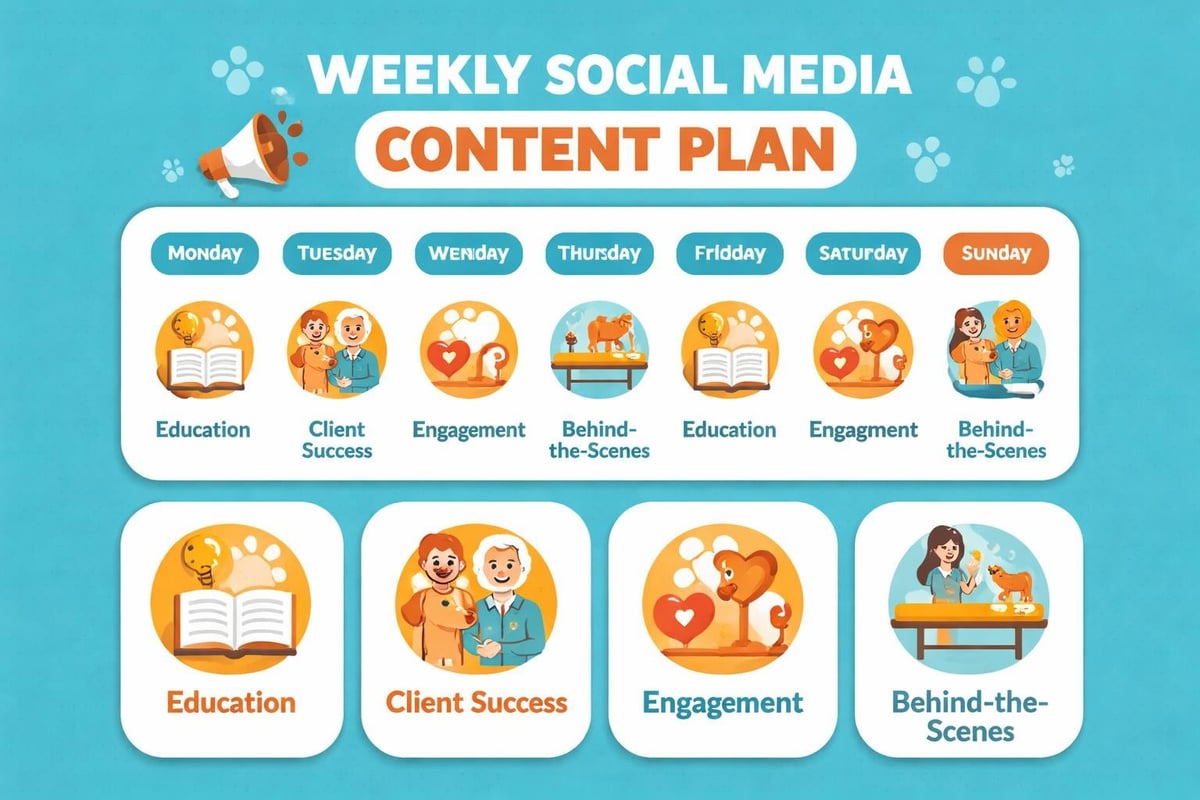
Mix up your content types to keep things interesting:
- Educational content – Quick training tips, myth-busting, Q&A
- Behind-the-scenes – Daily operations, meet the staff, facility tours
- Client spotlights – Success stories and transformations
- User-generated content – Repost client photos (with permission)
- Engagement posts – Questions, polls, "caption this" posts
Take Bark Avenue Daycare in Portland as an example. They post a "Transformation Tuesday" feature every week showing dogs who were nervous on their first day versus a few months later, completely comfortable and having a blast. These posts consistently get high engagement and shares, bringing in new client inquiries.
Leveraging Reviews and Testimonials
Nothing sells your dog business better than happy clients singing your praises. Gathering client testimonials and showcasing success stories builds trust faster than any marketing copy you could write yourself.
The challenge? Most satisfied clients won't leave reviews unless you make it really easy and ask at the right time.
Here's a simple system that works:
- Perfect timing: Ask right after a positive experience (successful training milestone, great daycare report, beautiful grooming results)
- Make it easy: Send a direct link to your Google Business Profile or preferred review platform
- Provide guidance: Tell them what would be helpful to mention (specific services, results, what they appreciated)
- Show appreciation: Thank everyone who leaves a review, whether it's glowing or constructive
- Display prominently: Feature your best reviews on your website and social media
Don't be shy about this. Your reviews help other dog owners make confident decisions about trusting you with their beloved pets.
Paid Advertising for Faster Growth
Organic marketing is fantastic for long-term growth, but PPC advertising campaigns can accelerate your results when you need to fill spots quickly or launch a new service.
Google Ads for Dog Businesses
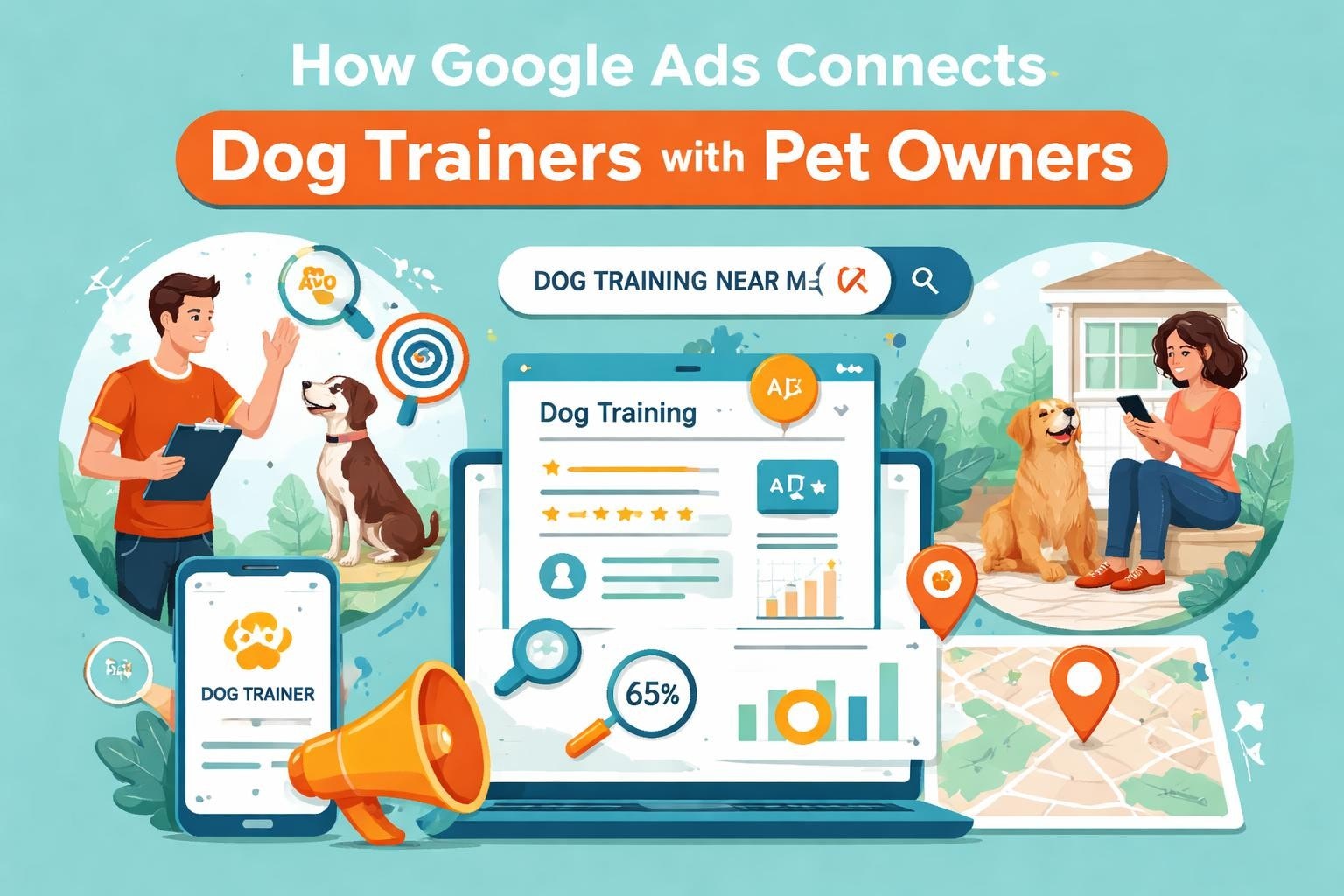
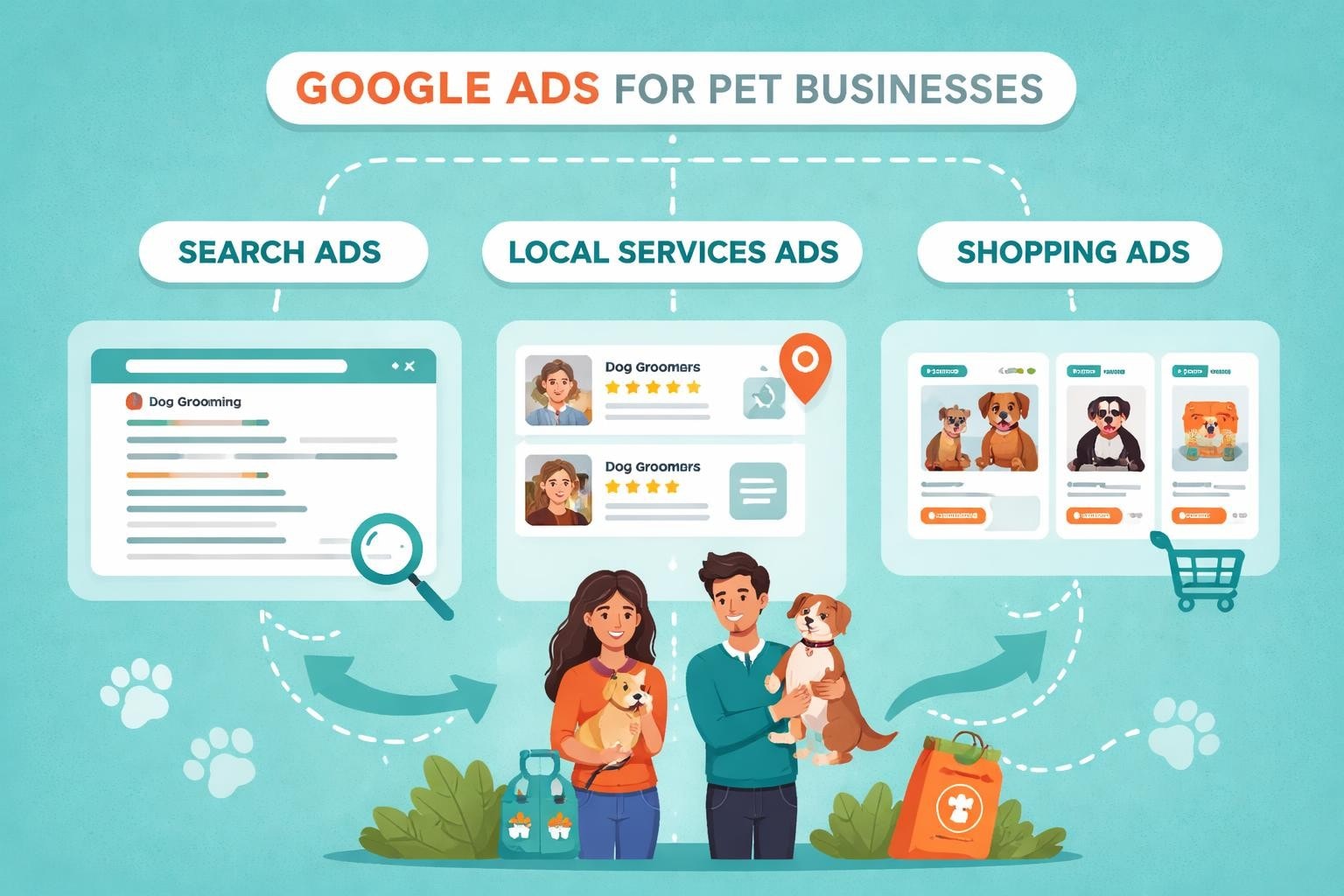
Google Ads work beautifully for dog business marketing because people are actively searching for your services. When someone types "puppy training classes in [your city]," your ad can appear right at the top of results.
Budget wisely. Start small – even $10-15 per day can generate leads in many markets. Track everything ruthlessly. You need to know:
- Cost per click
- Cost per lead
- Lead-to-client conversion rate
- Lifetime value of a client
If a client is worth $800 over their lifetime and it costs you $50 in ads to acquire them, that's a fantastic return on investment.
Facebook and Instagram Ads
These platforms excel at targeting specific demographics and interests. You can target dog owners in your service area based on their interests, behaviors, and even life events (like recently getting a puppy).
| Ad Type | Best For | Typical Cost |
|---|---|---|
| Google Search Ads | High-intent searches | $2-8 per click |
| Facebook Lead Ads | Building email list | $3-10 per lead |
| Instagram Story Ads | Brand awareness | $0.50-3 per click |
| Retargeting Ads | Converting website visitors | $1-4 per click |
The visual nature of these platforms works perfectly for showcasing your facility, happy dogs, and before-and-after transformations.
Email Marketing That Keeps Clients Coming Back
Everyone talks about getting new clients, but keeping existing ones is way more profitable. Email marketing helps you stay connected with past and current clients without being pushy or annoying.
Build your email list by offering something valuable:
- Free training tip guide
- Puppy preparation checklist
- Discount on first service
- Access to exclusive content
Then send regular emails that provide value, not just sales pitches. A monthly newsletter with training tips, dog health information, and updates about your business keeps you top-of-mind. When their situation changes or they need a service, you're the first business they think of.
Segmentation is your friend. Daycare clients need different content than training clients. Puppy parents have different needs than senior dog owners. Tailor your messages accordingly.
Community Engagement and Local Partnerships
Dog business marketing extends beyond digital channels. Your local community is full of opportunities to connect with potential clients face-to-face.
Community Involvement Ideas
- Sponsor local dog events – 5K fun runs, adoption events, breed club meetups
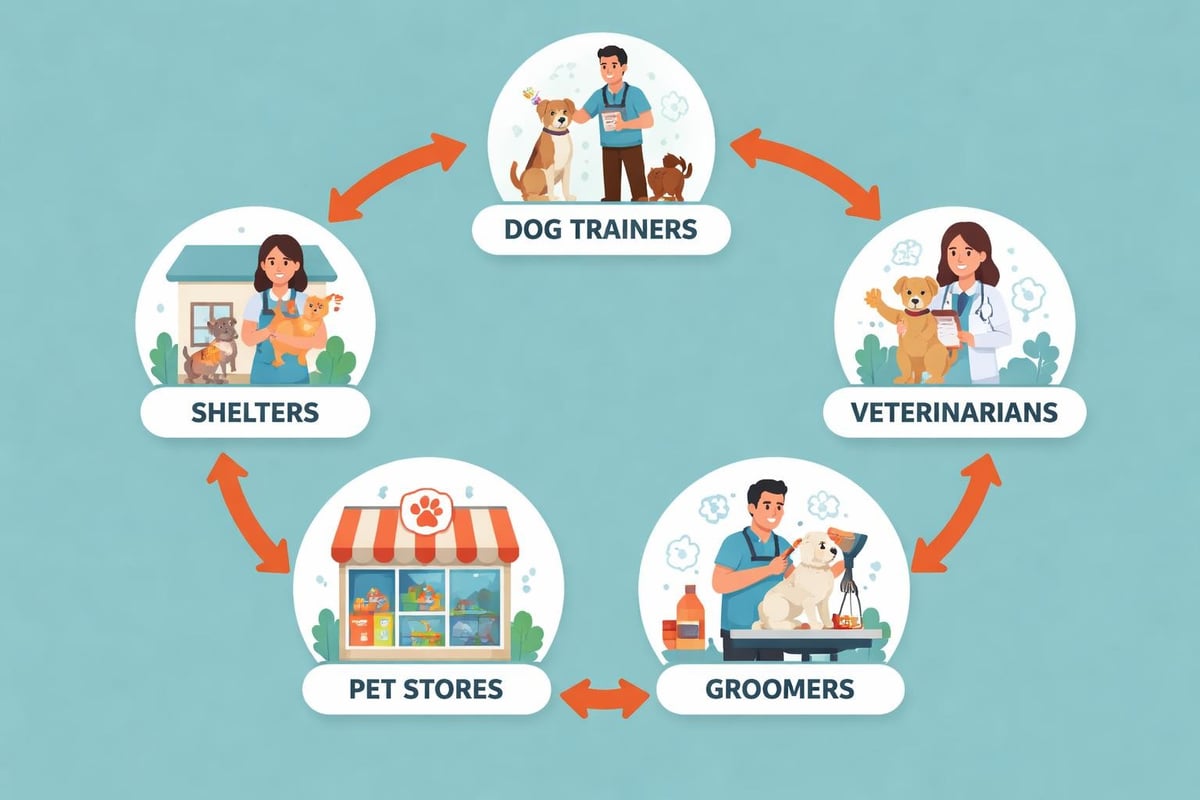
- Partner with complementary businesses – Veterinarians, pet stores, dog-friendly cafes
- Host educational workshops – Free seminars on common dog behavior issues
- Participate in community events – Farmers markets, street fairs, school events
- Support local shelters – Offer discounted services for rescue dogs
Happy Tails Training in Denver partners with three local veterinary clinics who refer new puppy owners for basic training classes. In return, Happy Tails recommends those vets to all their clients. It's a win-win relationship that creates valuable connections in the local pet business community.
Content Marketing to Establish Authority
Creating valuable content positions you as the expert in your area. When dog owners search for information and consistently find helpful answers from you, you become their trusted resource – and eventually, their service provider.
Blog about topics your clients care about:
- "5 Signs Your Puppy Needs Professional Training"
- "How to Choose the Right Daycare for Your High-Energy Dog"
- "Common Grooming Mistakes That Damage Your Dog's Coat"
- "Preparing Your Anxious Dog for Their First Boarding Experience"
Each piece of content should genuinely help your reader while naturally demonstrating your expertise. Link to your services where relevant, but focus on being helpful first.
Video content performs especially well in the pet industry. Simple videos showing training techniques, facility tours, or answering common questions can be repurposed across your website, YouTube, social media, and email newsletters.
Tracking Results and Adjusting Your Strategy
Here's where a lot of dog business owners drop the ball – they try marketing tactics but never actually measure what's working. You can't improve what you don't measure.
Key Metrics to Track
For all dog business marketing efforts, monitor:
- Website traffic and where it comes from
- Conversion rate (visitors to inquiries to bookings)
- Cost per acquisition for each marketing channel
- Client lifetime value
- Return on investment for paid advertising
Set up Google Analytics on your website (it's free) and use tracking tools for your social media and advertising platforms. Review your numbers monthly and adjust your strategy based on what the data tells you.
If Instagram is generating tons of engagement but zero bookings, maybe those followers aren't in your service area or you need clearer calls-to-action. If Google Ads are expensive but converting well, perhaps reallocate budget from underperforming channels.
Seasonal Marketing Opportunities
The dog business has natural seasonal fluctuations. Smart marketing means anticipating these patterns and planning accordingly.
Peak seasons and marketing angles:
- January-February: New Year's resolutions, new puppy season begins
- March-April: Spring training before summer activities
- May-June: Vacation boarding season, summer camp programs
- July-August: Peak vacation season, back-to-school prep for dogs home alone
- September-October: Fall training sessions, holiday boarding prep
- November-December: Holiday boarding, gift certificates, New Year promotions
Plan your marketing campaigns at least two months ahead of these peak seasons. When everyone else is scrambling in June to fill July boarding spots, you've already been marketing for weeks and your calendar is full.
Creating Referral Programs That Work
Your happiest clients are your best marketers. Make it easy and rewarding for them to spread the word about your dog business.
Simple referral program structure:
- Current client refers a friend who books a service
- Referring client gets $25 off their next service
- New client gets $15 off their first service
- Everyone wins
Track referrals carefully and thank clients who send people your way. Some businesses find that offering service credits works better than cash discounts – it encourages the referrer to come back and use their reward.
Golden Paws Daycare in Chicago credits $30 to any client who refers someone who completes their first month. They've built 30% of their business through referrals alone because they made the program generous and super simple to understand.
Mobile Marketing and Accessibility
Over 60% of local searches happen on mobile devices. If your website isn't mobile-friendly, you're literally turning away more than half your potential clients.
Beyond mobile-responsive design, consider:
- Click-to-call buttons prominently displayed
- Text message booking confirmations and reminders
- Mobile-friendly online booking system
- Fast page load speeds (compress those dog photos!)
- Easy-to-tap buttons and links
Test your website on your own phone regularly. If you find anything frustrating or difficult, your clients definitely do too.
Developing a Consistent Brand Voice
Your brand voice is how your business "sounds" across all your dog business marketing – from your website copy to social media posts to how your staff answers the phone.
Are you professional and knowledgeable? Warm and family-oriented? Fun and playful? Luxury and sophisticated? Your brand voice should reflect your actual personality and resonate with your ideal clients.
Consistency matters. When everything from your logo colors to your email signature to your staff uniforms feels cohesive, people remember you. They also trust you more because consistency signals professionalism and attention to detail.
Dog business marketing doesn't have to be overwhelming or require a massive budget. Start with the fundamentals – a solid website, active presence on one or two social platforms, encouraging reviews, and getting involved in your community. As you grow, you can layer in more sophisticated marketing strategies like paid advertising and email campaigns. The key is consistency and actually measuring what works for your specific business. If you're ready to take your dog business marketing to the next level but aren't sure where to start, All Ears Digital specializes in helping pet businesses just like yours attract more clients and grow sustainably through strategic marketing, from SEO and social media to website design and advertising management.