Running a pet business means you're competing for attention every single day. Pet parents are searching online for groomers, vets, dog walkers, pet supplies, and training services right now. If your business isn't showing up in those crucial moments, you're missing out on customers who are ready to book or buy. That's where pet business Google Ads come into play, giving you the power to appear exactly when potential clients are looking for what you offer.
Why Pet Business Google Ads Actually Work
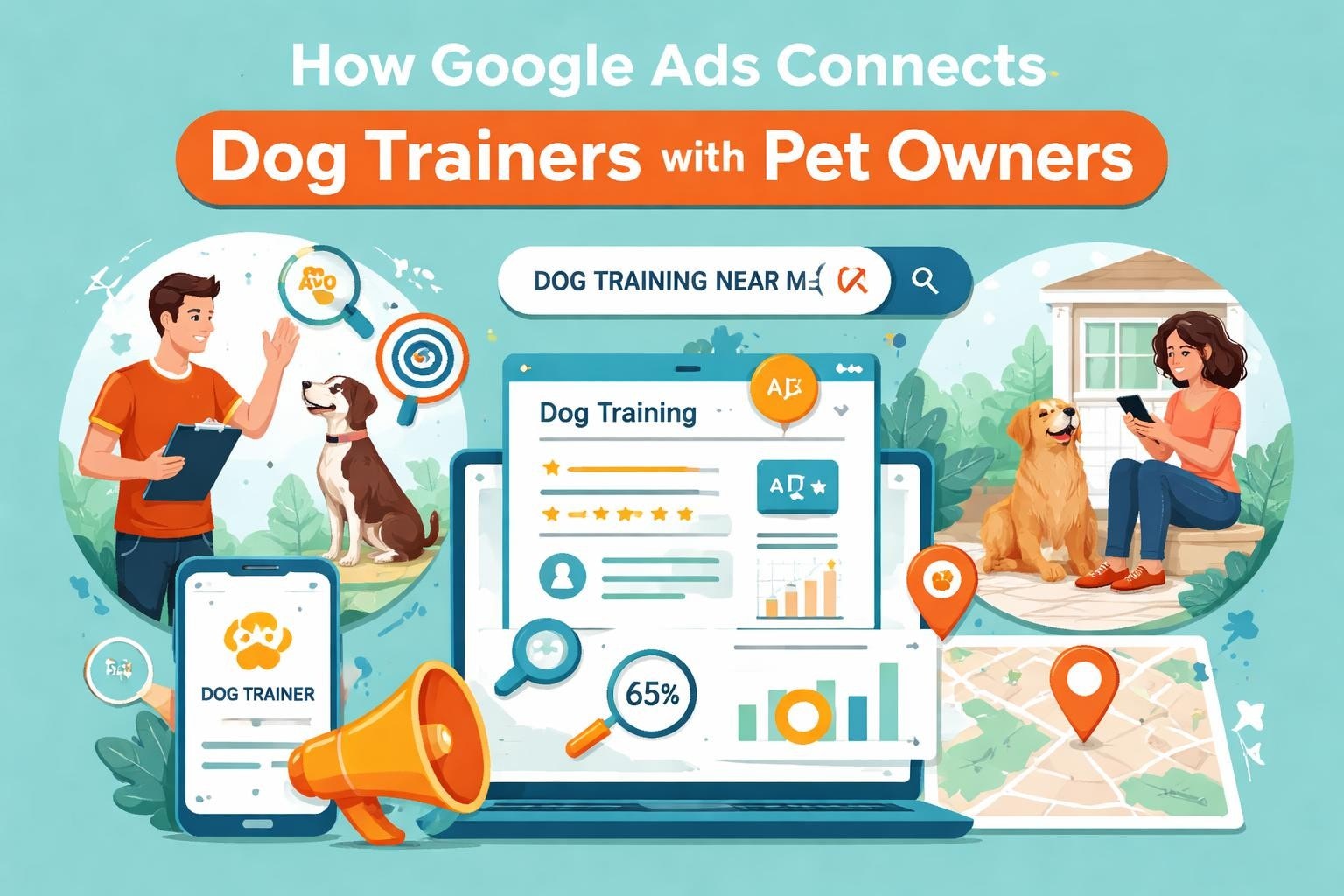
Unlike posting on social media and hoping someone sees it, Google Ads puts your business directly in front of people actively searching for pet services. When someone types "dog groomer near me" or "emergency vet in Seattle," they're not casually browsing, they need help now.
This intent-driven approach makes Google Ads incredibly powerful for pet businesses. You're not interrupting someone's day with an ad they didn't ask for. You're showing up as the solution to their problem.
The Numbers Don't Lie
Pet businesses using Google Ads strategically see real results. Two veterinary hospitals crushing Google Ads saw dramatic increases in clicks, calls, and actual appointments. One clinic went from struggling to fill their schedule to having a waitlist for new clients.
The key is understanding that pet business Google Ads work differently than other industries. Pet parents are emotional decision-makers who want to feel confident about the businesses they choose. Your ads need to speak to both their practical needs and their desire to give their furry family members the best care possible.
Setting Up Your First Pet Business Google Ads Campaign
Starting with Google Ads doesn't have to be overwhelming. Here's exactly how to get your first campaign running:
Step 1: Define Your Goal
What do you actually want to happen? Common goals for pet businesses include:
- Phone calls for appointments (groomers, vets, trainers)
- Website visits for e-commerce stores
- Direction requests to your physical location
- Form submissions for consultations
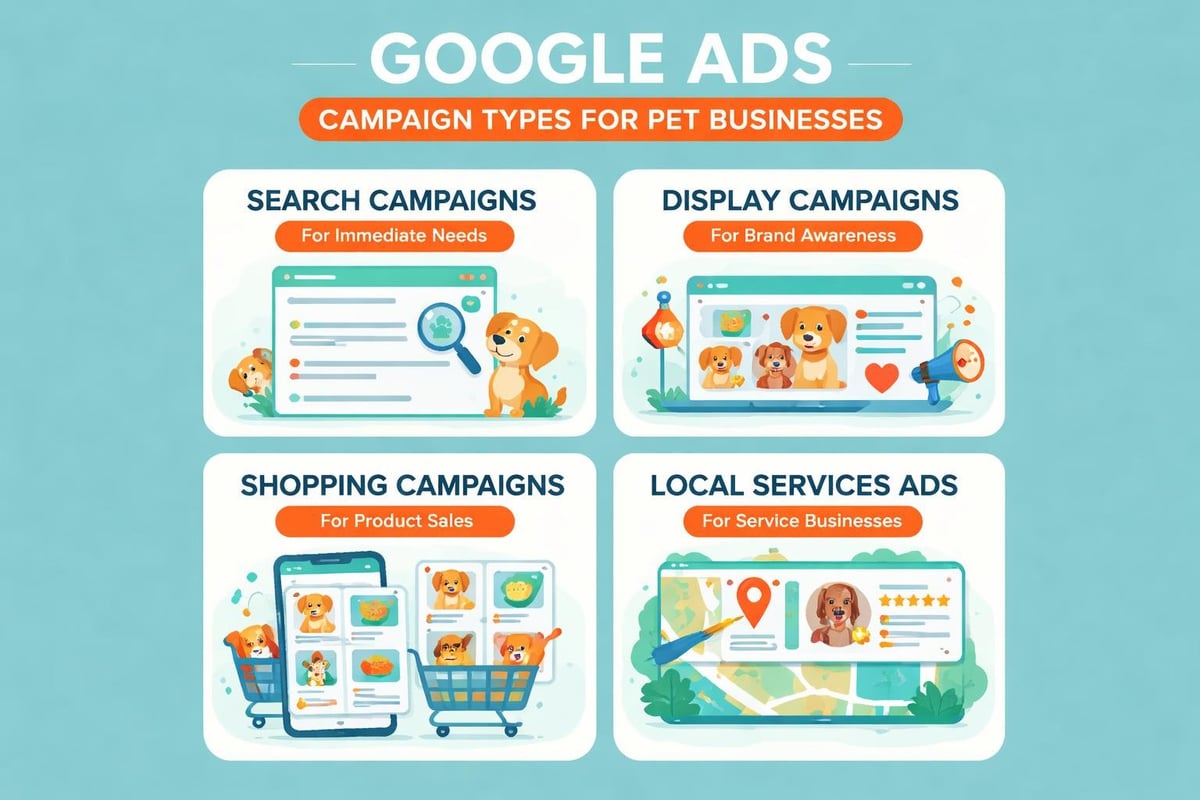
Step 2: Choose Your Campaign Type
Google offers several campaign types, and picking the right one matters:
| Campaign Type | Best For | Example Pet Business |
|---|---|---|
| Search Ads | Service-based businesses | Veterinary clinics, groomers, dog walkers |
| Shopping Ads | Product sellers | Pet supply stores, custom pet products |
| Local Services Ads | Licensed professionals | Vets, pet sitters, trainers |
| Display Ads | Brand awareness | New pet businesses, pet product launches |
For most pet service providers, starting with Search Ads or Google Local Services Ads makes the most sense. These capture people actively looking for what you offer.
Step 3: Build Your Keyword List
Think like a pet parent. What would they type into Google? Here are real examples:
- "Dog grooming [your city]"
- "Emergency vet near me"
- "Puppy training classes"
- "Cat boarding rates"
- "Mobile dog groomer"
Don't overthink this. Start with 10-15 keywords that directly describe your services. You can always expand later.
Step 4: Write Ads That Connect
Your ad copy needs to stand out. Pet parents see dozens of ads every day. What makes yours different?
Good pet business Google Ads include:
- Specific services (not just "pet care")
- Trust signals (licensed, insured, certified)
- Emotional language (family, love, care)
- Clear calls to action (Book Now, Call Today, Shop Now)
Step 5: Set Your Budget
Here's where it gets real. How much should you spend? A useful starting point is $500-$1,000 per month for local service businesses. E-commerce pet stores might need $1,500-$3,000 to see meaningful results.
Remember, you're not spending this money blindly. You're paying to put your business in front of people who are searching for exactly what you sell.
Advanced Strategies for Pet Business Google Ads Success
Once you've got the basics down, these strategies can take your campaigns from good to great.
Location Targeting That Makes Sense
Most pet service businesses serve specific geographic areas. A dog walker in Portland doesn't need ads showing in Miami. Set your location radius based on how far you're willing to travel or ship.
For brick-and-mortar pet stores, try targeting a 10-15 mile radius around your location. Mobile services like groomers or trainers might expand to 25-30 miles. The strategies to supercharge custom pet products sales show how product-based businesses can target nationally while still focusing on high-converting areas.
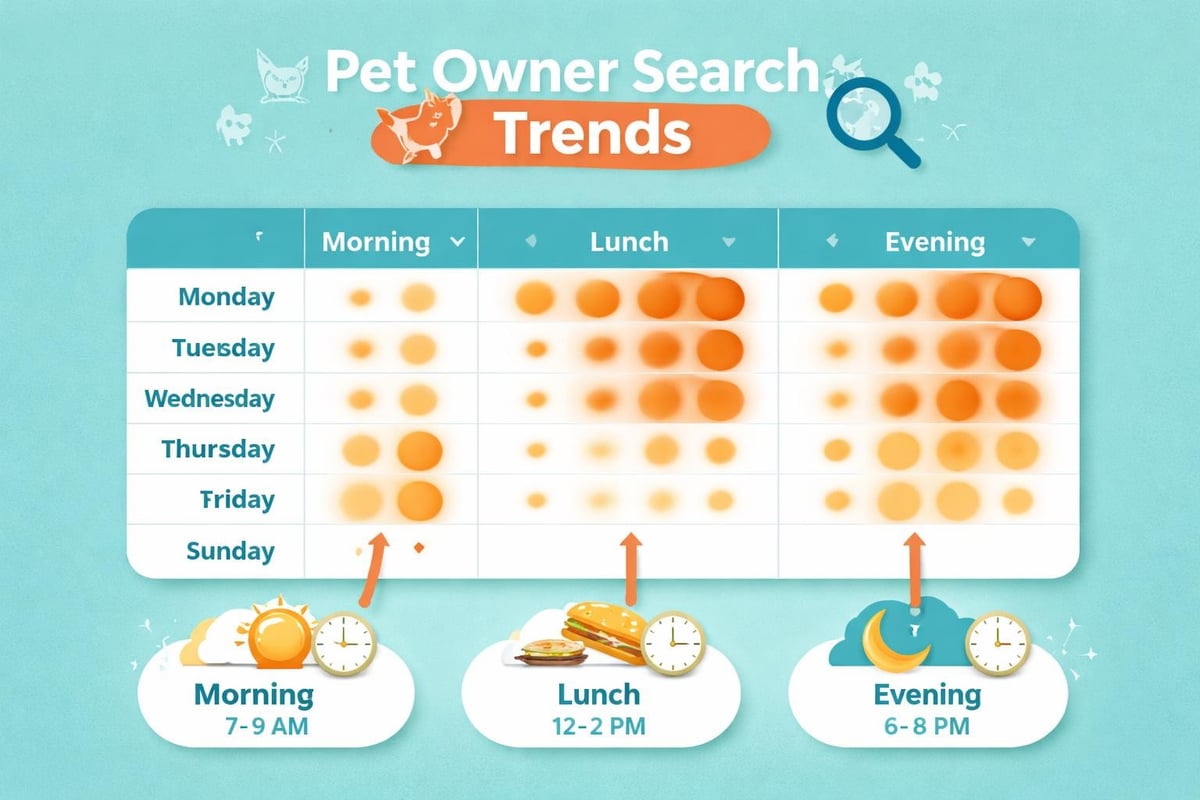
Dayparting for Better Results
When are pet parents searching? Probably not at 3 AM (unless it's an emergency vet search). Most pet service searches happen:
- Morning (7-9 AM): Before work
- Lunch (12-1 PM): Quick break browsing
- Evening (5-8 PM): Planning for the week
Adjust your ad schedule to show more during these peak times. Your budget goes further when you're visible during high-intent moments.
Negative Keywords Save Money
This is huge. Negative keywords prevent your ads from showing for irrelevant searches. If you're a premium dog groomer charging $75 per session, you don't want ads showing for "cheap dog grooming" or "free dog wash."
Common negative keywords for pet businesses:
- Free
- DIY
- Jobs
- Salary
- Wholesale (unless you sell wholesale)
- Volunteer
Adding these saves you from paying for clicks that will never convert.
Real Pet Business Google Ads Success Stories
Let's look at actual results from businesses just like yours.
The Pet Tech Company That Slashed Costs
A pet tech company using Google Ads reduced their customer acquisition cost by 58.41% while increasing revenue by nearly 50%. How? They focused on high-intent keywords, improved their landing pages, and ruthlessly cut keywords that didn't convert.
Their biggest lesson: not all clicks are created equal. They'd rather have 100 highly qualified clicks than 500 random visitors.
The Pet Supplies Store That Doubled Revenue
One pet supplies company doubled their revenue in 90 days using Performance Max Shopping Ads. The secret? They optimized their product feed with detailed descriptions, high-quality photos, and specific category tags.
For e-commerce pet businesses, product feed quality matters more than most people realize. Google needs to understand what you're selling to show your products to the right people.
What You Can Learn From These Wins
Notice a pattern? Success with pet business Google Ads comes down to three things:
- Targeting the right people (not just anyone with a pet)
- Creating relevant ads and landing pages (matching what people searched for)
- Continuously optimizing (cutting what doesn't work, investing more in what does)
Common Mistakes Pet Businesses Make With Google Ads
Even experienced business owners mess these up. Avoid these pitfalls and you're already ahead of most competitors.
Mistake 1: Sending Everyone to Your Homepage
Your homepage tries to do everything, which means it does nothing particularly well. When someone clicks an ad for "cat boarding," they should land on a page specifically about cat boarding, not your general homepage where they have to hunt for information.
Mistake 2: Ignoring Mobile Users
Over 60% of pet-related searches happen on mobile devices. If your website isn't mobile-friendly, you're wasting money. People will click your ad, get frustrated with a slow or hard-to-navigate site, and leave.
Mistake 3: Setting and Forgetting
Google Ads isn't a crockpot. You can't just set it and walk away for six months. Successful campaigns require weekly monitoring at minimum. Check what's working, pause what's not, and adjust based on actual performance data.
Mistake 4: Competing on Brand Names
Unless you have deep pockets, don't bid on competitor names. Focus on service-based keywords where you can actually win. A small dog grooming business doesn't need to compete with PetSmart's billion-dollar ad budget.
Budget Breakdown for Different Pet Business Types
How much you need to spend depends entirely on what you're selling and where you're located. Here's a realistic breakdown:
| Business Type | Recommended Monthly Budget | Expected Results |
|---|---|---|
| Local grooming salon | $500-$800 | 15-30 new client inquiries |
| Veterinary clinic | $1,000-$2,000 | 30-60 appointment requests |
| Pet supply e-commerce | $2,000-$5,000 | $6,000-$15,000 in revenue |
| Dog training services | $600-$1,200 | 20-40 consultation requests |
| Pet sitting/boarding | $800-$1,500 | 25-50 booking inquiries |
These are starting points, not guarantees. Your actual results depend on competition in your area, your website quality, your pricing, and how well you convert inquiries to customers.
A helpful approach from All Ears Digital’s content marketing services is to align your ad spend with your lifetime customer value. If a new grooming client is worth $500 over their lifetime, spending $50 to acquire them makes perfect sense.
Measuring What Actually Matters
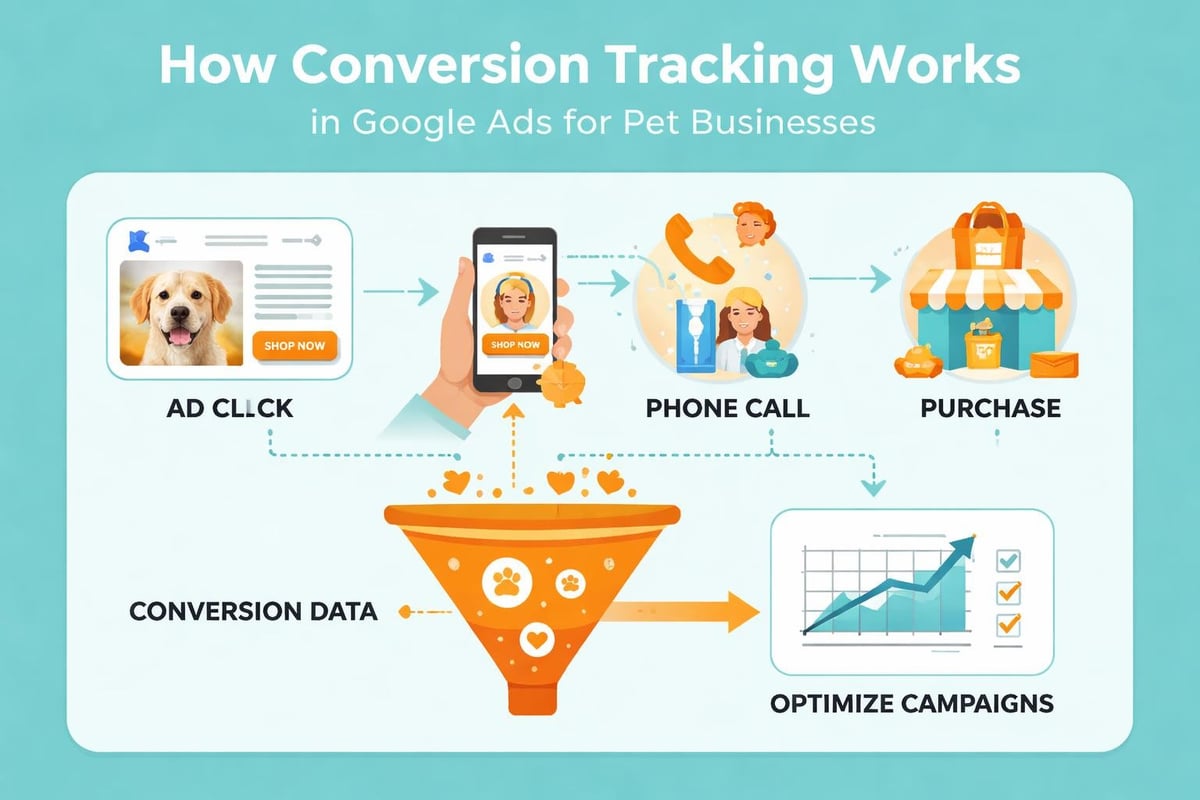
Clicks are nice, but they don't pay your rent. Here's what to actually track with your pet business Google Ads:
For Service Businesses:
- Phone calls
- Form submissions
- Direction requests
- Appointment bookings
For E-commerce:
- Add to cart rate
- Purchase conversion rate
- Revenue per click
- Return on ad spend (ROAS)
Set up conversion tracking from day one. This tells Google which clicks lead to actual business, allowing the algorithm to find more people like your best customers.
Seasonal Strategies for Pet Businesses
Pet businesses have seasonal rhythms. Boarding facilities get slammed during holidays. Grooming picks up before summer. Training classes surge in January when people get new puppies.
Plan your Google Ads budget around these patterns:
High Season (Increase Budget 30-50%):
- Boarding: Thanksgiving, Christmas, spring break, summer
- Grooming: May-July, pre-holidays
- Training: January-March, September-October
- Pet supplies: Year-round with spikes around holidays
Low Season (Decrease Budget or Focus on Other Marketing):
- January-February for most services
- Back to school for pet sitters
- Deep winter for outdoor services
Working with a specialized pet marketing team helps you anticipate these patterns and adjust spending before you miss opportunities or waste money during slow periods.
Integration With Your Other Marketing
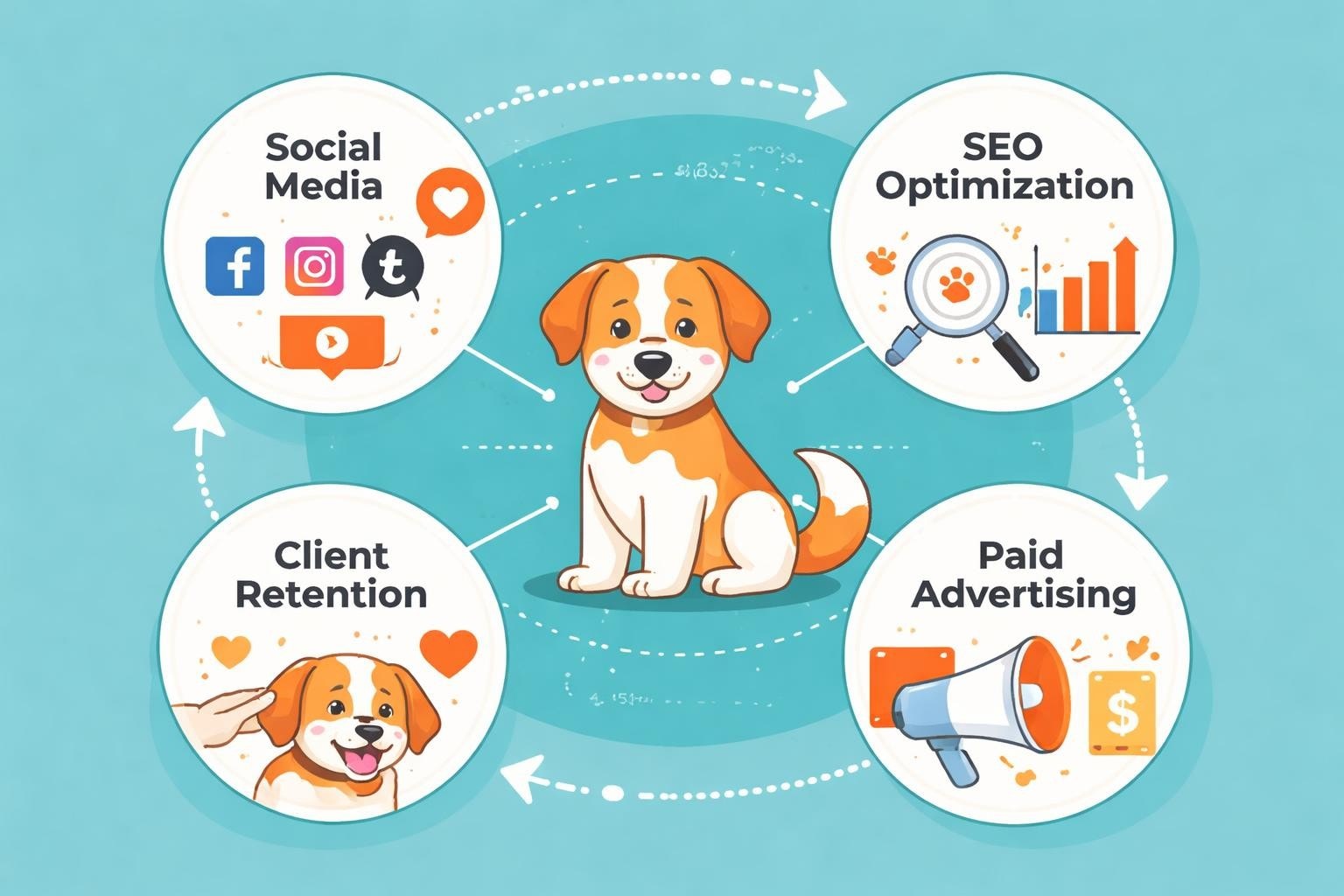
Google Ads shouldn't exist in a vacuum. The pet businesses seeing the best results combine paid search with organic strategies.
Here's how they work together:
Content Marketing + Google Ads
Create helpful blog posts about common pet parent questions. When those rank organically, they reduce your need for paid ads on informational keywords. Use ads for high-intent commercial searches instead.
Social Media + Google Ads
Social media builds awareness and trust. Google Ads captures people who are ready to buy or book. Someone might discover you on Instagram, then search for your business name on Google weeks later. Your ad appears, reminding them you exist.
SEO + Google Ads
Yes, you should do both. They complement each other beautifully. Ranking organically builds credibility. Having an ad above those organic results gives you double visibility and screams "legitimate business."
Getting Help With Your Pet Business Google Ads
Managing Google Ads effectively takes time and expertise. Many pet business owners start DIY, realize it's more complex than expected, and eventually bring in help.
Signs you might need professional management:
- You're spending $1,000+ per month with mediocre results
- You don't have time to check campaigns weekly
- You're not sure what metrics to track
- Your cost per lead is higher than you can afford
- You want to scale but don't know how
PPC services for pet product retailers and specialized agencies focusing on pet businesses understand the unique challenges of this market. They know what works, what doesn't, and how to avoid expensive mistakes.
The right content marketing manager can also help align your ad campaigns with broader content strategy, ensuring consistent messaging across all channels.
Mobile-First Strategies That Convert
Pet parents are constantly on their phones, especially when dealing with urgent needs like finding a vet or groomer. Your mobile strategy matters more than ever in 2026.
Mobile-Specific Best Practices:
- Use click-to-call extensions so people can phone you directly from the ad
- Keep landing pages simple with large, tappable buttons
- Load times under 3 seconds (pet parents won't wait)
- Forms with minimal fields (name, phone, pet type)
- Location extensions showing your address and distance
Test your entire experience on your phone. Click your own ad. How long does the page take to load? Is the call button obvious? Can you easily find your address? If anything frustrates you, it's frustrating potential customers too.
Pet business Google Ads offer one of the fastest ways to connect with customers who are actively searching for your services or products right now. By targeting the right keywords, crafting compelling ads, and continuously optimizing based on real data, you can build a steady stream of qualified leads and sales. Whether you're just starting out or looking to scale your existing campaigns, the strategies outlined here provide a solid foundation for success. If managing all of this sounds overwhelming while you're trying to run your pet business, All Ears Digital specializes in helping pet businesses grow through strategic ads management, social media marketing, and SEO, so you can focus on what you do best while experts handle your digital marketing.