Running a pet business is rewarding, but getting your services in front of the right pet parents? That's where things get interesting. Pet advertising has evolved far beyond putting a flyer on a coffee shop bulletin board. Today's successful pet businesses combine traditional marketing wisdom with digital strategies to reach pet owners exactly when they're searching for help. Whether you're a dog trainer, groomer, pet sitter, or veterinary clinic, understanding how to advertise effectively can transform your business from struggling to find clients to having a waitlist.
Understanding the Pet Advertising Landscape in 2026
The pet industry continues to boom, with more pet parents willing to spend on premium services than ever before. This growth means opportunity, but also increased competition.
Your advertising needs to cut through the noise and speak directly to pet owners' concerns. A dog trainer advertising puppy classes needs different messaging than one focusing on reactive dog rehabilitation. Similarly, a luxury grooming salon attracts different clients than a mobile grooming service.
The Regulatory Side You Can't Ignore
Before diving into tactics, you need to understand the legal landscape. Pet advertising isn't just about creativity; it's about responsibility and compliance.
Organizations like The Pet Advertising Advisory Group (PAAG) have established guidelines to protect animals and consumers. While PAAG focuses primarily on classified pet sales, their principles apply broadly: transparency, honesty, and animal welfare should guide all your advertising efforts.
If you're in specific states, additional regulations may apply. For example, New Jersey’s Pet Purchase Protection Act sets standards for how pets can be advertised and sold. Even if you're not selling animals, understanding these consumer protection frameworks helps you build trust.
Key compliance considerations:
- Never make false claims about your services or qualifications
- Be transparent about pricing and what's included
- Use authentic photos (not stock images claiming to be your work)
- Respect animal welfare in all marketing materials
- Follow platform-specific advertising policies
Digital Advertising Channels That Actually Work
Let's get practical. Here are the advertising channels that consistently deliver results for pet businesses in 2026.
Google Ads for Pet Services
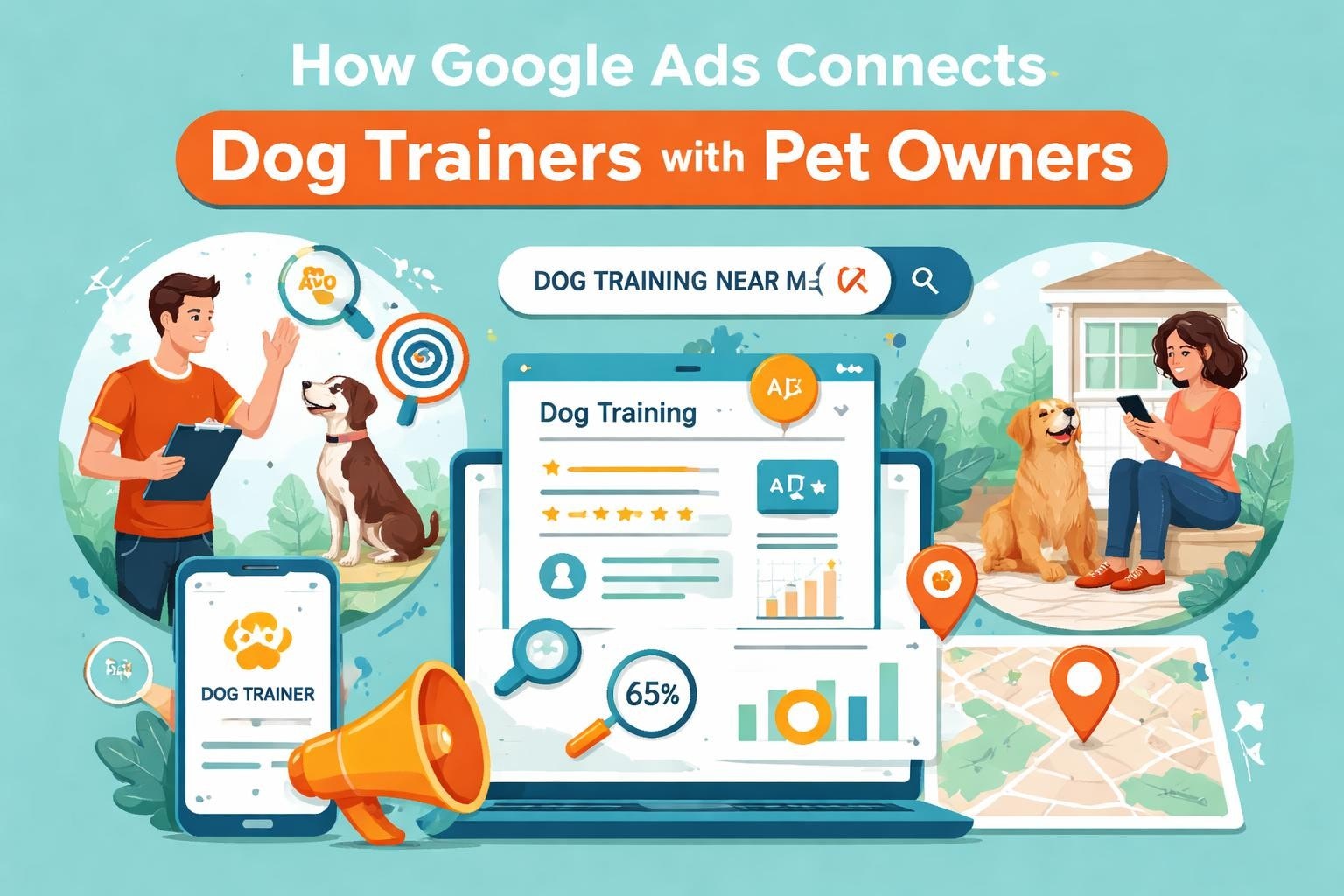
When someone searches "dog trainer near me" or "emergency vet open now," you want to appear. Google Ads puts your business at the top of search results for the exact services you offer.
Steps to launch your first Google Ads campaign:
- Create your Google Ads account and link your Google Business Profile
- Choose Local Services Ads or Search Ads (Local Services work great for service-based pet businesses)
- Define your service area – be specific about which neighborhoods you serve
- Write compelling ad copy that addresses pet owner pain points
- Set your daily budget – start with $20-30/day and adjust based on results
- Add negative keywords to avoid wasting money (like "free" or "DIY")
- Track conversions – phone calls, form submissions, booking requests
A mobile dog grooming business in Austin, Texas might target keywords like "mobile dog grooming Austin," "at-home dog grooming," and "dog grooming south Austin." Their ad copy could emphasize convenience: "No More Car Rides to the Groomer – We Come to You."
Social Media Advertising for Pet Businesses
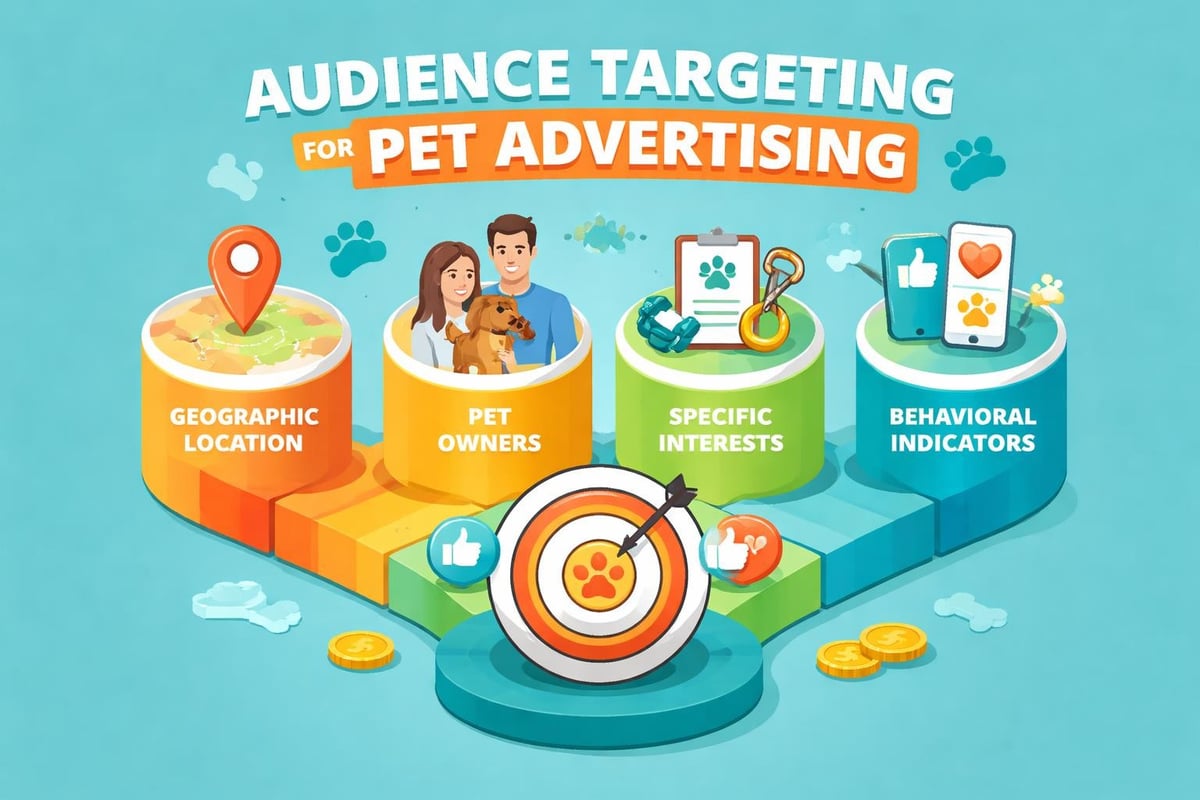
Pet content naturally performs well on social media because, honestly, who doesn't love seeing cute dogs and cats? But paid social advertising takes it further by targeting specific demographics and interests.
| Platform | Best For | Average Cost | Ideal Pet Business |
|---|---|---|---|
| Local targeting, older demographics | $0.50-2.00 per click | Veterinary clinics, boarding facilities | |
| Visual services, younger pet parents | $0.75-3.00 per click | Groomers, trainers, pet photography | |
| TikTok | Building brand awareness, engagement | $1.00-3.00 per click | Modern pet brands, unique services |
| YouTube | Educational content, demonstrations | $0.10-0.30 per view | Training programs, pet care education |
A real-world example: A dog training facility in Denver used Instagram ads targeting dog owners within 10 miles who followed pages about specific breeds known for training challenges (German Shepherds, Huskies, etc.). Their video ad showed a reactive dog's transformation over six weeks. The result? Their group classes filled up three months in advance.
Local Advertising Strategies
Digital doesn't mean abandoning local tactics. The most successful pet businesses blend both approaches.
Effective local pet advertising methods:
- Community bulletin boards at pet stores, coffee shops, and vet clinics
- Local newspaper ads (especially in community papers that pet parents actually read)
- Sponsoring local dog events like adoption drives or charity walks
- Partnership advertising with complementary businesses (vets, pet stores, doggy daycares)
- Vehicle wraps if you have a mobile service
A cat-only veterinary practice in Portland partnered with three local cat rescues. They offered discounted wellness exams for newly adopted cats and got featured in the rescues' newsletters and social media. The rescues got a valuable partner, and the vet clinic gained dozens of loyal new clients.
Creating Advertising Content That Converts
Having the right channels matters, but your message makes or breaks campaign success. Pet parents don't just buy services; they buy peace of mind, solutions to problems, and better lives for their furry family members.
Before and After: The Universal Pet Business Winner
Transformation sells. Whether you're a groomer showing a matted dog turned fluffy, a trainer showing a jumpy puppy now calmly greeting guests, or a pet nutritionist showing weight loss progress, visual proof builds trust.
Guidelines for effective before/after content:
- Always get client permission before using their pet's photos
- Include timelines (how long did this transformation take?)
- Explain the process briefly
- Make it authentic (real clients, real results, not cherry-picked extremes)
- Add testimonials when possible
Addressing Pain Points Directly
Your advertising should speak to specific problems pet parents face. Generic messaging like "We love pets!" doesn't convert. Specific messaging like "Does your dog pull on walks? Our six-week leash training program gives you peaceful walks again" identifies the problem and offers a clear solution.
According to emerging pet marketing trends for 2026, authenticity and community engagement are becoming even more critical. Pet parents want to see real businesses, real people, and real results.
Budget Allocation and ROI Tracking
Let's talk numbers. How much should you spend on pet advertising, and how do you know if it's working?
Setting Your Advertising Budget
A common starting point is allocating 5-10% of your gross revenue to marketing and advertising. For newer businesses or those in growth mode, you might push that to 15-20%.
Sample monthly budget breakdown for a dog training business earning $10,000/month:
| Channel | Budget | Expected Outcome |
|---|---|---|
| Google Ads | $600 | 15-20 leads |
| Facebook/Instagram Ads | $400 | 20-30 leads |
| Local partnerships & events | $200 | Brand awareness + 5-10 leads |
| Email marketing platform | $50 | Nurture existing leads |
| Content creation (photos/videos) | $250 | Support all channels |
| Total | $1,500 | 40-60 leads/month |
These numbers vary wildly based on your location, competition, and service pricing. A luxury pet resort in Manhattan will have different economics than a mobile grooming service in rural Kansas.
Measuring What Matters
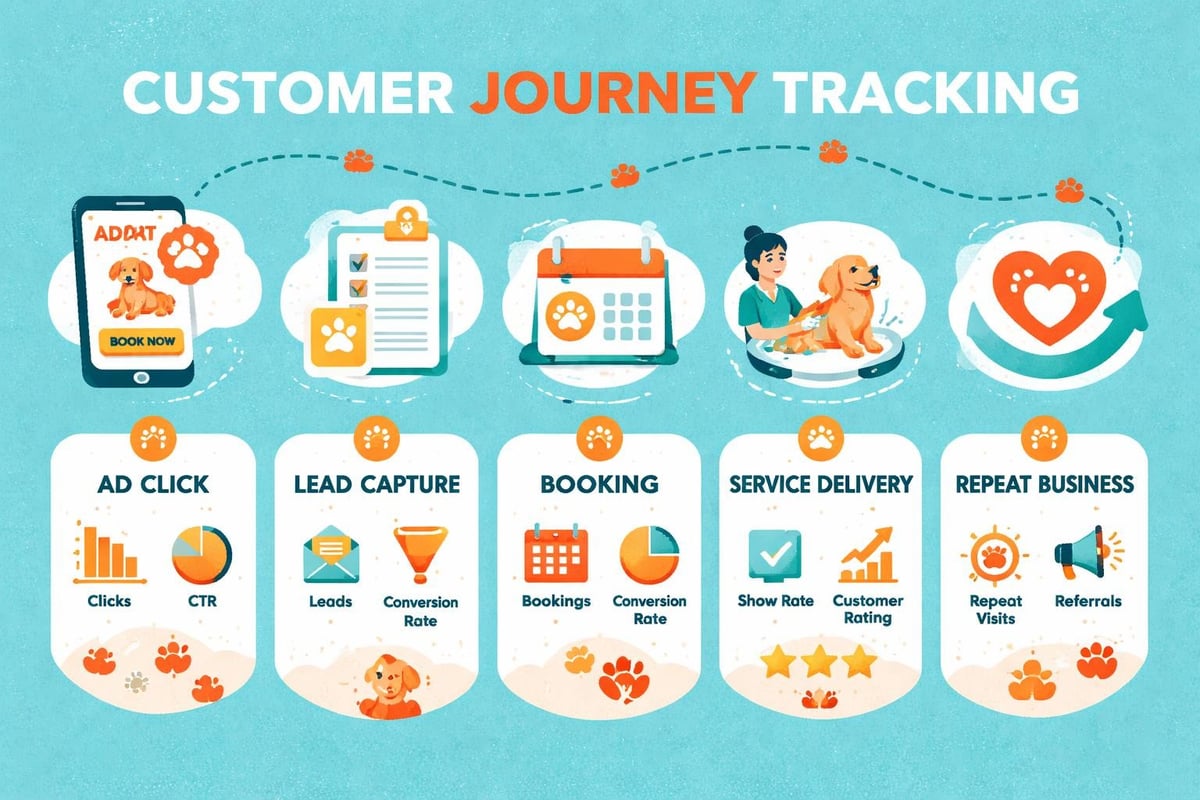
Not all advertising metrics are created equal. Vanity metrics like likes and impressions feel good but don't pay the bills.
Track these metrics instead:
- Cost per lead – How much does each potential client cost you?
- Conversion rate – What percentage of leads become paying clients?
- Customer acquisition cost (CAC) – Total advertising cost divided by new clients
- Customer lifetime value (LTV) – How much does an average client spend over their relationship with you?
- Return on ad spend (ROAS) – Revenue generated for every dollar spent on advertising
If your average dog training client spends $1,200 over their lifetime with you, spending $150 to acquire them (12.5% CAC) is excellent. But if you're spending $500 to acquire that same $1,200 client, you need to optimize.
Platform-Specific Strategies for Pet Businesses
Different advertising platforms require different approaches. What works on Facebook flops on Google Ads, and vice versa.
Google Search Ads Strategy
Search ads capture high-intent customers. Someone Googling "dog trainer for aggressive dog" is actively looking for help right now.
Winning search ad elements:
- Headline: Use the exact problem they're searching for
- Description: Emphasize your unique solution and qualifications
- Extensions: Add phone number, location, and links to specific services
- Landing page: Match the ad's promise (if they clicked an ad about aggression training, don't send them to your generic homepage)
Facebook and Instagram Ads Strategy
Social ads work differently. People aren't searching for your services; you're interrupting their scrolling. Your ad needs to stop them in their tracks.
What works on social:
- Video ads outperform static images (especially for transformations)
- User-generated content (real clients sharing their experiences)
- Behind-the-scenes glimpses of your business
- Educational content that provides value before asking for the sale
- Local targeting to keep costs down and relevance high
A pet photography business might run carousel ads showing a series of photos from one session, demonstrating their range and quality. The call-to-action isn't "Book now" but "See more holiday photo packages" leading to a landing page with seasonal offerings.
Common Pet Advertising Mistakes to Avoid
Even experienced pet business owners make these mistakes. Learn from others' errors instead of your own bank account.
The big ones:
- Targeting too broad – "All dog owners within 50 miles" wastes money on people who'll never drive that far
- Ignoring mobile optimization – Most pet parents search on phones; if your ads or website don't work on mobile, you're losing clients
- Not testing different ad variations – Run multiple versions to see what resonates
- Forgetting about retargeting – Most people don't buy immediately; retargeting ads remind them you exist
- Using boring stock photos – Pet parents can spot generic stock photos instantly; use real photos of real pets you've worked with
- Neglecting your Google Business Profile – This free listing appears in local searches and Maps; keep it updated with photos, hours, and responses to reviews
The Authenticity Factor
Pet parents are savvy. They can tell when advertising feels fake or when businesses are just trying to take their money. Building trust through authentic advertising isn't just nice; it's necessary.
Show your actual facility. Feature your real team members. Share honest results, including acknowledging that not every pet is a perfect fit for every service. This honesty builds the kind of trust that turns one-time clients into lifetime advocates.
Working with specialists like All Ears Digital who understand the pet industry means your advertising speaks authentically to pet parents while avoiding common pitfalls.
Advanced Tactics for Growing Pet Businesses
Once you've mastered the basics, these advanced strategies can multiply your results.
Seasonal Campaign Planning
Pet services have seasonal patterns. Dog training inquiries spike after the holidays when families get new puppies. Grooming bookings increase before major holidays. Summer brings boarding and pet-sitting demand.
Plan campaigns around these seasonal trends:
- January-February: New puppy training, post-holiday grooming
- March-April: Spring cleaning grooms, tick/flea prevention
- May-June: Summer boarding reservations, travel prep
- July-August: Peak boarding season, hot weather care
- September-October: Back-to-routine training, fall groom packages
- November-December: Holiday photos, gift certificates, boarding bookings
Referral Program Advertising
Your best advertisers are happy clients. Create a referral program and then advertise it.
A veterinary clinic might offer $25 off the next visit for both the referring client and new client. They advertise this program through email, social media, and signage in the clinic. This turns every client into a mini-advertiser.
Remarketing and Email Sequences
Someone visits your website but doesn't book. Traditional advertising considers them lost. Smart pet advertising brings them back.
Set up remarketing pixels to show ads to website visitors for the next 30 days. Combine this with email sequences for people who downloaded a free guide or requested information but didn't book.
Sample email sequence for a dog training inquiry:
- Day 0: Thank you email with immediate value (free training tip)
- Day 2: Client success story related to their specific need
- Day 5: FAQ addressing common objections
- Day 7: Limited-time offer or invitation to free consultation
- Day 14: Last-chance message before they exit the sequence
Building Your Advertising Ecosystem
The most effective pet advertising isn't a single campaign but an ecosystem where different elements support each other.
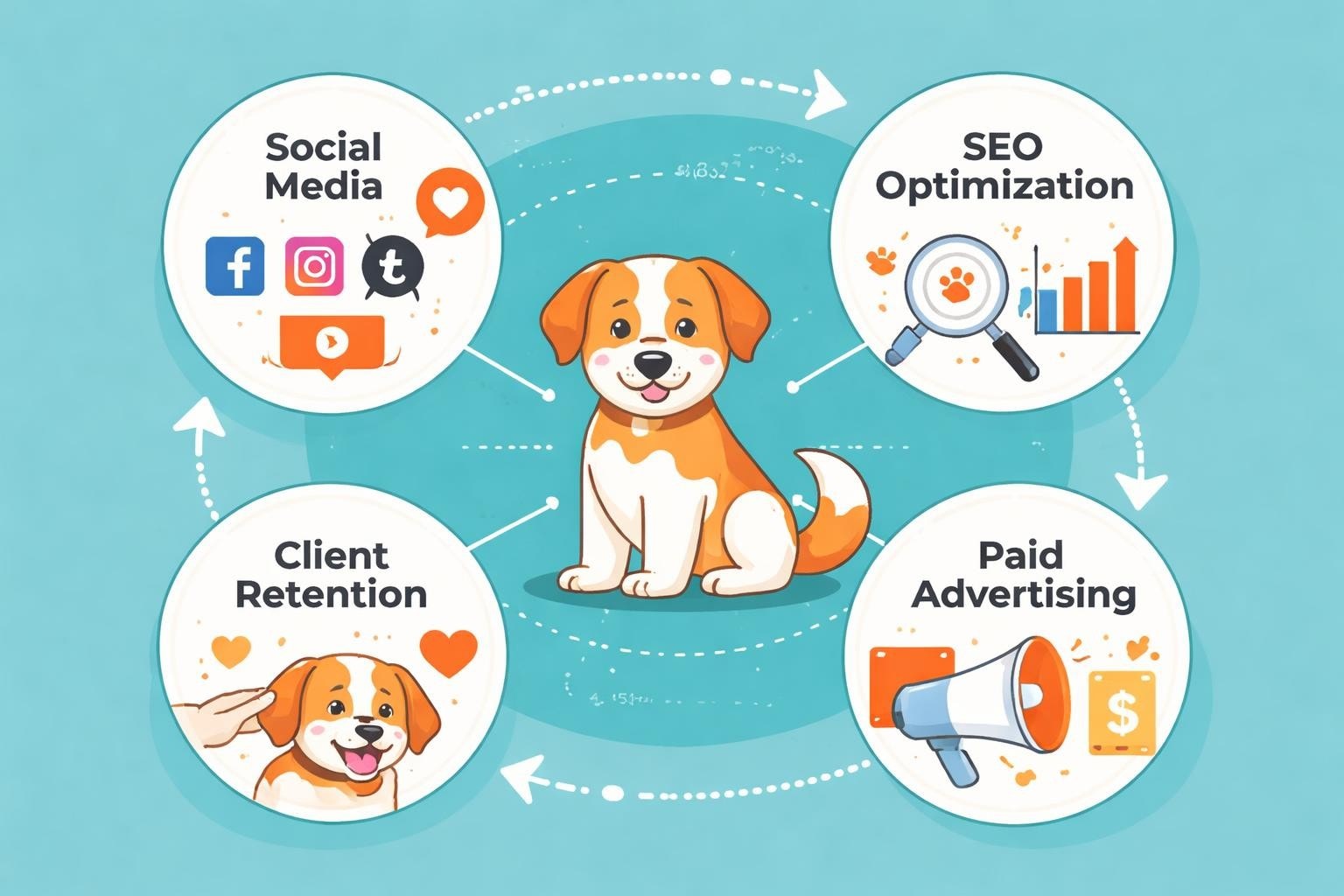
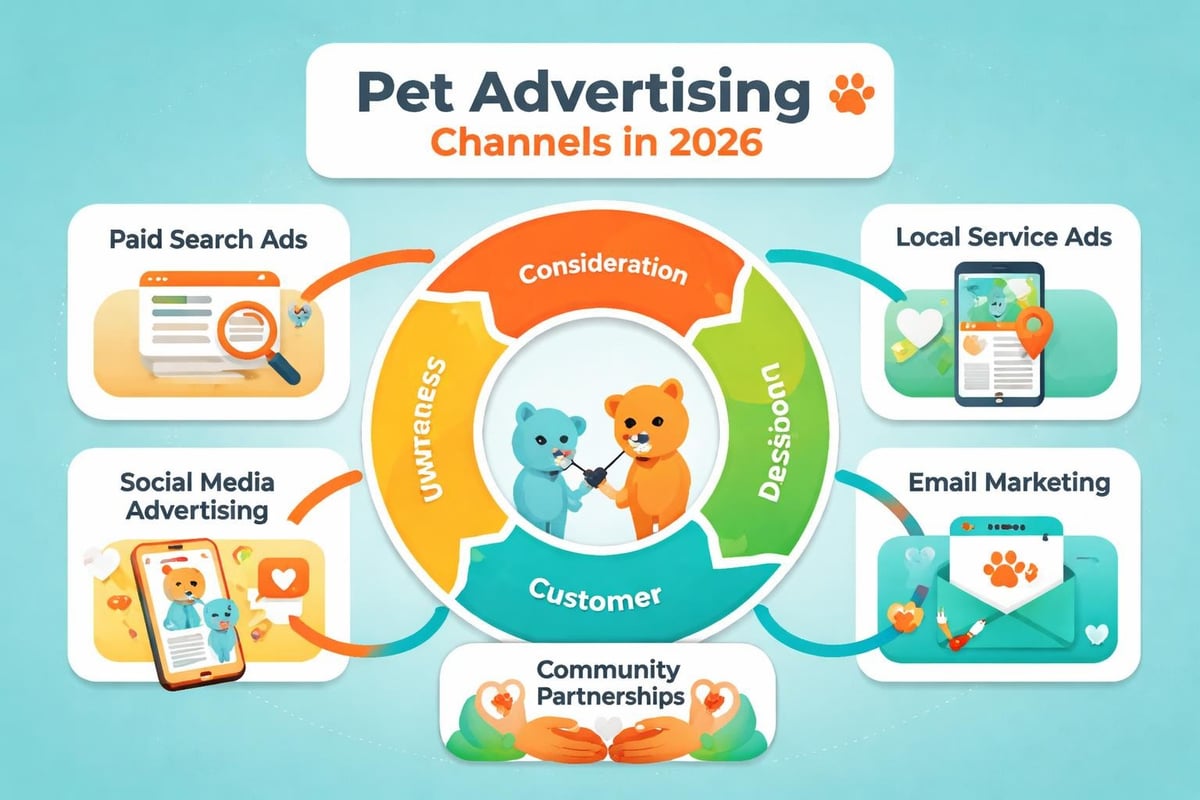
Your branding and website form the foundation. Social media builds awareness and community. Search ads capture high-intent customers. Email nurtures relationships. Local partnerships create credibility.
When these elements work together, your advertising efficiency multiplies. A pet parent might see your Instagram ad, visit your website, sign up for your email list, see your Google ad two weeks later when they're ready to book, and finally convert after reading reviews from clients they trust.
This integrated approach requires more planning but delivers better results than throwing money at random advertising tactics and hoping something works.
Content That Fuels Advertising
The best advertising doesn't feel like advertising. Create valuable content, then use paid promotion to amplify it.
Content ideas that make great ads:
- Training tip videos
- Common pet health myth-busting
- Grooming tutorials
- Pet care seasonal guides
- Client transformation stories
A dog daycare might create a blog post about "Signs Your Dog Would Love Daycare" with genuine, helpful information. They advertise this post to local dog owners interested in dog training and dog parks. The article provides value, builds trust, and naturally leads to learning about their daycare services.
Regulations like Missouri’s pet food advertising limits remind us that honesty and accuracy in pet advertising aren't just good ethics; they're legal requirements. This principle applies beyond pet food to all pet services.
Testing, Learning, and Scaling
Pet advertising success comes from continuous improvement. What worked last year might not work today. What works for one competitor might not work for your unique business.
Create a testing framework:
- Run ads with different headlines to see what resonates
- Test various images (action shots vs. portraits vs. before/afters)
- Try different calls-to-action (Book now vs. Learn more vs. Get your free guide)
- Experiment with ad placement and timing
- Test different target audiences
Give each test enough time and budget to gather meaningful data. Changing everything every three days creates chaos, not insights. Run tests for at least two weeks and at least 1,000 impressions before drawing conclusions.
When you find winning combinations, scale them. Double down on what works before experimenting with new approaches.
Making Pet Advertising Work for Your Specific Business
Every pet business is unique. A mobile grooming service advertises differently than a brick-and-mortar salon. A force-free dog trainer targets different audiences than one using balanced training methods.
Tailor your advertising to your unique positioning:
- Identify what makes you different
- Understand exactly who your ideal client is
- Speak their language
- Show up where they spend time
- Address their specific concerns
A cat behavior consultant might advertise primarily on cat-specific Facebook groups and Instagram accounts, using language that acknowledges the unique challenges of cat parenting. They wouldn't waste money advertising to general "pet owners" because cat people and dog people often seek different things.
Similarly, a luxury pet resort might advertise in upscale lifestyle publications and target higher-income zip codes, while a budget-friendly boarding facility focuses on value-conscious families in nearby neighborhoods.
Pet advertising in 2026 requires balancing creativity with strategy, authenticity with promotion, and multiple channels with focused messaging. The businesses seeing the best results are those that understand their unique value, know their ideal clients intimately, and create advertising that genuinely helps pet parents while growing their business. If you're ready to create advertising that actually fills your calendar with ideal clients, All Ears Digital specializes in helping pet businesses just like yours develop and execute marketing strategies that work in the real world.