In today’s digital world, veterinary clinics are in a race to stand out. Pet owners have more choices than ever, and the right marketing for veterinarians is the key to winning their trust. With new trends and technology popping up every year, staying ahead is not just smart—it is essential.
This guide is your roadmap for 2026. You will learn how to use digital tools, master local SEO, connect on social media, manage your clinic’s reputation, and keep clients coming back. We will also reveal future-ready marketing tools that top clinics are already using.
Ready to attract, engage, and retain more pet owners? See how real-world clinics boost results with these proven steps. Let’s dive in and transform your approach to marketing for veterinarians.
Understanding the 2026 Veterinary Marketing Landscape
In 2026, the world of marketing for veterinarians is more dynamic than ever. Pet owners’ habits have shifted, technology is evolving quickly, and competition is fierce. To thrive, clinics must adapt to the latest trends, tools, and client expectations.
The Evolving Pet Owner Demographic
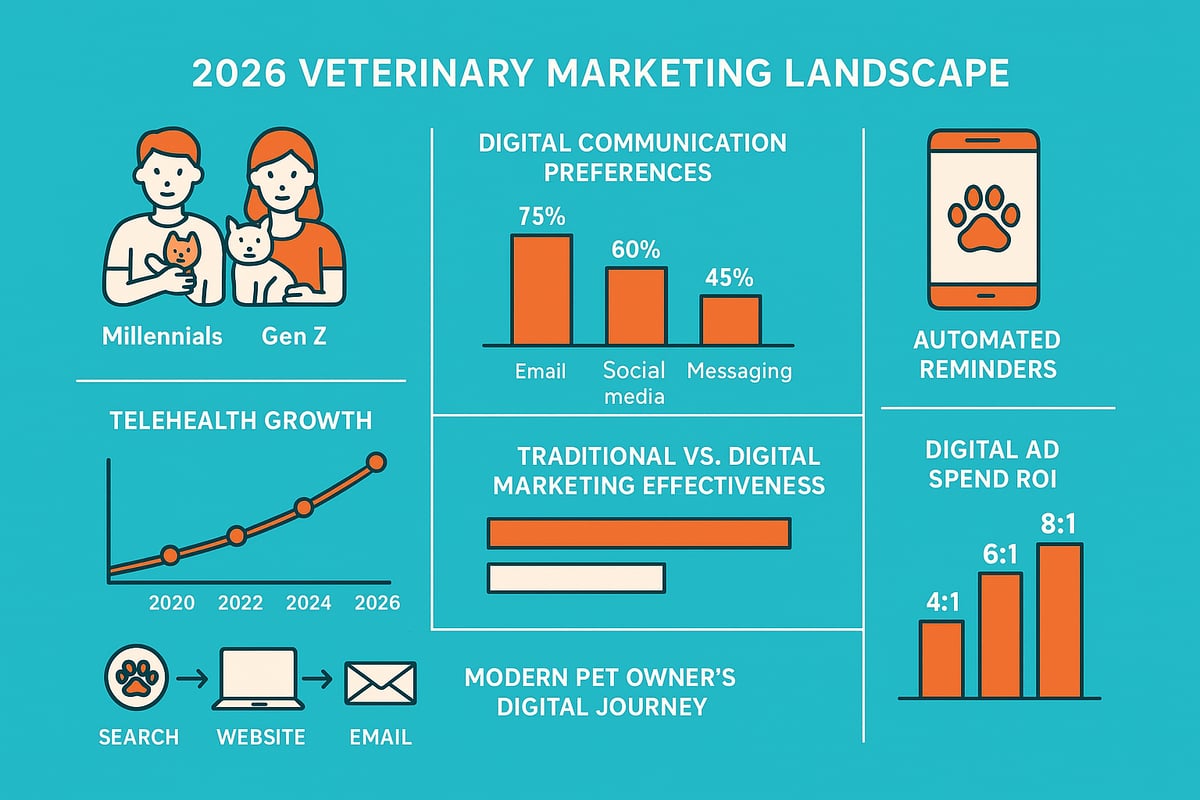
Pet ownership is booming among Millennials and Gen Z, who now represent the bulk of veterinary clients. These groups expect ease and convenience, especially when it comes to booking appointments or communicating with their vet.
- Over 60% of pet owners prefer clinics with digital options.
- Millennials and Gen Z want fast replies, online forms, and virtual care.
- Real-world example: Practices with mobile check-ins see happier, more loyal clients.
To succeed in marketing for veterinarians, clinics must keep pace with these digital-first expectations and tailor services to what modern pet parents value most.
Digital Transformation in Veterinary Practices
Technology is transforming the client experience at every touchpoint. Telehealth, AI-driven reminders, and client portals are no longer optional—they are becoming the norm for marketing for veterinarians.
- Automated appointment scheduling and follow-ups save time for both staff and clients.
- Clinics that use automated reminders have seen no-shows drop by up to 30%.
- Digital records and portals let clients access pet info anytime.
Adopting these tools not only streamlines operations but also makes your practice stand out in a crowded field.
Competitive Analysis: What Top Clinics Are Doing
Top-performing clinics are raising the bar for marketing for veterinarians by using multi-channel strategies. They blend web, text, email, and social media to keep their message consistent and trustworthy.
- Animal Healthcare of Marlboro, for example, earned 200+ five-star reviews using digital marketing.
- Consistency across platforms builds trust and encourages repeat visits.
- Step-by-step: Audit your channels, unify your branding, and respond quickly everywhere.
By studying successful clinics, you can replicate proven tactics and build a stronger reputation.
Regulatory and Privacy Considerations
As marketing for veterinarians grows more digital, privacy is a bigger concern. New HIPAA-like rules for pet data require clinics to safeguard client information.
- Always get consent before sending emails or texts.
- Use secure systems for storing and sharing pet data.
- Review privacy policies regularly.
Staying compliant keeps your clinic trustworthy and protects against costly mistakes.
Marketing Budget Trends for 2026
Veterinary clinics are shifting budgets toward digital channels. Investing in online ads, SEO, and automation brings measurable results for marketing for veterinarians.
- Digital ad spend is up, while traditional marketing is down.
- ROI benchmarks show clinics investing in digital can see up to 100% more bookings.
- For more insights, check out Veterinary Marketing Statistics for 2026.
Focusing your resources on digital strategies positions your practice for long-term growth.
Building a Strong Online Presence for Your Veterinary Practice
In the world of marketing for veterinarians, a strong online presence is your digital storefront. Pet owners are searching for trustworthy clinics online, and your practice needs to shine at every touchpoint. Let’s break down the essentials for getting noticed, building trust, and making it easy for clients to connect with your team.
Optimizing Your Veterinary Website
First impressions are digital now. Your website is often the first encounter pet owners have with your clinic. In 2026, marketing for veterinarians starts with a mobile-first website that loads quickly and looks great on any device.
Key tips to optimize your site:
- Use a responsive design for smartphones and tablets.
- Add clear calls-to-action like “Book Now” or “Contact Us.”
- Offer online forms for appointment requests and prescription refills.
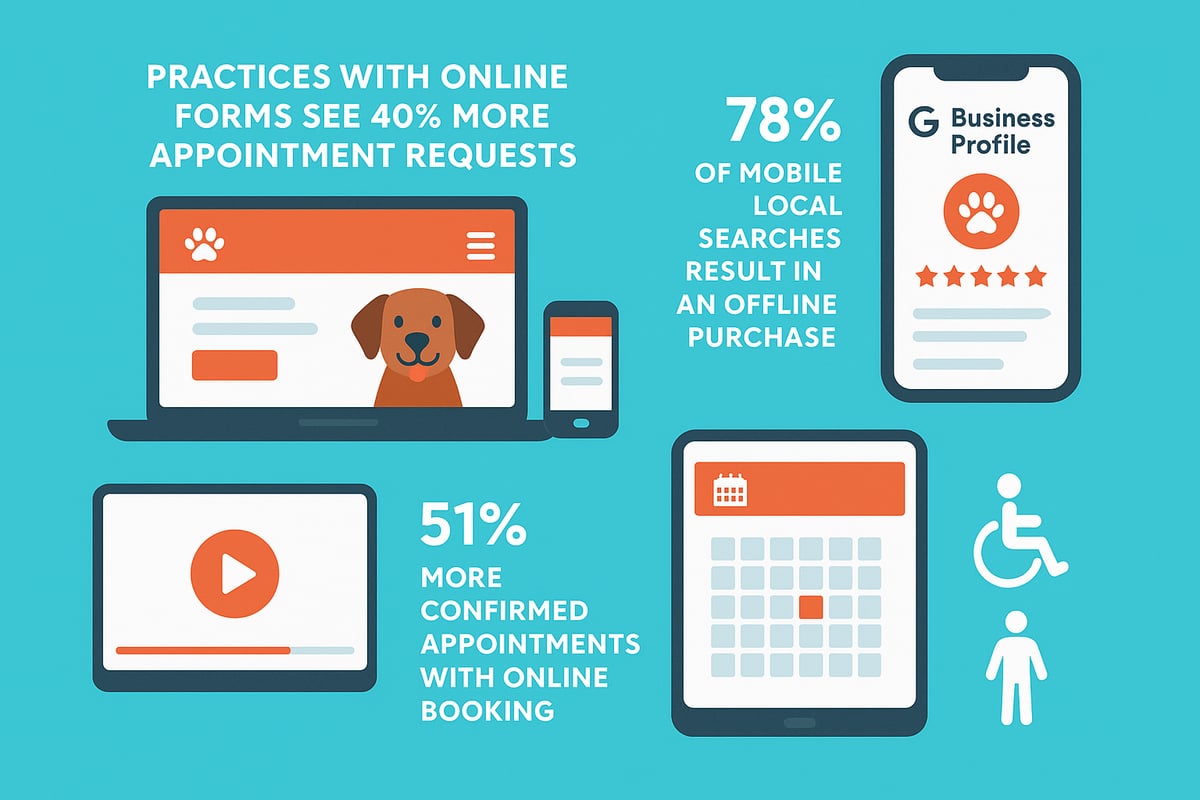
Practices using online forms report a 40% jump in appointment requests. Want to see what works? Check out clinics that feature bright, easy-to-find booking buttons and a simple navigation menu. Make sure your site reflects your brand’s warmth and professionalism.
Local SEO Strategies for Veterinarians
Local SEO is the secret sauce of marketing for veterinarians who want to attract pet owners nearby. Claim and optimize your Google Business Profile to appear in local searches. Consistent NAP (Name, Address, Phone) info across all directories is a must.
Quick step-by-step for local SEO:
- Claim your Google Business Profile.
- Add accurate business details and high-quality photos.
- Use local keywords like “veterinarian near me” in your content.
- Ask happy clients to leave reviews.
Did you know that 78% of mobile local searches lead to an offline purchase? Need help getting your clinic to the top of search results? Consider working with a Pet SEO service company that specializes in veterinary clinics for expert guidance.
Content Marketing and Educational Resources
Content is your clinic’s chance to educate, inspire, and connect. Blogging is a staple of marketing for veterinarians, especially when you answer common pet health questions or share seasonal care tips.
Popular content ideas:
- Pet health FAQs and myth-busting posts
- Seasonal advice on fleas, ticks, and allergies
- Video tours of your clinic or how-to pet care demos
Clinics that share educational videos often see more social shares and engagement. Imagine a quick clip of a happy pup getting a vaccine or a vet explaining dental care. Content marketing builds trust and positions your team as the go-to experts in your community.
Online Booking and Virtual Consultations
Today’s pet owners expect convenience. Integrating online booking tools is a must for modern marketing for veterinarians. Make it easy for clients to schedule appointments at any hour.
Why offer online booking?
- Saves staff time and reduces phone calls.
- Increases confirmed appointments by 51%.
- Appeals to tech-savvy Millennials and Gen Z.
Virtual consultations, or telemedicine, set your clinic apart. Offer secure video calls for follow-ups or minor concerns. This flexibility can boost client satisfaction and loyalty, especially for busy pet parents.
User Experience and Accessibility
User experience is everything in marketing for veterinarians. Your website should be welcoming, easy to navigate, and accessible to all pet owners, regardless of age or ability.
Essentials for an accessible, user-friendly site:
- ADA-compliant design: readable fonts, alt text for images, and high-contrast colors
- Simple navigation with clear menu labels
- Mobile-friendly layout for all screen sizes
A site that’s easy to use helps everyone, from young pet parents to seniors. Accessibility isn’t just good manners—it’s smart business. By focusing on user experience, you ensure that every visitor has a positive interaction with your clinic online and feels confident booking an appointment.
Leveraging Social Media and Digital Advertising
In 2026, marketing for veterinarians is all about building meaningful connections online. Social media and digital ads let clinics reach pet owners right where they spend their time. Let’s explore how to make the most of these digital tools.
Choosing the Right Platforms
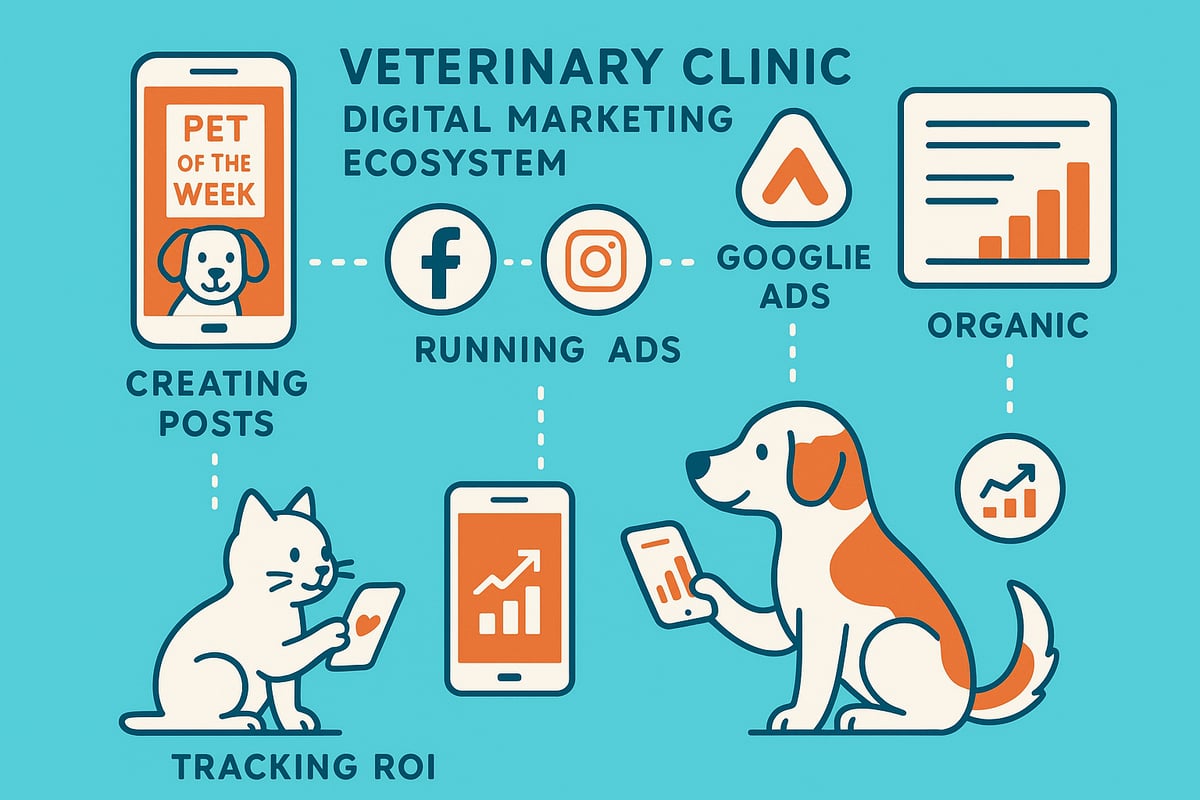
Selecting the best platforms is a cornerstone of marketing for veterinarians. Pet owners flock to Facebook for community, Instagram for adorable pet photos, and TikTok for playful, viral videos.
- Facebook: Great for sharing updates and building local groups.
- Instagram: Perfect for before-and-after stories, staff spotlights, and pet care tips.
- TikTok: Use short, fun videos to showcase pet health hacks or behind-the-scenes moments.
Consider which networks your clients use most. For some clinics, focusing on two platforms works better than juggling them all. According to pet social media marketing experts, tailored content boosts engagement and keeps your clinic top of mind.
Paid Advertising for Veterinarians
Paid ads are a powerhouse in marketing for veterinarians, especially when you want to reach new pet owners quickly. Google Ads let you appear right when someone searches for “vet near me,” while Meta Ads (Facebook and Instagram) help you retarget those who’ve visited your site or match your ideal client profile.
- Google Ads: Target local searches, such as “emergency vet in [City].”
- Meta Ads: Set up retargeting for website visitors or create lookalike audiences.
- Budget: Start small and scale up as you see results.
Real-world example: A Denver clinic ran targeted ads and saw an 87% jump in appointment requests. Track results weekly to adjust your strategy for the best ROI.
Organic Social Media Strategies
Organic content keeps your marketing for veterinarians authentic and relatable. Connect with pet owners by sharing daily stories, running fun contests, and featuring user-generated content.
- “Pet of the Week” campaigns: Invite clients to submit photos, then spotlight winners.
- Q&A sessions: Host live streams to answer common pet health questions.
- Regular posting: Use a content calendar to stay consistent.
A Michigan practice saw a huge jump in engagement after launching a monthly pet costume contest. Simple, regular interaction builds trust and keeps your followers engaged even when they don’t need a vet visit.
Influencer and Partnership Marketing
Influencer partnerships are transforming marketing for veterinarians. Collaborate with local pet influencers or shelters to reach wider, pet-loving audiences.
- Partner with pet shops for cross-promotions.
- Team up with trainers or groomers for bundled offers.
- Support shelter adoption events with free health checks.
A clinic in Austin joined forces with a local pet bakery, sharing each other’s posts and offering exclusive discounts. This not only brought in new clients but also strengthened community ties.
Tracking Social ROI and Analytics
Measuring results is vital in marketing for veterinarians. Use built-in platform analytics to track what works and what doesn’t.
Step-by-step guide:
- Review post engagement (likes, comments, shares) weekly.
- Monitor ad performance (clicks, bookings) monthly.
- Adjust your content and ad spend based on real data.
Table: Key Metrics for Social Media Success
| Metric | Why It Matters | How to Improve |
|---|---|---|
| Engagement | Shows audience interest | Post more interactive content |
| Reach | Measures audience size | Use relevant hashtags |
| Click-Throughs | Leads to bookings or info | Clear CTAs, eye-catching visuals |
Tracking lets you invest smarter and celebrate wins, making every dollar count.
Reputation Management and Client Communication
In the world of marketing for veterinarians, your clinic’s reputation is everything. Clients now turn to online reviews and digital conversations before they ever pick up the phone. Delivering consistent, caring communication helps you stand out and builds a loyal community around your practice.
Importance of Online Reviews
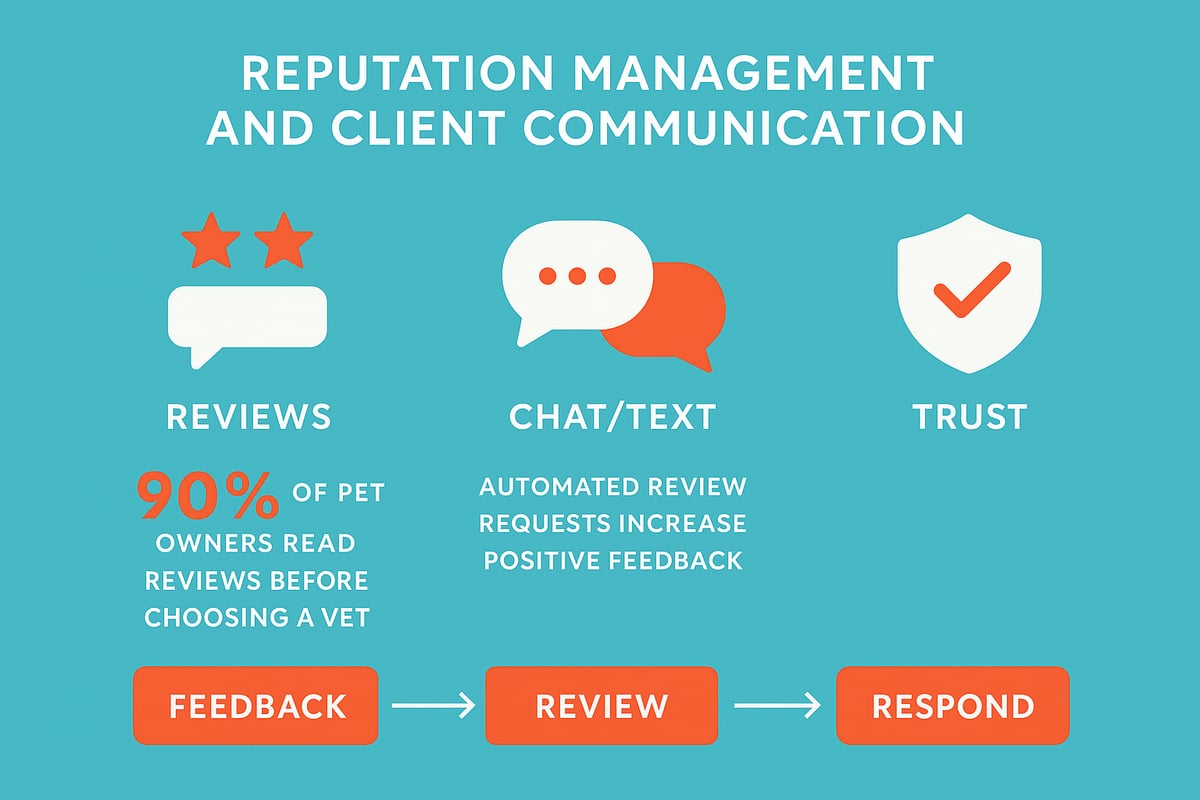
Online reviews are the new word of mouth in marketing for veterinarians. Did you know that nearly 90% of pet owners check reviews before selecting a vet? Your online reputation can make or break a first impression.
Encourage positive feedback by:
- Sending post-visit follow-ups via text or email
- Making it easy for clients to leave reviews on Google, Facebook, and Yelp
- Thanking clients personally for their feedback
Clinics that automate review requests often see a noticeable uptick in five-star ratings. For example, Happy Tails Animal Hospital implemented automated texts and watched their review count double in six months.
Responding to Feedback
When it comes to marketing for veterinarians, how you handle reviews speaks volumes. Responding quickly and professionally to both positive and negative feedback shows clients you care.
Best practices include:
- Thanking clients for positive feedback
- Addressing concerns with empathy and offering to resolve issues offline
- Keeping responses brief, polite, and HIPAA-compliant
Never ignore negative reviews. Instead, view them as opportunities to improve and show your commitment to service. A heartfelt, timely response can often turn a critic into a loyal fan.
Reputation Monitoring Tools
Staying on top of your online reputation is essential in marketing for veterinarians. There are several tools designed to help you track, compare, and respond to reviews across platforms.
Here’s a quick comparison:
| Tool Name | Features | Benefit |
|---|---|---|
| ReviewTrackers | Multi-site monitoring | Faster response |
| Google Alerts | Free brand mentions | Easy setup |
| Reputation.com | Analytics dashboard | Data-driven insights |
Clinics using monitoring software resolve client issues faster and protect their reputation. For more detailed advice, explore these reputation management strategies tailored for veterinary practices.
Direct Communication Channels
Direct communication keeps your practice top-of-mind in marketing for veterinarians. Two-way texting is perfect for appointment reminders, updates, and quick questions.
Consider these options:
- Text message reminders for upcoming visits
- Email newsletters with personalized pet care tips
- Secure messaging through pet health portals
Clients value quick, convenient communication, especially millennials and Gen Z pet owners. Practices offering these channels often see higher engagement and satisfaction.
Building Trust Through Transparency
Transparency is the secret sauce in marketing for veterinarians. Sharing updates about your clinic, introducing team members, and being open about pricing or procedures foster trust.
Real-world example: Paws & Claws Veterinary Clinic regularly posts about new services, staff achievements, and pricing updates. This honesty has led to a surge in client loyalty and positive word of mouth.
Trust grows when clients feel informed and respected. Keep them in the loop and watch your reputation shine.
Client Retention and Loyalty Programs
Keeping pet parents coming back is vital for marketing for veterinarians in 2026. With so many choices out there, standing out means building real relationships and making every visit count. Let’s dig into the most effective strategies for long-term client loyalty.
Automated Recall and Reminder Systems
Automated reminders are a game-changer in marketing for veterinarians. By using AI-driven systems for annual check-ups, vaccinations, and follow-ups, clinics make it easy for pet owners to stay on track.
Here’s a quick guide to setting up a reminder system:
- Choose software that integrates with your practice management platform.
- Set up personalized messages for wellness visits, vaccines, and medication refills.
- Enable text and email reminders for maximum reach.
Clinics implementing automated reminders have seen client return rates jump by 30%. It’s a simple move that makes life easier for your clients and keeps your schedule full.
Loyalty Programs and Referral Incentives
Loyalty and referral programs are essential elements of marketing for veterinarians who want to boost retention. A well-structured program rewards repeat visits and encourages word-of-mouth recommendations.
Popular loyalty ideas include:
- Point systems for every visit or purchase
- Free services after a set number of visits
- Referral bonuses for bringing in new clients
Staying ahead of the curve? Check out Veterinary Marketing Trends for 2025 for more innovative approaches to loyalty and referral incentives. Real-world clinics report steady increases in repeat bookings after launching these programs.
Personalized Client Experiences
Personal touches go a long way in marketing for veterinarians. Sending birthday messages for pets, remembering favorite treats, or offering customized care plans shows clients you truly care.
Try these easy personalization ideas:
- Automated birthday greetings with a small discount
- Post-visit follow-ups tailored to each pet’s needs
- Custom care recommendations based on breed or age
Practices that personalize their approach often see higher retention and glowing reviews from grateful pet parents.
Pet Health Portals and Mobile Apps
Modern pet owners want convenience. Pet health portals and mobile apps are now must-haves in marketing for veterinarians. These tools let clients access records, book appointments, and refill prescriptions anytime, anywhere.
Key features to include:
- Secure login for privacy
- Easy appointment scheduling
- Access to vaccination records and reminders
Clinics offering user-friendly portals report significantly higher client satisfaction and engagement.
Community Engagement and Events
Building community is a cornerstone of successful marketing for veterinarians, even as technology evolves. Hosting open houses, adoption events, or educational seminars helps practices connect with pet owners beyond the exam room.
Consider these event ideas:
- “Puppy Playdate” socials
- Pet wellness workshops
- Fundraisers supporting local animal shelters
These events foster loyalty, create memorable experiences, and turn occasional clients into lifelong fans.
Future-Proofing Your Veterinary Marketing Strategy
Keeping your clinic ahead in the ever-changing pet industry means thinking one step ahead. Future-proofing isn’t just about adopting shiny new tech, it’s about creating a resilient, adaptable plan for marketing for veterinarians that works today and tomorrow.
Embracing New Technologies
Veterinary clinics are quickly adopting tools like AI chatbots for instant client responses, virtual reality tours to showcase facilities, and advanced telehealth for remote pet care. These innovations make marketing for veterinarians more efficient and engaging.
- AI chatbots handle appointment requests and FAQs around the clock.
- Virtual tours build trust and familiarity before a visit.
- Telehealth expands access for clients unable to visit in person.
Curious about how AI is changing the game? Explore AI in Veterinary Marketing for the latest insights.
Data-Driven Decision Making
The best marketing for veterinarians uses data to guide every move. Dashboards and analytics platforms help you see what works, what doesn’t, and where to invest.
Key tools to consider:
| Tool | Use Case | Benefit |
|---|---|---|
| Google Analytics | Website traffic | Track client sources |
| Social Insights | Social media posts | Improve engagement |
| CRM Software | Client communication | Personalize follow-ups |
Regularly review your stats, adjust your marketing spend, and watch your bookings grow.
Staying Ahead of Industry Trends
Pet owner preferences are always evolving, so staying up to date is critical. Marketing for veterinarians thrives when you monitor trends, attend webinars, and join conferences.
- Track shifts in pet care expectations.
- Join online groups for the latest tips.
- Subscribe to industry blogs for fresh ideas.
Want a sneak peek at what’s coming? Check out Pet Care Trends for 2026 for expert predictions.
Building a Flexible, Scalable Strategy
As your clinic grows, flexibility is key. Marketing for veterinarians should be adaptable, whether you’re adding new locations or expanding services.
- Plan for multi-location branding.
- Decide what to handle in-house versus outsourcing.
- Build systems that scale as you do.
Many successful clinics start small, then scale up their efforts as demand increases.
Real-World Success Stories
Let’s get inspired! Some clinics have doubled bookings by integrating digital marketing for veterinarians across all channels.
- One multi-location practice unified their website, social media, and email campaigns.
- Consistent messaging built trust and brought in more pet owners.
- Lessons: Stay consistent, measure results, and adapt quickly.
These stories show how a proactive approach leads to real, measurable growth.
Ethical Marketing and Community Responsibility
Today’s pet owners value clinics that care about more than profits. Ethical marketing for veterinarians means promoting wellness, supporting shelters, and educating your community.
- Host events for responsible pet ownership.
- Share wellness tips and success stories.
- Partner with local rescue groups for greater impact.
Building community trust ensures your clinic remains a go-to choice for years to come.
Ready to put all these marketing tips into action and see your clinic thrive in 2026? You don’t have to tackle it alone—partnering with experts who truly get the pet industry can make all the difference. At All Ears Digital, we’re all about helping veterinarians like you attract pet parents, boost online bookings, and create a brand that stands out (and yes, fetches five-star reviews). If you’re ready to grow your practice and spend more time caring for animals, let’s make it happen together.
Get Started
Article written using RankPill.