When you're running a pet business, figuring out which form of marketing actually works can feel like trying to teach a cat to fetch. Every expert tells you something different, and what worked for your competitor's dog daycare might not work for your mobile grooming service. The truth is, there's no one-size-fits-all approach, but understanding the different forms of marketing available to you is the first step in building a strategy that actually brings in clients who genuinely love what you do.
Understanding What a Form of Marketing Really Means
Let's start with the basics. A form of marketing is simply a specific method or channel you use to connect with potential customers and convince them that your pet business is exactly what they need. Think of it like choosing between different types of treats for training a puppy. Some dogs go crazy for cheese, others prefer chicken, and a few weirdos actually like vegetables. Similarly, some pet parents discover businesses through Instagram, while others prefer Google searches or word-of-mouth recommendations.
The challenge isn't just picking one form of marketing and hoping for the best. It's about understanding which methods align with how your ideal customers actually behave and what you can realistically manage with your time and budget.
Why This Matters for Pet Business Owners
Pet parents are passionate, protective, and incredibly selective about who they trust with their furry family members. This means your marketing needs to do more than just announce you exist. It needs to build trust, showcase your expertise, and demonstrate that you genuinely care about animals.
The form of marketing you choose directly impacts how quickly you can establish that trust. A well-executed social media presence might let pet parents see your daily interactions with animals, while SEO helps people find you when they're desperately searching for "emergency vet near me at 2am" or "puppy training classes that actually work."
Traditional Forms of Marketing That Still Work
Before we dive into the digital world, let's acknowledge that some old-school marketing methods still deliver results for pet businesses. These approaches have been around forever for a reason.
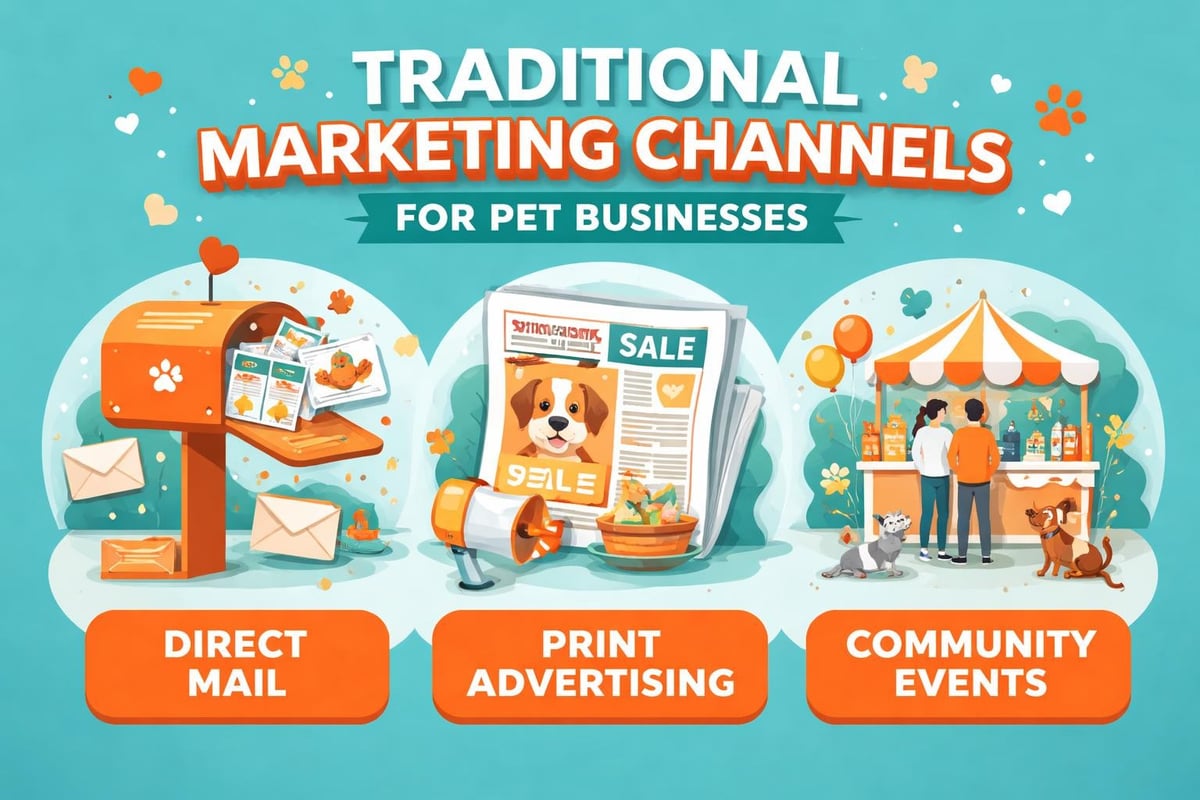
Local Print and Direct Mail
- Community newspapers and pet magazines where local pet parents actually look for services
- Postcard campaigns targeting specific neighborhoods with high pet ownership
- Flyers at veterinary clinics (with permission, of course) where your ideal clients already visit
- Sponsor local pet events and get your name on all the promotional materials
Direct mail might seem outdated, but when a new pet owner moves into the neighborhood, a welcome postcard from your grooming salon with a special offer can make a real impression. It's a form of marketing that feels personal and thoughtful, especially if you design it well.
Strategic Partnerships and Referrals
This form of marketing relies on building genuine relationships with complementary businesses. Partner with local vets, pet stores, trainers, and other services that serve your same audience.
Here's a simple step-by-step guide to building partnership marketing:
- Identify 5-10 businesses that serve pet parents but don't compete with you directly
- Reach out personally (not with a generic email template) and suggest meeting for coffee
- Propose a mutual referral arrangement where you both benefit
- Create co-branded materials like referral cards or exclusive discounts
- Track which partnerships actually send you business and nurture those relationships
- Show appreciation by sending referrals back and acknowledging their support publicly
Digital Forms of Marketing Every Pet Business Should Know
The digital landscape offers more options than ever, which can be both exciting and overwhelming. Let's break down the most effective forms for pet businesses.
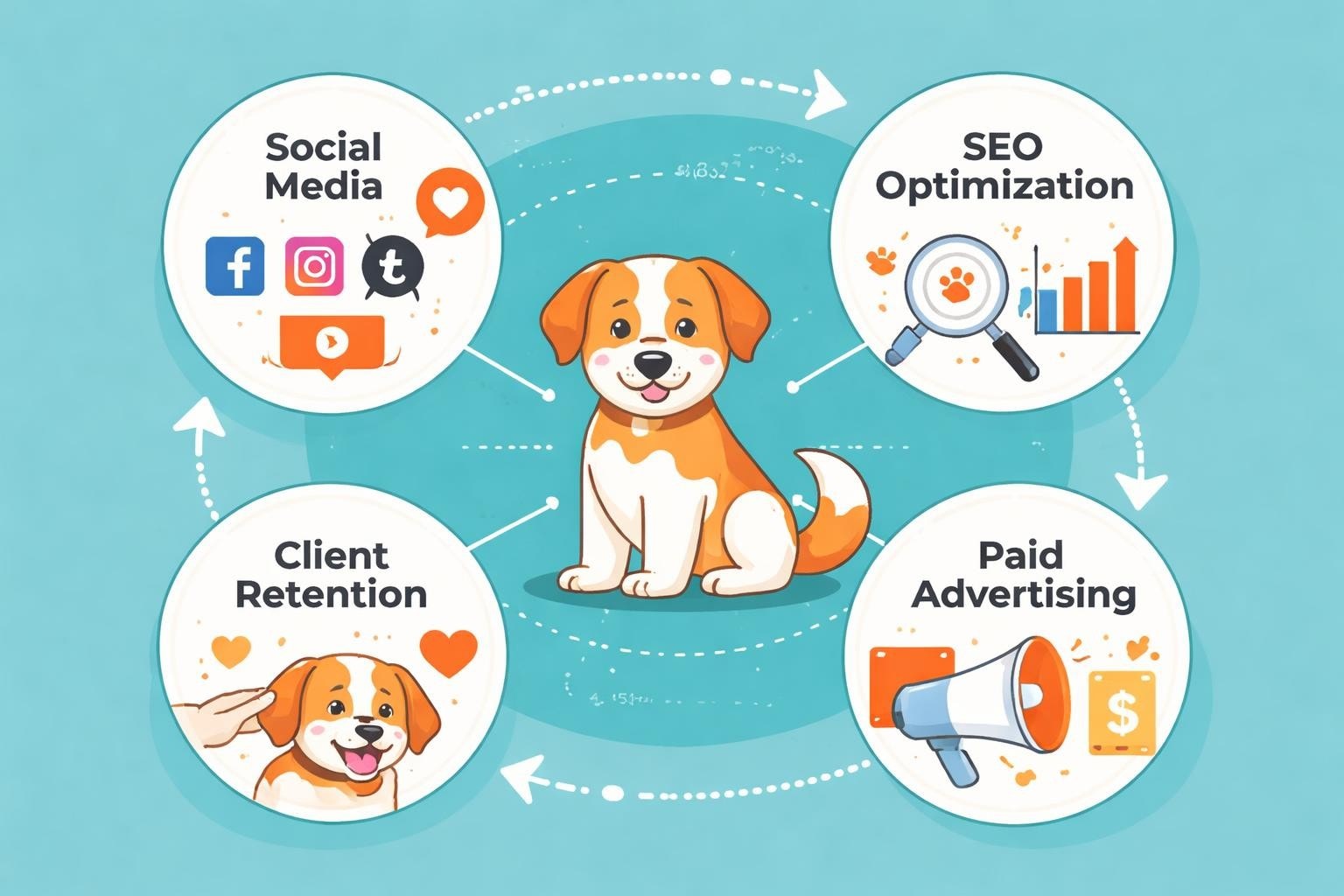
Social Media Marketing
This form of marketing is practically made for pet businesses. People cannot resist cute animal content, and if you're creating it daily anyway, you might as well use it strategically. Different platforms serve different purposes:
| Platform | Best For | Content Type | Effort Level |
|---|---|---|---|
| Visual storytelling, before/afters, daily moments | Photos, Reels, Stories | High | |
| Community building, local reach, events | Mixed media, longer posts, groups | Medium | |
| TikTok | Viral potential, younger pet parents | Short videos, trends, personality | High |
| Inspiration seekers, how-to content | Pins, guides, infographics | Low-Medium |
A successful pet boarding facility might share daily "report cards" of their guests on Instagram Stories, showing dogs playing in the yard or cats lounging in sunny spots. This personalized marketing approach helps anxious pet parents feel connected to their pets while they're away.
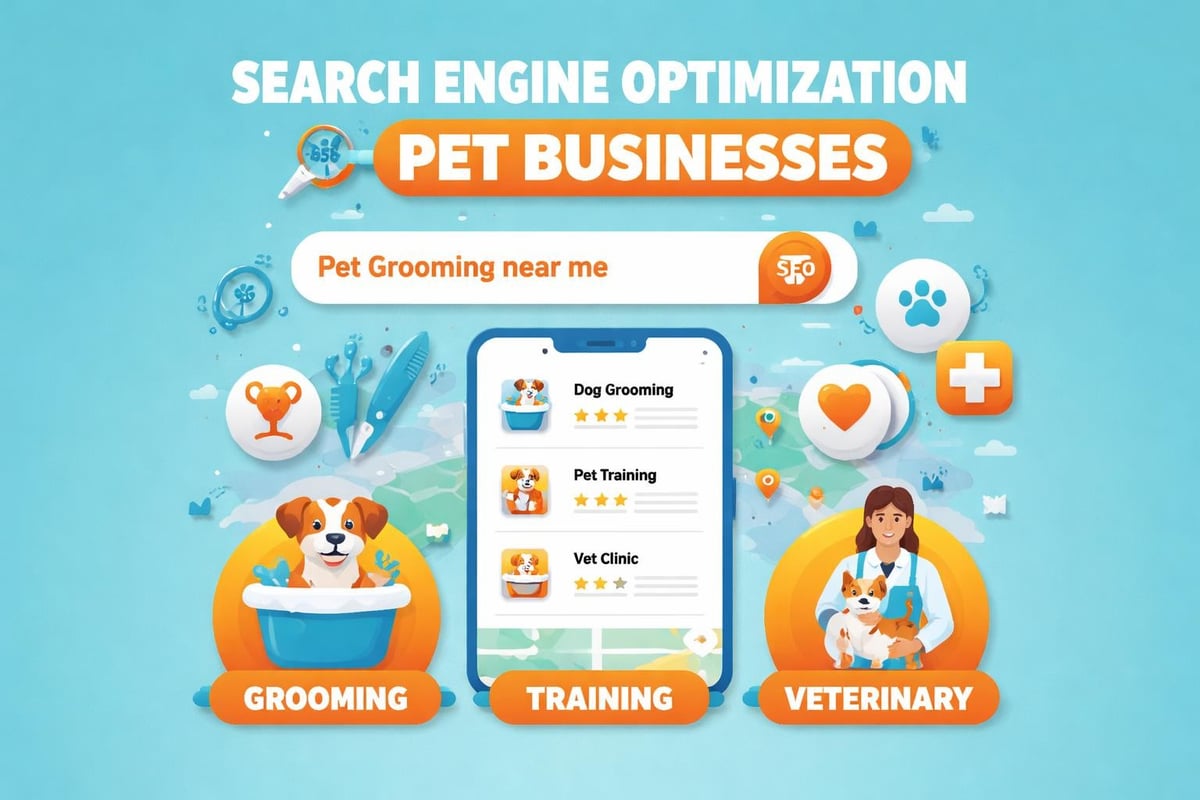
Search Engine Optimization (SEO)
SEO is the form of marketing that works while you sleep. When someone in your area searches "best cat groomer near me" or "puppy socialization classes," you want to show up in those results. This requires:
- A well-optimized website with location-specific content
- Regular blog posts answering common pet parent questions
- Google Business Profile that's completely filled out
- Positive reviews that mention specific services and locations
- Local directory listings that are consistent across platforms
Unlike mass marketing approaches that cast a wide net, SEO helps you reach people who are actively looking for exactly what you offer.
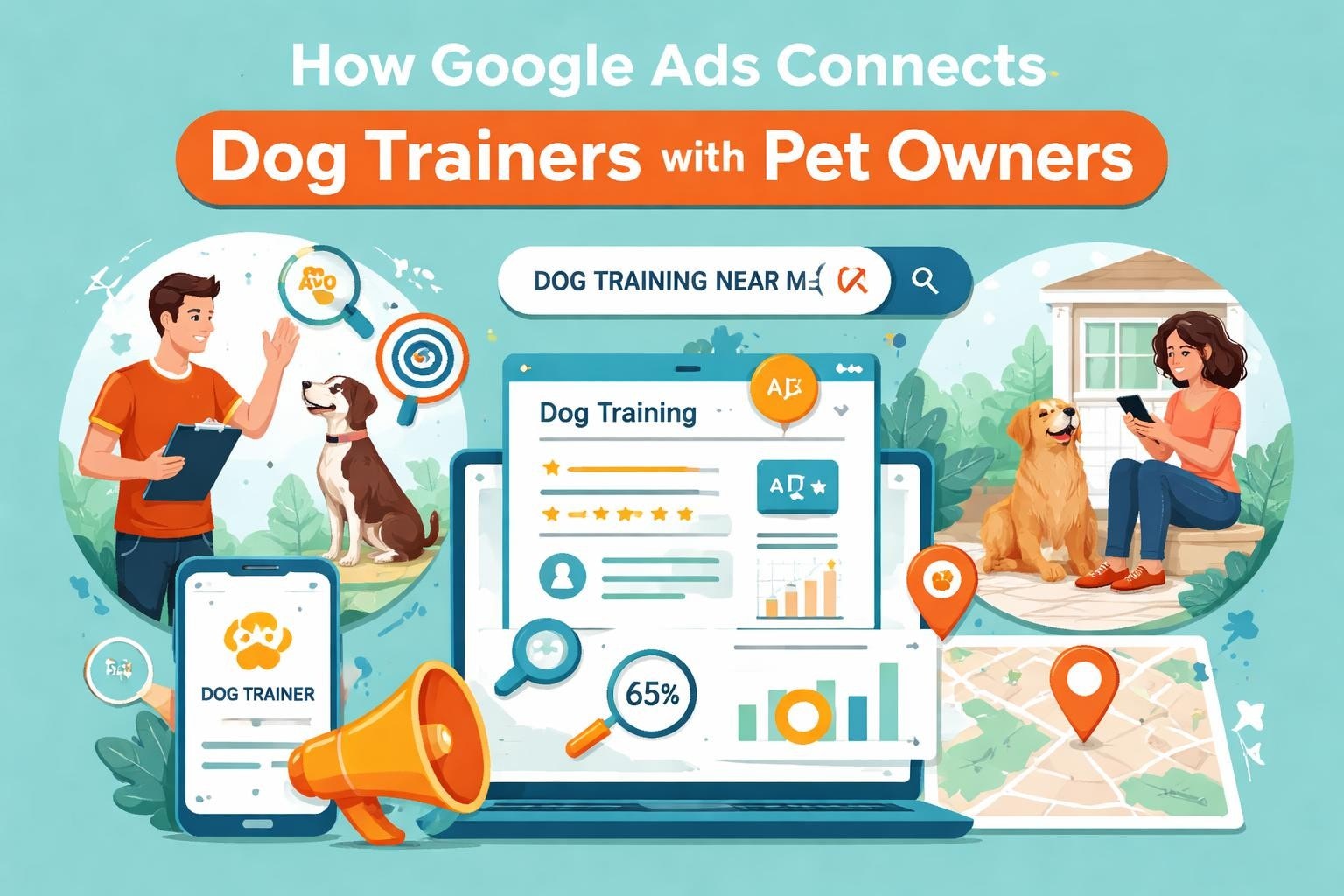
Paid Advertising (PPC and Social Ads)
This form of marketing gives you immediate visibility, which is especially helpful when you're just starting out or launching a new service. The teams at All Ears Digital specialize in managing ads for pet businesses because the targeting options are incredibly specific.
You can run ads targeting:
- Pet owners within 5 miles of your brick-and-mortar location
- People who recently moved and might need a new vet or groomer
- Parents of puppies or kittens who need training or preventive care
- Followers of competitor pages who might be open to alternatives
- People interested in specific breeds that match your expertise
The key is tracking your return on investment religiously. A $500 ad spend that brings in three new clients worth $2,000 each over their lifetime is excellent. That same $500 bringing in clicks but no actual bookings needs adjustment.
Content Marketing as an Educational Form of Marketing
Content marketing works beautifully for pet businesses because pet parents constantly have questions. They want to know if their puppy's behavior is normal, how to introduce a new cat to the household, or what ingredients they should avoid in pet food.
Building a Content Strategy
Start by listing every question clients ask you repeatedly. Those questions are gold. Each one becomes a blog post, video, or social media series. For example:
- "How often should I groom my Golden Retriever?" becomes a blog post about coat care
- "Is my puppy ready for group classes?" becomes a video about socialization readiness
- "What's the difference between boarding and daycare?" becomes an infographic
This form of marketing builds trust because you're helping before you're selling. When someone finds your helpful article about crate training, they remember your business when they need a dog trainer.
The Long Game Advantage
Unlike ads that stop working the moment you stop paying, good content continues attracting potential clients months or even years after you publish it. Understanding segmenting-targeting-positioning helps you create content that speaks directly to your ideal client segments.
Email Marketing: The Form of Marketing Everyone Forgets
Email might seem boring compared to flashy social media, but it's one of the most profitable forms of marketing available. When someone gives you their email address, they're inviting you into their inbox. That's valuable.
Here's what makes email marketing work for pet businesses:
- Welcome series for new subscribers that introduces your services gradually
- Seasonal reminders about flea/tick prevention, holiday boarding, or winter safety
- Educational newsletters that mix helpful tips with subtle service promotions
- Special offers for loyal clients or to re-engage people who haven't booked recently
- Birthday messages for their pets (yes, people love this)
The mobile groomer who emails clients two weeks before their pet is "due" for grooming gets way more repeat bookings than the one who waits for clients to remember on their own.
Choosing the Right Form of Marketing for Your Pet Business
Now that you understand the options, how do you actually choose? Consider these factors:
Your Budget Reality Check
Be honest about what you can actually afford, both in money and time. Some forms of marketing require more financial investment (like paid ads), while others demand more time commitment (like consistent social media).
| Marketing Form | Financial Investment | Time Investment | Speed of Results |
|---|---|---|---|
| Social Media | Low-Medium | High | Medium |
| SEO | Low-Medium | High | Slow |
| Paid Ads | Medium-High | Low-Medium | Fast |
| Email Marketing | Low | Medium | Medium |
| Content Marketing | Low | High | Slow |
| Traditional Print | Medium | Low | Medium-Fast |
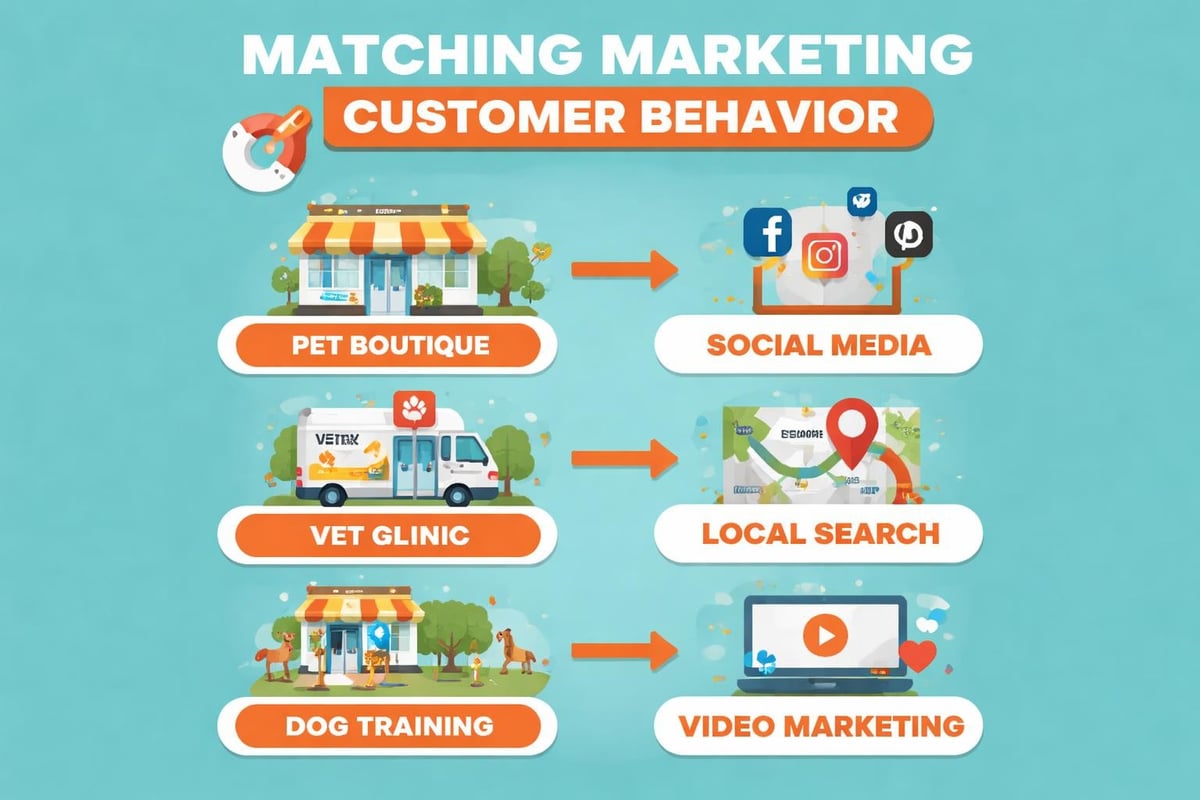
Where Your Clients Actually Hang Out
A high-end cat boarding facility serving busy professionals might find LinkedIn surprisingly effective, while a budget-friendly dog walking service probably won't. Think about your specific audience demographics and behaviors.
If you primarily serve retirees, Facebook and email marketing might outperform TikTok. If you're targeting millennial pet parents with disposable income, Instagram and targeted ads could be your sweet spot.
Testing and Adapting Your Approach
The smartest approach to any form of marketing is treating it like an experiment. Start with one or two methods you can commit to doing well, track your results, and adjust based on what actually brings in clients.
Here's a practical testing framework:
- Choose two forms of marketing to focus on for 90 days
- Set specific, measurable goals (like "gain 500 Instagram followers" or "get 20 new clients from SEO")
- Track everything using spreadsheets, analytics tools, or CRM software
- Ask new clients how they found you and record that information
- Evaluate at the end of 90 days and decide what to continue, improve, or drop
- Add one new form of marketing while maintaining what's working
Combining Multiple Forms of Marketing
The most successful pet businesses don't rely on just one form of marketing. They create an integrated approach where different methods support each other. This concept of diversification helps you reach different segments of your audience and protects you if one channel stops performing.
For example, a dog training business might:
- Use SEO to attract people searching for puppy classes
- Run Facebook ads promoting an upcoming training workshop
- Post Instagram content showing training successes and tips
- Send email newsletters to past clients announcing new class schedules
- Partner with local pet stores for referrals
- Write blog posts answering common training questions
Each form of marketing feeds the others. Someone might see your Instagram post, search for your business on Google, read a few blog posts, and then sign up for your email list before finally booking a class.
Unconventional Forms of Marketing for Bold Pet Businesses
Sometimes the most memorable marketing doesn't fit into traditional categories. Street marketing and guerrilla tactics can work surprisingly well for pet businesses with personality.
Consider these creative approaches:
- Pop-up events at farmers markets or community festivals where you offer free nail trims or quick consultations
- Social media challenges that encourage customers to share photos with a branded hashtag
- Partnership campaigns with local animal rescues that position you as community-minded
- Vehicle wraps that turn your grooming van into a mobile billboard
- Sponsored pet photo contests that generate engagement and user content
A pet photography business once put up "wanted" style posters around dog parks featuring adorable photos they'd taken, with "WANTED: For Being Too Cute" headlines and their contact info. It was silly, memorable, and generated tons of inquiries.
Measuring Success Across Different Marketing Forms
You can't improve what you don't measure. Each form of marketing has different metrics that matter, and understanding them helps you make smarter decisions about where to invest your resources.
Key Metrics by Marketing Type
Social Media:
- Engagement rate (likes, comments, shares per post)
- Follower growth rate
- Click-through rate to your website
- Direct messages and inquiries
- Conversions from social traffic
SEO and Content:
- Organic search traffic
- Keyword rankings for target terms
- Time spent on site
- Pages per session
- Conversion rate from organic traffic
Paid Advertising:
- Cost per click (CPC)
- Click-through rate (CTR)
- Cost per acquisition (CPA)
- Return on ad spend (ROAS)
- Conversion rate by campaign
Email Marketing:
- Open rates
- Click-through rates
- Unsubscribe rates
- Conversion rates
- Revenue per email
The most important number, regardless of which form of marketing you use, is customer acquisition cost compared to customer lifetime value. If it costs you $50 to acquire a grooming client who spends $600 per year with you for three years, that's fantastic. If it costs $500 to acquire a client who books once for $75, something needs to change.
Common Mistakes Pet Business Owners Make
After working with hundreds of pet businesses, certain patterns emerge. Avoid these common pitfalls:
Trying everything at once instead of mastering one form of marketing leads to mediocre results across the board. It's better to be excellent at Instagram and email than terrible at six different channels.
Giving up too quickly is another huge mistake. SEO takes months to show results. Content marketing builds slowly. If you quit after three weeks because you're not seeing explosive growth, you never give the strategy a chance to work.
Ignoring the data and making decisions based on feelings rather than facts wastes money. Just because you personally love Pinterest doesn't mean your clients use it. Track what actually drives bookings.
Copying competitors without understanding strategy rarely works. Your competitor's viral TikTok success might be the result of months of testing and a specific audience you don't serve.
Getting Started With Your Marketing Mix
If you're feeling overwhelmed, here's a simple action plan to get started:
Week 1: Audit your current efforts. What are you already doing? What's working? What feels like a waste of time?
Week 2: Research your audience. Survey existing clients about how they found you and where they spend time online.
Week 3: Choose your primary form of marketing based on where your audience is and what you can commit to consistently.
Week 4: Set up tracking systems so you can measure results from day one.
Month 2: Execute consistently. Post regularly, optimize steadily, or run your first campaign.
Month 3: Evaluate and adjust. What's working? What needs tweaking? What should you add next?
There are numerous types of marketing strategy you can explore as you grow more comfortable with the basics.
Finding the right form of marketing for your pet business takes experimentation, patience, and a willingness to track what actually works for your specific situation. Whether you focus on building an engaged social media community, dominating local search results, or creating a referral engine through partnerships, the key is choosing strategies you can execute consistently and measuring their impact honestly. If you're ready to develop a marketing approach that actually fills your appointment book with ideal clients, All Ears Digital specializes in helping pet businesses like yours grow through proven strategies tailored to the unique needs of the pet industry.