Did you know the dog walking market is booming like never before? With pet care spending at an all-time high, more people are seeking trusted professionals to keep their dogs happy and healthy.
This guide dives into the future of the dog walking market, spotlighting the trends, drivers, and innovations shaping 2026. We’ll break down market segmentation, explore tech’s role, highlight regional growth, and share expert forecasts.
Curious how to stand out or grow your business? You’ll discover actionable strategies and real-world insights. Ready to become a dog walking market leader? Let’s get started!
The Dog Walking Market Landscape in 2026
The dog walking market is stepping into a new era in 2026. Pet parents are seeking more than just a stroll around the block. They want convenience, safety, and a touch of luxury for their furry friends. This section unpacks the numbers, segments, real-world shifts, and the industry giants shaping tomorrow’s dog walking market.
Market Size and Growth Projections
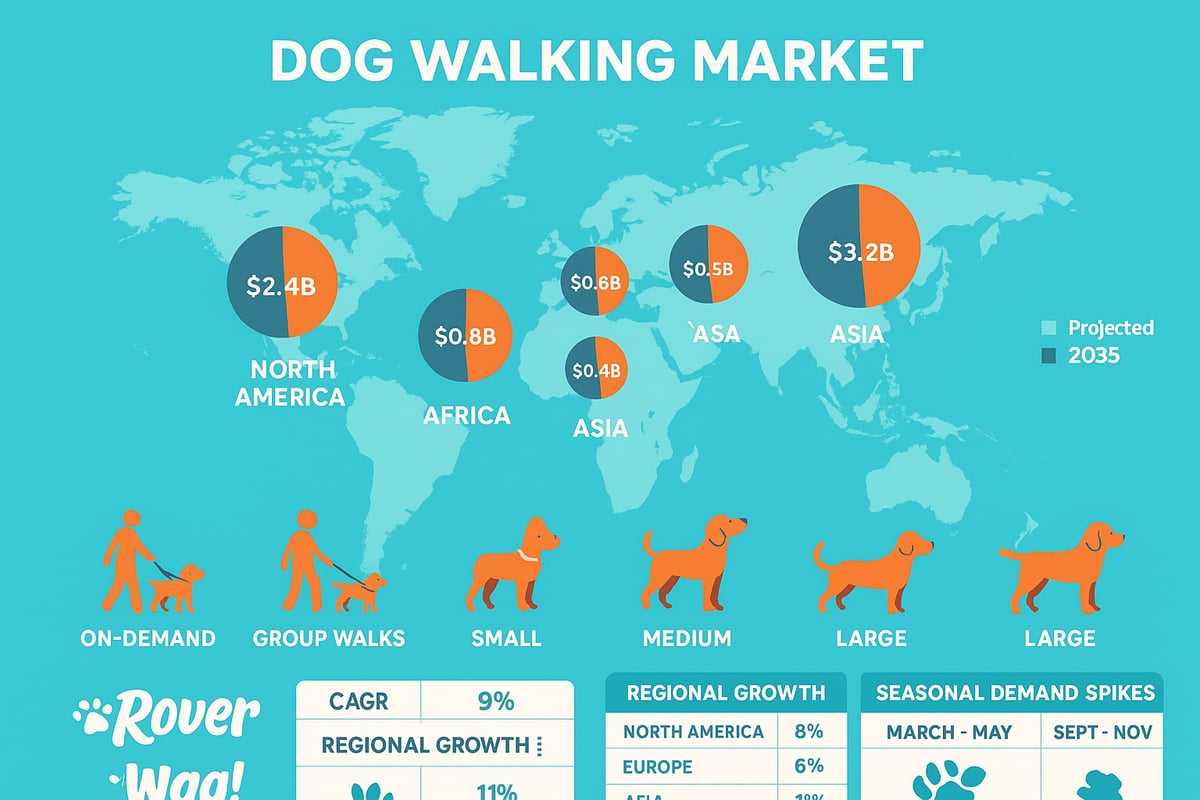
The dog walking market is experiencing rapid growth, reflecting shifts in how we care for our pets. In 2024, the global market value hit USD 1.18 billion. By 2035, projections show it soaring to USD 3.08 billion, with a compound annual growth rate (CAGR) around 9.1 percent.
Let’s compare the numbers in a quick table:
| Year | Market Value (USD) | Growth Rate |
|---|---|---|
| 2018 | 0.67 billion | 6.5 percent |
| 2024 | 1.18 billion | 8.2 percent |
| 2026 | 1.45 billion* | 9.1 percent |
| 2035 | 3.08 billion | 9.1 percent |
*Estimated
What’s fueling this surge in the dog walking market? The big three: increasing pet ownership, the humanization of pets, and urbanization. Urban pet parents, especially, rely on dog walking services during holidays and vacation seasons, causing noticeable demand spikes. For a deep dive into market app trends and data, check out this Dog Walking Service App Market Overview.
Core Market Segments
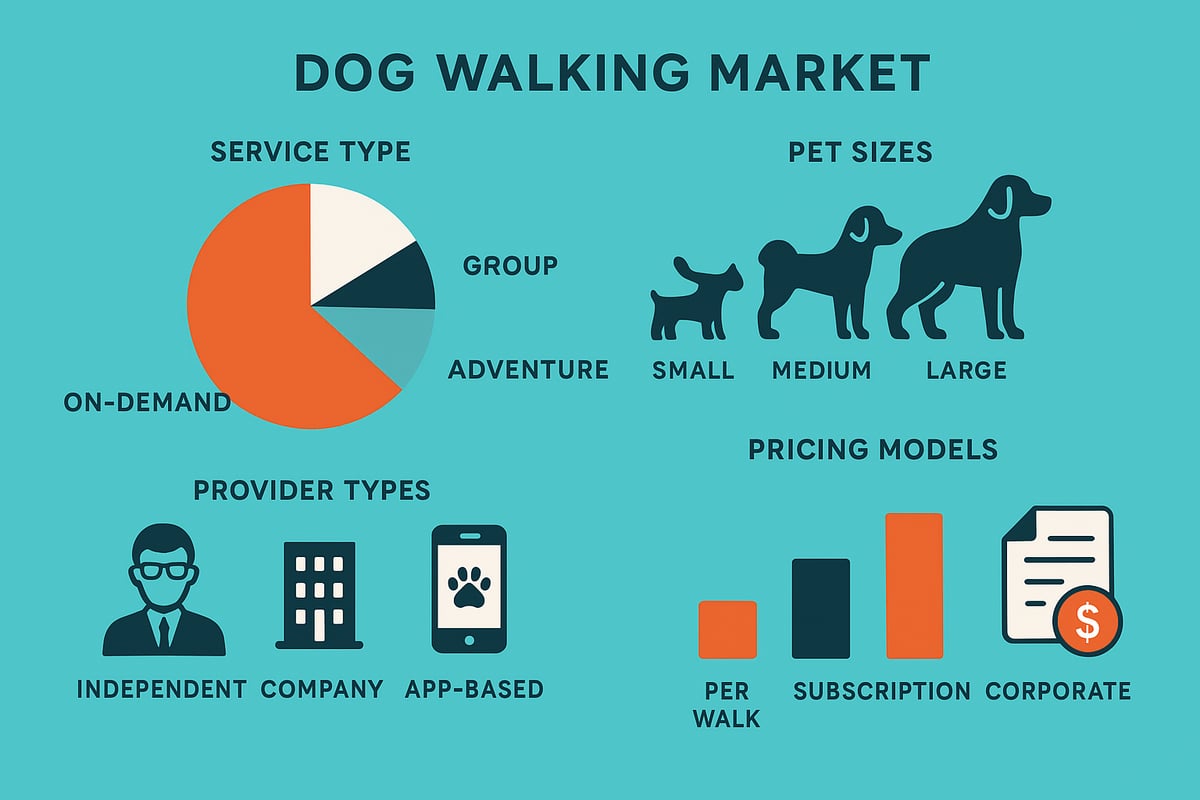
The dog walking market isn’t one size fits all. It’s divided into several key segments:
- Service Types: On-demand, recurring, group, individual, and adventure walks.
- Pet Types: Small, medium, and large breeds. Small breeds are most popular in urban areas.
- Service Providers: Independent walkers, pet care companies, app-based platforms, and boarding services.
- Pricing Models: Pay-per-walk, subscription plans, and memberships.
This segmentation helps the dog walking market cater to a wide variety of pet parent needs, from quick potty breaks to full-on adventure hikes.
Real-World Example
Let’s look at a real-world shift in the dog walking market. Recurring dog walking services have become a lifeline for busy urban professionals. Imagine Sarah, a tech worker in New York City, juggling meetings and commutes. She opts for a weekly subscription with a trusted app, ensuring her energetic pup gets daily exercise and socialization.
This trend shows how the dog walking market is adapting to modern lifestyles. Pet parents are choosing reliable, scheduled services over one-off bookings, seeking peace of mind and consistency.
Key Market Players
The dog walking market is packed with industry leaders making big moves. Major brands include Rover, Wag!, Fetch! Pet Care, and PetBacker. These companies dominate through user-friendly apps, strong safety protocols, and extensive walker networks.
Recent mergers and acquisitions are shaking things up. For example, Rover’s acquisition by Blackstone has boosted its market share and resources, solidifying its position at the top of the dog walking market. These strategic moves create more options and better service quality for pet owners everywhere.
Major Trends Shaping the Dog Walking Industry
The dog walking market is racing ahead, fueled by a wave of innovation and shifting pet parent expectations. Whether you’re a dog walker, pet business owner, or just curious, these trends will shape the way pups get their daily exercise in 2026. Let’s break down the most exciting changes, one by one.
Rise of App-Based Booking and Digital Platforms
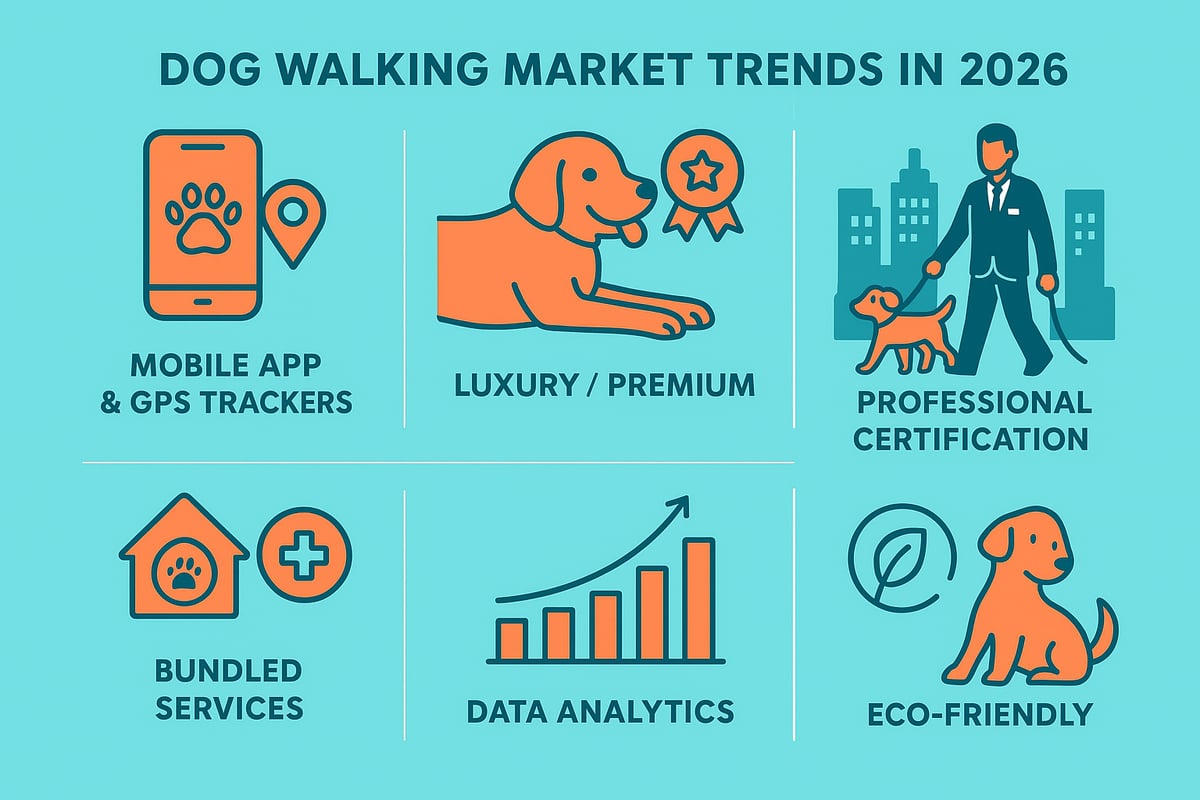
Pet parents want convenience, transparency, and control. That’s where the dog walking market has truly gone digital. App-based platforms like Rover and Wag! have set the standard with:
- One-tap booking and scheduling
- GPS-tracked walks with real-time updates
- In-app messaging and payment
- Verified walker profiles and reviews
These tools make it easy for pet owners to find trusted walkers, track their furry friend’s adventures, and pay securely—all in one place. For walkers, digital platforms streamline scheduling and help reach new clients.
Premiumization of Dog Walking Services
The dog walking market is not just about basic strolls anymore. Pet parents are splurging on premium and personalized experiences. Think:
- Adventure walks in parks or trails
- Real-time photo and video updates
- Detailed behavioral reports
- Customizable schedules
This push for quality time reflects the “pet humanization” trend, where dogs are treated more like family members. Many providers now offer subscription-based plans, bundled extras, and even luxury add-ons. According to Pet Industry Trends Shaping 2026, the demand for high-value, personalized pet care will only keep growing.
| Feature | Standard Walk | Premium Walk |
|---|---|---|
| GPS Tracking | ? | ? |
| Photo/Video Updates | ? | |
| Custom Routes | ? | |
| Adventure Locations | ? | |
| Behavioral Reports | ? |
Demand for Certified and Trained Professionals
Quality and safety are top priorities in the dog walking market. Yet, there’s still no universal certification for walkers. That’s changing as more companies:
- Require background checks and training
- Invest in pet first aid and safety courses
- Highlight staff expertise in their marketing
This move toward professionalism builds trust with clients and sets businesses apart.
Urbanization and Lifestyle Shifts
With more people living in cities and juggling busy schedules, the dog walking market is adapting fast. Dual-income households, remote work, and smaller living spaces mean:
- Higher demand for midday walks and flexible scheduling
- Services tailored for apartment dwellers
- Creative solutions for limited outdoor access
Urban professionals often rely on recurring walk plans to ensure their pups get regular exercise. Companies are stepping up with on-demand and group walk options that fit city life.
Expansion of Service Offerings
Today’s dog walking market is about more than just walking. Businesses are expanding into:
- Pet sitting and overnight care
- Training and behavior modification
- Wellness check-ins and pet transport
Many companies bundle these services, offering discounts or loyalty perks. For example, some platforms now let you book a walk, training session, and grooming all in one go—making life easier for busy pet owners.
Data-Driven Decision Making
Smart use of data is transforming the dog walking market. Platforms collect and analyze:
- Customer reviews and ratings
- Popular walking routes
- Safety incidents and feedback
This information helps companies improve service quality, optimize routes, and personalize experiences. Pet owners benefit from transparent reporting, while walkers can showcase their reliability and responsiveness.
Sustainability and Eco-Friendly Practices
Pet parents care about the planet, too. The dog walking market is responding with eco-conscious options like:
- Biodegradable waste bags
- Routes that avoid busy roads for cleaner air
- Partnerships with sustainable pet brands
Some companies even market themselves as “green” dog walkers, appealing to environmentally minded clients. It’s a small change that can make a big difference—one paw print at a time.
Market Segmentation: Opportunities and Challenges
Understanding the dog walking market means looking at every angle, from how services are delivered to who needs them most. Let’s break down the main ways the market splits and the unique opportunities and hurdles in each segment.
Service Type Segmentation
The dog walking market is shaped by diverse service types. On-demand walks offer quick convenience, while recurring services provide consistency for pet owners with regular schedules. Group walks are popular for social dogs, and individual sessions cater to pets with special needs. Adventure walks, a growing trend, appeal to owners seeking enrichment for their dogs.
Here are the most common service types:
- On-demand walks
- Recurring scheduled walks
- Group walks
- Individual walks
- Adventure walks
Recurring dog walking services have become the go-to for busy professionals in cities, as they guarantee reliability and peace of mind. As highlighted in the Pet Services Market Growth Analysis, the rise in premium services is fueling new segmentation opportunities.
Pet Type Segmentation
Pet size matters in the dog walking market. Small breeds lead the pack, especially in urban environments where space is limited. Medium and large breeds follow, each with unique needs. Small dogs often require shorter, more frequent walks, while large breeds need extra exercise and strength from walkers.
Let’s compare at a glance:
| Pet Type | Urban Demand | Exercise Needs | Service Challenges |
|---|---|---|---|
| Small Breed | High | Low/Medium | Apartment-friendly |
| Medium | Medium | Medium | Balance of care |
| Large | Lower | High | Strength, safety |
Servicing large breeds can be tricky, especially in crowded city spaces, requiring more expertise and safety focus.
Provider Segmentation
Who’s leading the dog walking market? It’s a mix of independent walkers, established companies, and app-based platforms. Independent walkers bring personal touch, while companies and apps offer reliability and broader reach. The gig economy has opened doors for new entrants, especially via platforms like Rover and Wag!
Provider types:
- Independent walkers
- Company-employed walkers
- App-based gig workers
- Boarding services with walking add-ons
App-based walkers are shaking up local markets by making services more accessible and transparent for pet owners.
Pricing Models and Consumer Preferences
Pricing in the dog walking market isn’t one-size-fits-all. Pay-per-walk rates suit occasional users, while subscriptions and memberships attract those seeking value and convenience. Many companies now offer bundles or add-on services, giving pet owners more for their money.
Common pricing models:
- Pay-per-walk
- Subscription plans
- Membership programs
- Bundled service packages
Successful subscription models, like those used by Fetch! Pet Care, keep clients loyal and revenue stable. Flexibility and value-added perks are key to winning over today’s pet owners.
End-User Segmentation
The dog walking market serves a wide range of clients. Individual pet owners remain the core group. However, services are expanding to shelters, veterinary clinics, and even corporate clients who offer pet care as an employee perk.
Types of end users:
- Individual pet owners
- Animal shelters
- Veterinary clinics
- Corporate clients
Corporate pet services are on the rise, reflecting a shift in workplace wellness priorities and employee benefits.
Key Challenges
Navigating segmentation brings challenges. The dog walking market lacks standardization, making quality control and trust essential. With so many providers, standing out is tough. Regulations and insurance requirements can vary, adding complexity for newcomers.
To overcome these hurdles, providers should:
- Prioritize transparency and reliability.
- Invest in training and certifications.
- Stay informed about local regulations.
- Build strong client relationships.
By addressing these challenges, businesses can unlock new opportunities and set themselves apart in the growing dog walking market.
Regional Analysis: Where Growth Is Happening
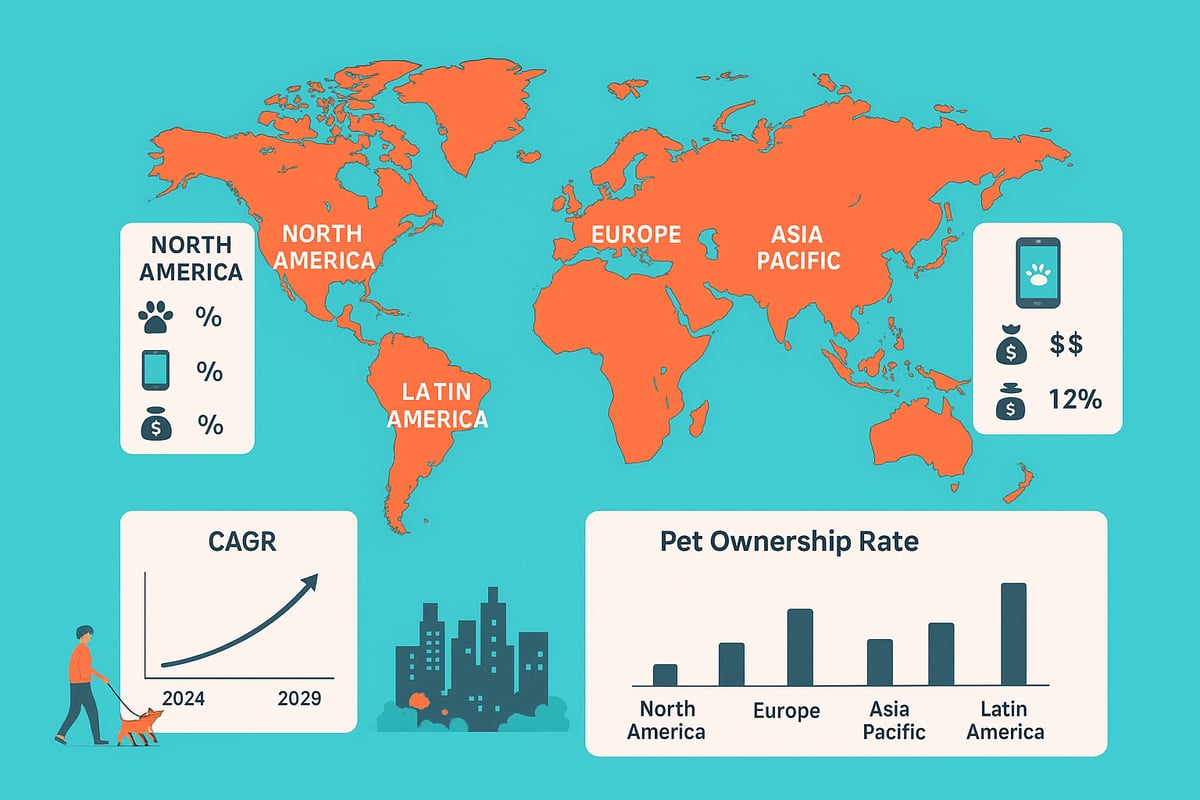
The dog walking market is booming worldwide, but growth trends vary dramatically by region. Whether you operate in a bustling U.S. city or a rising market in Asia, understanding where the action is can help you focus your efforts and spot new opportunities. Let’s break it down region by region.
North America
North America leads the global dog walking market, especially in the U.S. and Canada. High pet ownership, urban lifestyles, and a strong demand for premium services drive this region’s success. Major cities like New York and Los Angeles are packed with busy professionals who rely on recurring dog walking subscriptions.
- Subscription-based models thrive in urban hubs.
- Tech-savvy consumers expect app-based booking and real-time updates.
- Leading platforms like Rover and Wag! dominate market share.
For a deeper dive into U.S. pet care trends, check out the United States Pet Care Market Trends. North America’s focus on safety, convenience, and premium features sets the pace for the dog walking market globally.
Europe
Europe’s dog walking market is growing fast, with the U.K., Germany, France, and Spain leading the charge. Urbanization and a love for pets fuel demand for dog walking, especially in major cities. However, regulations and cultural differences add complexity.
- The U.K. sees rapid adoption of app-based services.
- France and Germany focus on independent walkers and boutique companies.
- Regulatory hurdles can slow market entry for newcomers.
Despite these challenges, Europe’s dog walking market benefits from increasing disposable income and a strong pet culture. Providers who localize their services and build trust can carve out loyal client bases.
Asia Pacific
Asia Pacific is the fastest-growing region in the dog walking market. Countries like China, Japan, India, and Australia are experiencing a surge in pet ownership, thanks to a rising middle class and urban migration. Digital adoption is fueling growth, particularly in large metropolitan areas.
- App-based platforms are soaring in cities like Shanghai, Tokyo, and Sydney.
- Demand for certified, trained walkers is on the rise.
- Local startups are innovating with bundled pet care services.
Asia Pacific’s youthful population and tech adoption create huge opportunities for forward-thinking businesses. Tapping into local preferences and adapting to city lifestyles are key to thriving in this region.
Latin America and Middle East & Africa
Emerging markets in Latin America and the Middle East & Africa are just starting to catch up in the dog walking market. Countries like Brazil, Argentina, and several in the GCC are seeing increased urbanization and pet humanization trends.
- Early-stage growth with lots of untapped potential.
- Infrastructure and regulation remain significant challenges.
- Cultural attitudes toward pet care are evolving quickly.
Businesses entering these markets need patience, creativity, and a deep understanding of local norms. Flexible service offerings and strong community ties can help overcome early barriers.
Regional Opportunities and Risks
Every region in the dog walking market presents unique opportunities and risks. Here’s a quick comparison:
| Region | Key Opportunities | Major Risks |
|---|---|---|
| North America | Premium, tech-driven services | Market saturation |
| Europe | Boutique/localized offerings | Regulatory complexity |
| Asia Pacific | Digital adoption, youth market | Cultural adaptation needed |
| Latin America & MEA | Early growth, new adopters | Infrastructure, regulation |
To succeed, businesses should:
- Localize services for each market.
- Monitor regulatory changes closely.
- Build trust with transparency and reliability.
- Leverage technology for efficiency and safety.
No matter where you operate, staying agile and customer-focused is the secret sauce for winning in the global dog walking market.
Technology and Innovation in Dog Walking
Technology is shaking up the dog walking market in the best way possible. Whether you're a pet parent or a walker, innovation is making life easier, safer, and a lot more fun. Let’s break down how the latest tech trends are shaping this fast-growing industry.
Mobile Apps and Digital Transformation
Mobile apps are now the backbone of the modern dog walking market. Platforms like Rover, Wag!, and PetBacker have revolutionized how owners book, track, and pay for walks. Want to see how they stack up? Here’s a quick comparison:
| Platform | Key Features | User Rating |
|---|---|---|
| Rover | GPS tracking, photo updates, insurance | 4.8/5 |
| Wag! | Real-time alerts, easy booking, vet chat | 4.7/5 |
| PetBacker | Multi-service, secure payments, reviews | 4.6/5 |
These digital tools offer transparency and peace of mind. Plus, with the rise of digital marketing for pet businesses, finding and retaining clients in the dog walking market has never been easier.
Data, Analytics, and Personalization
Personalization is the name of the game in today’s dog walking market. Walkers and companies are using data to tailor services to each pet’s unique needs. Here’s a simple guide to how it works:
- Collect client feedback after each walk.
- Analyze pet profiles for preferences and health needs.
- Use route optimization tech to find the safest, most enjoyable paths.
- Adjust services based on analytics and reviews.
This data-driven approach means every pup gets a walk that fits their personality, energy level, and safety requirements.
Safety and Security Innovations
Safety is a top priority for everyone in the dog walking market. Thanks to new tech, both pets and walkers are better protected than ever before.
- Apps now require background checks and insurance for walkers.
- Real-time GPS tracking lets owners monitor walks from start to finish.
- Wearable tech for pets tracks activity and location.
- Emergency alerts connect walkers with help in seconds.
These innovations build trust, making it easier for new clients to jump in with confidence.
Integration with Other Pet Services
The dog walking market is no longer just about strolls around the block. Companies are bundling services like training, pet sitting, and wellness checks into one seamless experience.
For example, some platforms offer combined walking and training sessions for busy pet parents. This integration saves time and gives pets a well-rounded care package, all managed through a single app. The future of dog care? It’s connected, convenient, and totally customizable.
Competitive Landscape and Business Strategies
The dog walking market is rapidly evolving, with fierce competition and innovative strategies shaping how companies stand out. Let’s dive into the key players, smart branding moves, growth models, and savvy marketing tactics that define success in this industry.
Key Players and Market Share
Several brands lead the dog walking market, each bringing unique strengths. Here’s a quick comparison:
| Company | Business Model | Unique Feature | Market Share (Est.) |
|---|---|---|---|
| Rover | App-based platform | Recurring bookings | 35% |
| Wag! | App-based platform | Real-time GPS | 25% |
| Fetch! Pet Care | Franchise model | Local expertise | 15% |
| Barkly Pets | Direct-to-consumer | Flexible walks | 10% |
| Swifto | Tech-enabled local | Live tracking | 5% |
Brands like Rover and Wag! drive innovation with tech-driven solutions. Mergers, such as Rover’s acquisition by Blackstone, reinforce their leadership in the dog walking market.
Differentiation and Branding
Standing out in the dog walking market requires more than just dog leashes and happy pups. Companies invest in:
- Tech features: GPS, photo updates, real-time notifications.
- Customer service: 24/7 support and transparent reviews.
- Specialized services: Adventure walks or group outings.
- Strong branding: Storytelling and trust-building.
Content marketing is a major tool for differentiation. Providers use content marketing for pet services to showcase expertise, share customer stories, and build brand loyalty. This helps attract pet parents who value reliability and care.
Partnership and Franchise Models
Franchise and partnership models are gaining ground in the dog walking market. National brands expand into new cities by partnering with local entrepreneurs or offering franchises.
Steps to grow via franchising:
- Develop a proven business process.
- Offer support and training to franchisees.
- Maintain quality control across locations.
Real-world example: Fetch! Pet Care’s franchise success comes from empowering local owners while keeping brand standards high. Multi-location companies also form partnerships with pet groomers and trainers to offer bundled services, increasing customer retention.
Marketing and Client Acquisition
Marketing is the lifeblood of growth in the dog walking market. Top strategies include:
- Digital marketing: Targeted ads and Google My Business.
- Local SEO: Ranking in neighborhood searches.
- Social media: Sharing daily walk adventures and client testimonials.
- Referral programs: Rewarding loyal customers.
Specialized support, like a Pet SEO service company, helps dog walking businesses improve visibility and attract more clients. Real-world pet businesses have scaled quickly by investing in these tailored marketing solutions, proving that the right strategy can turn a small venture into a local favorite.
So, after diving into all these trends and insights, you probably see just how much opportunity there is for dog walking businesses in 2026. Whether you’re dreaming about launching your own service or ready to take your current pet business to the next level, digital marketing is going to be your best friend—seriously, it’s what separates the pack leaders from the rest. If you want to attract more clients, build trust in your local community, and stand out in this busy market, you don’t have to do it alone. We’re here to help you make it happen—Get Started.
Article written using RankPill.