The digital marketing world is evolving faster than ever in 2026, with businesses racing to stand out online. The need for a skilled digital marketing strategist has never been higher, as brands compete in a crowded, tech-driven landscape.
This guide will show you how to master digital marketing strategy in 2026. You’ll discover:
- What a strategist really does
- Essential skills for success
- Future trends and predictions
- Step-by-step strategy creation
- Must-have technologies and tools
- Career pathways and growth tips
Ready to future-proof your skills? Dive in and unlock the secrets to digital marketing strategist success.
The Role of a Digital Marketing Strategist in 2026
If you think digital marketing is just about posting on social media, think again. The digital marketing strategist in 2026 is the master conductor of a brand’s entire online presence, ensuring every campaign, channel, and message is perfectly in tune with business goals.
A digital marketing strategist is not just a planner. They are the brains behind every successful online campaign, from the moment an idea is born to the final performance review. Their job is to keep the brand shining in a crowded digital arena, always one step ahead of the competition.
What does this look like day to day? Let’s break it down:
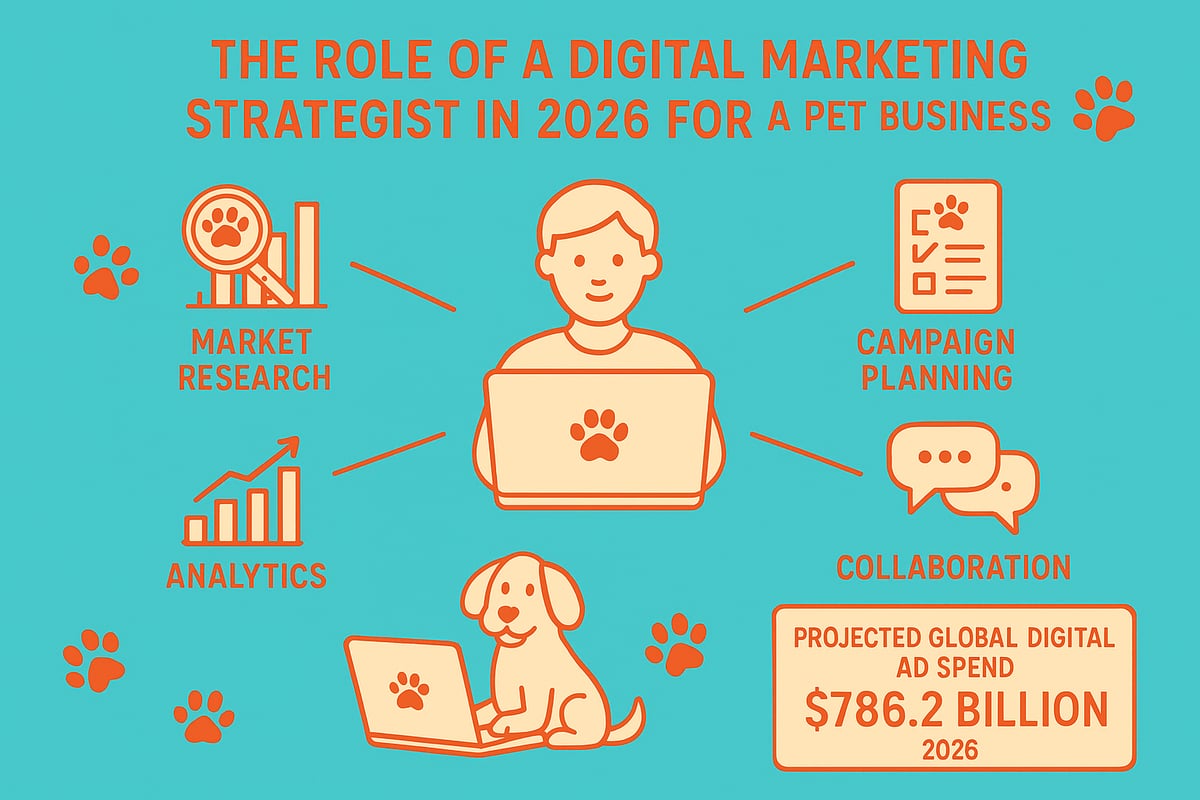
- Conducting in-depth market research to spot trends and opportunities.
- Designing campaigns that connect with the target audience.
- Collaborating with creative, sales, and tech teams to bring ideas to life.
- Monitoring performance, analyzing data, and making real-time adjustments.
Let’s say a local pet grooming business wants to launch a premium “paw-dicure” service in 2026. The digital marketing strategist would:
- Research what pet owners are buzzing about—maybe eco-friendly pet care is trending.
- Plan a campaign with fun social posts, targeted ads, and educational emails.
- Work with designers to create adorable graphics of pampered pups.
- Track every click, booking, and review, tweaking the campaign as needed.
This role is not to be confused with a manager or a specialist. Here’s a quick comparison:
| Role | Focus Area | Main Tasks |
|---|---|---|
| Strategist | Big-picture planning, direction | Research, plan, oversee, optimize |
| Manager | Execution, team management | Supervise, coordinate, report |
| Specialist | Specific channel or skill | Implement, analyze, refine |
Unlike a manager who leads the team or a specialist who dives deep into one channel, the digital marketing strategist connects the dots, ensuring every piece fits into the larger puzzle.
The work never really stops. After a campaign launches, the strategist reviews analytics, listens to feedback, and adapts. Maybe the “paw-dicure” emails had low open rates, but Instagram Reels went viral. The strategist quickly pivots, putting more budget into video content and adjusting the messaging.
The world of digital marketing is booming. Global digital ad spend is projected to hit $786.2 billion by 2026 (PRNewswire). With so much on the line, businesses need strategists who are adaptable and creative, able to turn insights into action at a moment’s notice.
Adaptability is crucial. Trends change fast—what worked last month might flop today. Creativity is just as important. A digital marketing strategist must dream up fresh ideas, test new tools, and find unique ways to stand out.
Their impact is huge. A great strategist drives business growth, builds brand reputation, and keeps customers coming back for more. For more on what this role involves in 2026, check out this detailed Digital Marketing Strategist Job Description.
In short, the digital marketing strategist is the unsung hero behind every successful brand online. If you love solving puzzles, spotting trends, and making things happen, this just might be your dream role.
Future-Proofing Your Strategy: Trends & Predictions for 2026
Staying ahead as a digital marketing strategist in 2026 means embracing a world where change is the only constant. The pet industry, just like every other sector, is seeing a digital revolution. To thrive, you’ll need to keep your finger on the pulse of emerging trends and adapt your strategy with agility and creativity.
What’s on the horizon for the digital marketing strategist? Let’s break down the shifts, tools, and mindsets you’ll need to master for the future.
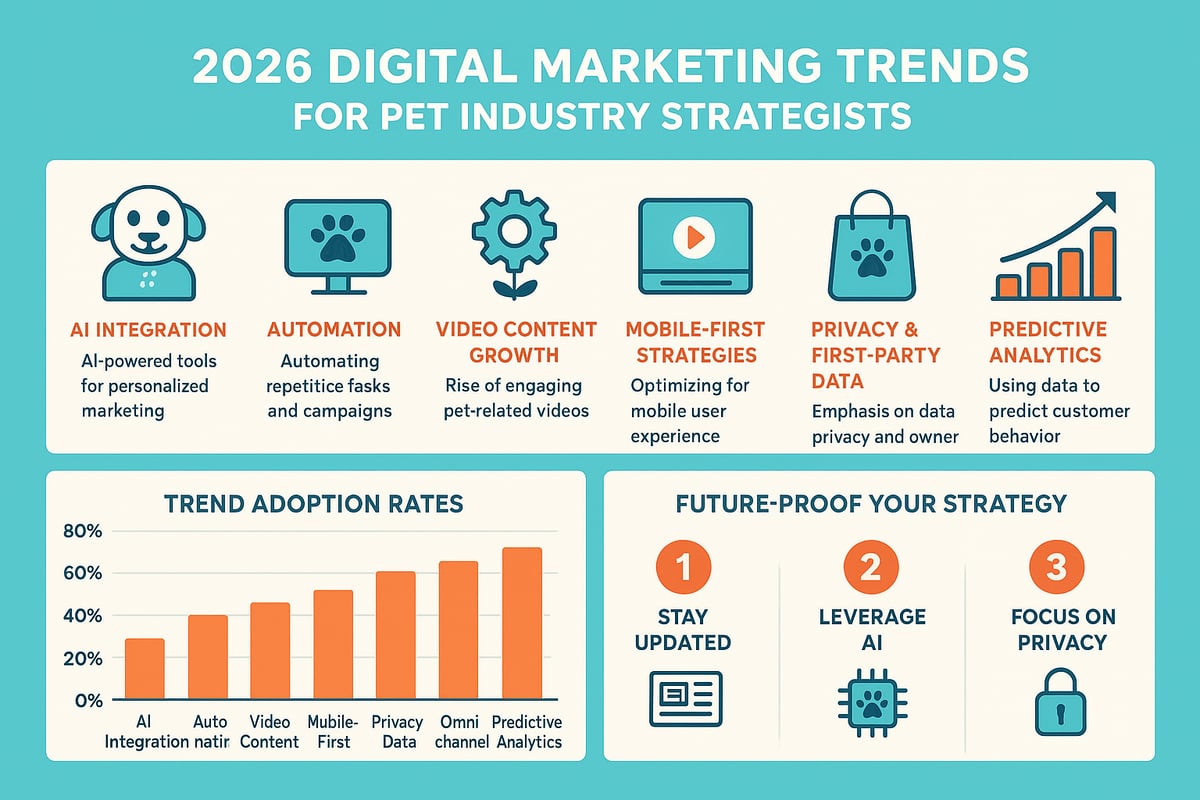
Integrating AI and Automation
AI is no longer a buzzword, it’s the backbone of every digital marketing strategist’s toolkit in 2026. From campaign management to customer segmentation, AI-powered platforms are making it easier to target the right audience at the right time.
Picture a pet daycare using AI to automatically adjust ad spend based on booking patterns or to segment dog owners by breed and send personalized offers. Automation tools can handle repetitive tasks like scheduling social posts or sending appointment reminders, freeing up time for creative strategy.
Here’s how a digital marketing strategist can leverage AI and automation:
- Use AI chatbots to answer customer questions about pet training instantly.
- Set up automated email workflows for new puppy owners.
- Analyze real-time data to optimize Facebook ad budgets for grooming specials.
Remember, while AI can streamline processes, human creativity is essential for crafting compelling messages and building genuine connections. The strategist who blends both will always have an edge.
The Shift to First-Party Data and Privacy
Privacy is front and center in 2026. With regulations like GDPR and CCPA tightening up and third-party cookies disappearing, digital marketing strategist roles are evolving. The focus now is on collecting and utilizing first-party data ethically.
For pet businesses, this might mean:
- Building robust email lists by offering exclusive pet care tips or discounts.
- Encouraging customers to create accounts for personalized pet care recommendations.
- Using surveys to learn about pet owners’ needs and preferences directly.
A digital marketing strategist ensures data collection methods are transparent and valuable to customers. They also champion secure data storage and compliance with privacy laws.
Step-by-step, here’s how to adapt:
- Audit your current data sources.
- Update consent forms and privacy policies.
- Create value-driven incentives for customers to share information.
- Regularly review and refine data practices.
By prioritizing trust, you’ll not only meet legal requirements but also build lasting relationships with your audience.
Omnichannel and Experience-Driven Marketing
In 2026, customers expect seamless experiences wherever they interact with your brand. Omnichannel marketing is the secret sauce for a successful digital marketing strategist. It’s about delivering consistent messaging and personalized journeys, whether someone visits your website, your social pages, or walks into your pet shop.
Consider a pet retailer who:
- Syncs promotions across Instagram, Facebook, email, and in-store displays.
- Offers click-and-collect for online orders.
- Uses loyalty programs that reward both online and in-person purchases.
Tools like unified CRM systems and social media management platforms make this possible. The strategist coordinates every touchpoint, ensuring branding and tone are consistent.
Want more on what’s shaping the future? Check out these Top Digital Marketing Trends and Predictions for 2026 for a deeper dive into AI, personalization, and sustainability messaging trends.
To stay ahead, a digital marketing strategist must be curious, ready to learn, and quick to adapt. Watch trends, experiment with new tools, and always put your customer’s experience first. That’s how you’ll future-proof your strategy and continue to grow in the ever-changing pet business landscape.
Step-by-Step: Building a Winning Digital Marketing Strategy in 2026
Ready to become a digital marketing strategist who wins in 2026? Let’s break down the process into seven practical steps, each designed to help you craft campaigns that get noticed and drive results. Whether you’re running a pet grooming shop or launching a new pet treat line, this roadmap will guide you from idea to measurable success.
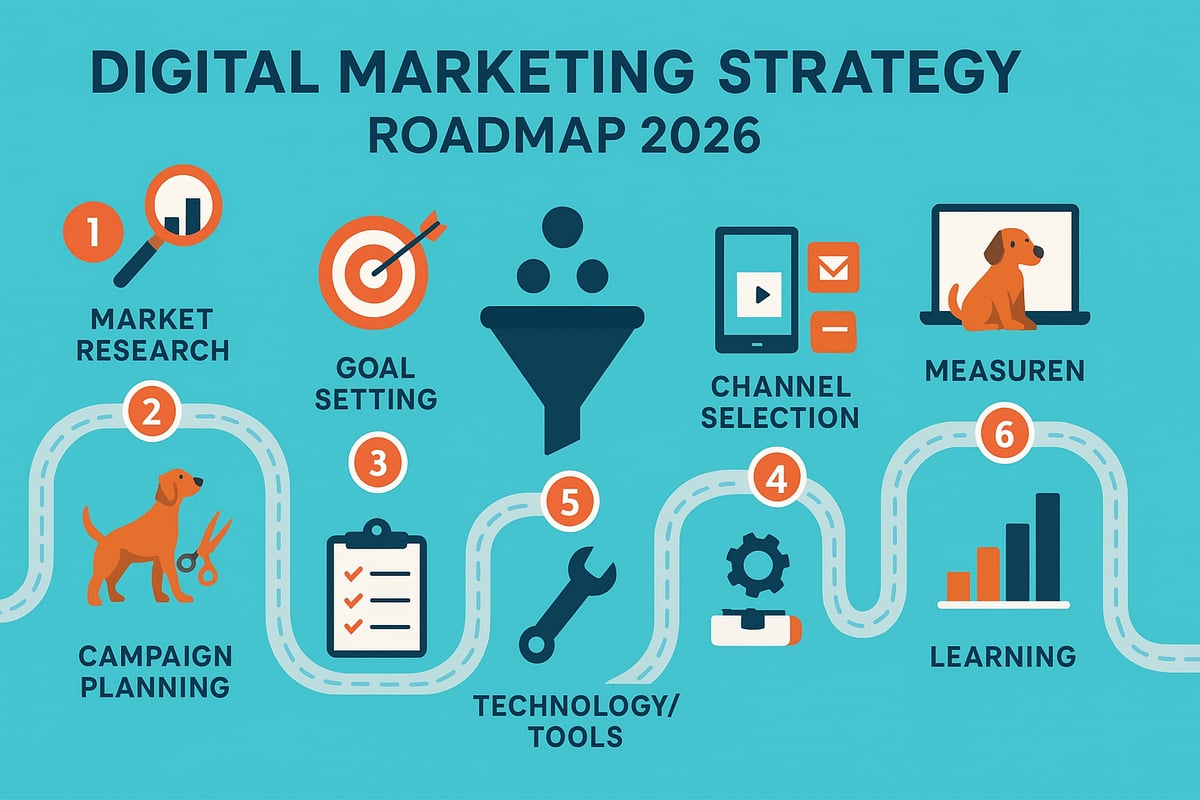
Step 1: Market and Audience Analysis
Every digital marketing strategist starts with research. You need to understand your audience, competitors, and market trends. For a pet training business, this could mean surveying local pet owners or analyzing Google Trends for “dog obedience classes near me.”
Popular tools include:
- Google Analytics for web traffic insights
- Facebook Audience Insights for demographics
- SurveyMonkey for customer feedback
Build detailed customer personas so your messaging hits home. Want expert help? Check out Digital marketing strategy services for professional guidance.
Step 2: Setting SMART Goals and KPIs
A digital marketing strategist always sets clear goals. Use the SMART framework:
- Specific (What do you want to achieve?)
- Measurable (How will you track progress?)
- Achievable (Is your goal realistic?)
- Relevant (Does it align with your business?)
- Time-bound (What’s the deadline?)
Example: “Increase pet boarding bookings by 20% in Q2.” Track KPIs like website conversions, new leads, or social shares to see what’s working.
Step 3: Channel Selection and Content Planning
Not all channels fit every business. A digital marketing strategist chooses based on where your audience hangs out. For a pet grooming business, Instagram Reels and Facebook might be perfect for showing off adorable makeovers.
Evaluate options like:
- SEO for website traffic
- Email for nurturing leads
- Paid ads for quick results
- Social media for engagement
Plan a content calendar that matches each channel’s strengths and your audience’s habits.
Step 4: Campaign Design and Execution
Now, it’s time to get creative. A digital marketing strategist maps out campaign themes, messaging, and visuals. Think about a seasonal promotion: your emails, Facebook ads, and in-store posters should all share the same look and feel.
Best practices:
- Use eye-catching visuals
- Schedule posts for peak times
- Integrate messaging across platforms
For example, launch a “Puppy Spa Day” promo with coordinated posts and emails to maximize reach.
Step 5: Leveraging Technology and Tools
A digital marketing strategist uses the right tech stack to save time and boost results. Tools like Hootsuite for scheduling, Google Analytics for insights, and CRM platforms to manage leads are essential.
For a multi-location pet store, these tools can:
- Automate social posts
- Track customer interactions
- Manage reviews and appointments
Choose tools that fit your goals and scale with your business.
Step 6: Measurement, Reporting, and Optimization
What gets measured gets improved. A digital marketing strategist sets up dashboards, reviews reports, and runs tests. For example, A/B test different email subject lines for your pet grooming newsletter.
Tips for success:
- Track metrics weekly
- Look for trends in open and click rates
- Adjust strategies based on data
Regular optimization helps you squeeze more value from every campaign.
Step 7: Continuous Learning and Adaptation
The digital marketing strategist never stops learning. Stay updated on trends, attend webinars, and join industry groups. For pet businesses, this could mean following animal care forums or attending local pet expos.
Ways to keep growing:
- Take online courses
- Network with peers
- Experiment with new content formats
Innovation keeps your strategies fresh and your business ahead of the curve.
Essential Tools and Technologies for Digital Marketing Strategists
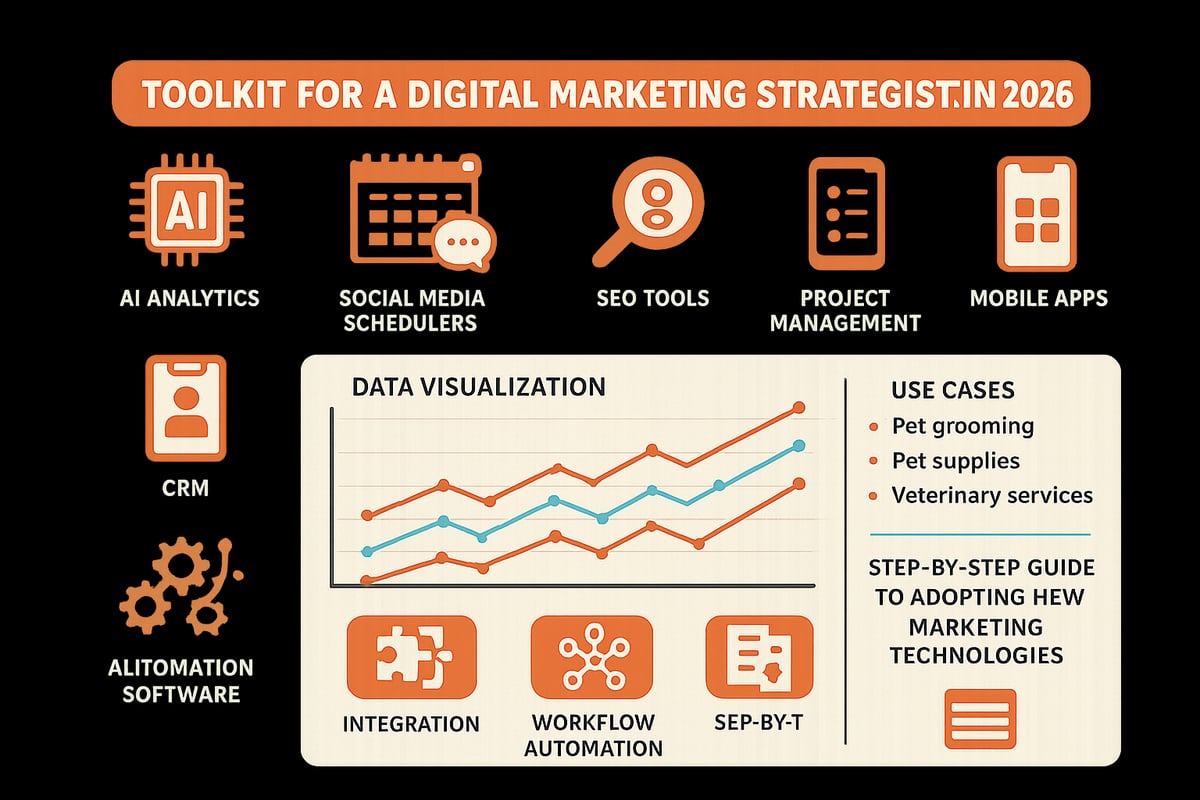
In 2026, the right toolkit is the secret weapon for every digital marketing strategist. The landscape is overflowing with platforms and apps, each promising to make campaigns smarter, faster, and more effective. But with so many choices, how do you pick what actually works for your pet business or brand?
Let’s break down the essential categories, spotlight the most powerful tools, and share real-world examples to help you build a tech stack that’s future-ready and easy to manage.
Why Tools Matter for the Digital Marketing Strategist
Every digital marketing strategist needs an arsenal of tools to juggle research, planning, execution, and reporting. Think of your toolkit as your business’s leash and collar: it keeps everything connected and under control, no matter how many campaigns you’re running.
The right tools help you:
- Track audience behavior in real time
- Manage multi-channel content calendars
- Automate repetitive tasks, freeing up creative brainpower
- Visualize campaign performance with easy-to-read dashboards
Without the right platforms, even the most creative strategist can get tangled in manual work, missing out on growth opportunities.
Must-Have Tools for 2026: Categories & Top Picks
Let’s look at the tool categories every digital marketing strategist should consider, especially if you’re running or marketing a pet business:
| Tool Category | Top Platforms (2026) | Use Case (Pet Business) |
|---|---|---|
| AI Analytics | Google Analytics 4, Tableau | Track pet adoption trends |
| Social Schedulers | Hootsuite, Buffer | Schedule weekly pet care posts |
| SEO Suites | SEMrush, Moz | Optimize for “dog grooming near me” |
| CRM | HubSpot, Zoho CRM | Manage puppy training leads |
| Automation | Mailchimp, ActiveCampaign | Send appointment reminders |
| Project Management | Asana, Trello | Plan multi-location events |
| Content Tools | Canva, Grammarly | Design flyers for pet adoption days |
| Data Visualization | Power BI, Looker | Present campaign ROI to owners |
Content marketing is a core pillar of any pet business’s online presence. If you want to dive deeper, check out these content marketing for pet businesses insights to see how the right tools make storytelling and lead generation effortless.
Integration, Automation & Data Visualization
A digital marketing strategist thrives on efficiency. Integrating your CRM, analytics, and email platforms lets your team collaborate smoothly and keep data flowing between systems. Automation is your best friend for scaling campaigns without losing the personal touch.
For example, set up workflows that:
- Trigger a welcome email when a new client joins your pet grooming list
- Auto-schedule social posts based on trending pet hashtags
- Generate weekly dashboards to spot which services are most popular
Data visualization tools help you turn raw numbers into actionable insights. Instead of staring at boring spreadsheets, you can share colorful charts with your team (or boss) that show what’s working and where to tweak.
Real-World Example: Pet Clinic Automation in Action
Imagine you run a bustling veterinary clinic. Your digital marketing strategist sets up an automation tool that sends appointment reminders via SMS and email. The CRM tracks which pet parents confirm, while analytics reveal the best times to send reminders for maximum response.
This approach not only reduces no-shows but also frees up your front desk for more personal client care. By connecting your calendar, CRM, and messaging platform, you create a seamless experience for both staff and pet owners.
Adopting New Technologies: Tips & Trends
Staying ahead means always evaluating what’s new. Here’s a step-by-step approach for any digital marketing strategist:
- Identify gaps in your current workflow or results.
- Research emerging tools that solve those problems.
- Test new platforms with a pilot campaign.
- Train your team and gather feedback.
- Measure impact and adjust your stack as needed.
Watch for trends like Generative Engine Optimization, where optimizing content for AI-driven search results is the next frontier. Learn more about Generative Engine Optimization to keep your strategy sharp as search engines evolve.
Mobile apps are a must for managing campaigns on the go, especially when you’re juggling pet expos, client calls, and social updates. Templates and frameworks streamline campaign launches, so you never start from scratch.
The right tools empower you to focus on what you do best—crafting creative campaigns, delighting customers, and driving real business growth.
Career Pathways and Opportunities for Digital Marketing Strategists
Dreaming of a career where you can blend creativity, analytics, and a love of pets? The digital marketing strategist role is bursting with possibilities in 2026, with flexible pathways and room to grow. Let’s break down how you can carve out your own success story in this dynamic field.
Mapping Your Digital Marketing Strategist Career Path
Every digital marketing strategist starts somewhere, and the journey is more like a winding pet parade than a straight line. You might begin as a digital marketing assistant, learning the ropes by managing social media or writing blog posts for a local pet groomer.
From there, you could step up to a digital marketing strategist role, where you’ll plan campaigns, analyze data, and collaborate with creative teams. Many strategists then move into management, overseeing teams or even directing all digital efforts for a large pet retailer.
Here’s a typical path:
- Digital Marketing Assistant/Coordinator
- Digital Marketing Strategist
- Digital Marketing Manager/Director
Real-world example: Jamie started out scheduling posts for a dog daycare’s Instagram. Today, as a digital marketing strategist, she designs multi-channel campaigns and mentors new marketers.
No matter where you start, each step builds on your skills and confidence. The digital marketing strategist role is your launchpad to endless growth.
Related Roles and Salary Insights
The digital marketing strategist skillset opens doors to a variety of related roles. You might specialize as a content strategist, analyze trends as a marketing analyst, or manage customer relationships as a CRM manager.
Here’s a quick salary snapshot for 2026:
| Role | Average Salary (USD) |
|---|---|
| Digital Marketing Strategist | $63,437 |
| Content Strategist | $55,000 |
| CRM Manager | $70,000 |
| Digital Marketing Director | $117,000+ |
Pet industry strategists often find their skills in high demand, especially for businesses looking to up their social game. Want to see how social media fits in? Check out these social media management insights for more ideas on where your career could lead.
Growing Demand and Industry Versatility
The digital marketing strategist profession is thriving thanks to the digital transformation sweeping every industry. Pet businesses, from grooming salons to pet food startups, need savvy strategists to stand out online and reach customers in creative ways.
This demand means your skills are transferable—one day you could be boosting bookings for a pet hotel, and the next, launching a new line of eco-friendly pet toys. The versatility of a digital marketing strategist keeps your days interesting and your career future-proof.
Remote and freelance work are on the rise. Many strategists work from home, manage their own client list, or consult for multiple pet brands at once. Flexibility is the name of the game.
Building Your Portfolio and Professional Network
Want to stand out as a digital marketing strategist? Build a portfolio that showcases your best work—think campaign case studies, analytics snapshots, and creative assets for pet brands. Add certifications, like Google Analytics or HubSpot, to boost your credibility.
Networking is key. Join pet business marketing groups, attend industry webinars, and connect on LinkedIn. Testimonials from happy clients or employers can make all the difference.
Never stop learning. Stay on top of trends by watching resources like Digital Marketing Trends for 2026 – YouTube. The industry moves fast, so keep your skills sharp and your curiosity alive.
No matter your background, the digital marketing strategist career path is packed with opportunities, flexibility, and the chance to make a real impact in the pet world and beyond.
If you’ve made it this far, you’re clearly serious about taking your pet business to the next level—and honestly, I’m here for it! From taming the wild world of digital marketing in 2026 to mastering fresh strategies and tools, you’ve now got a roadmap to attract your dream clients (and maybe a few extra tail wags). Ready to put these tips into action for your own pet biz? I’d love to help you turn insight into real results. Let’s make your marketing as pawsome as your services—Get Started and let’s grow together!